

Why I Started Looking for a Hybrid Inverter
The Rising Cost of Electricity in Kenya
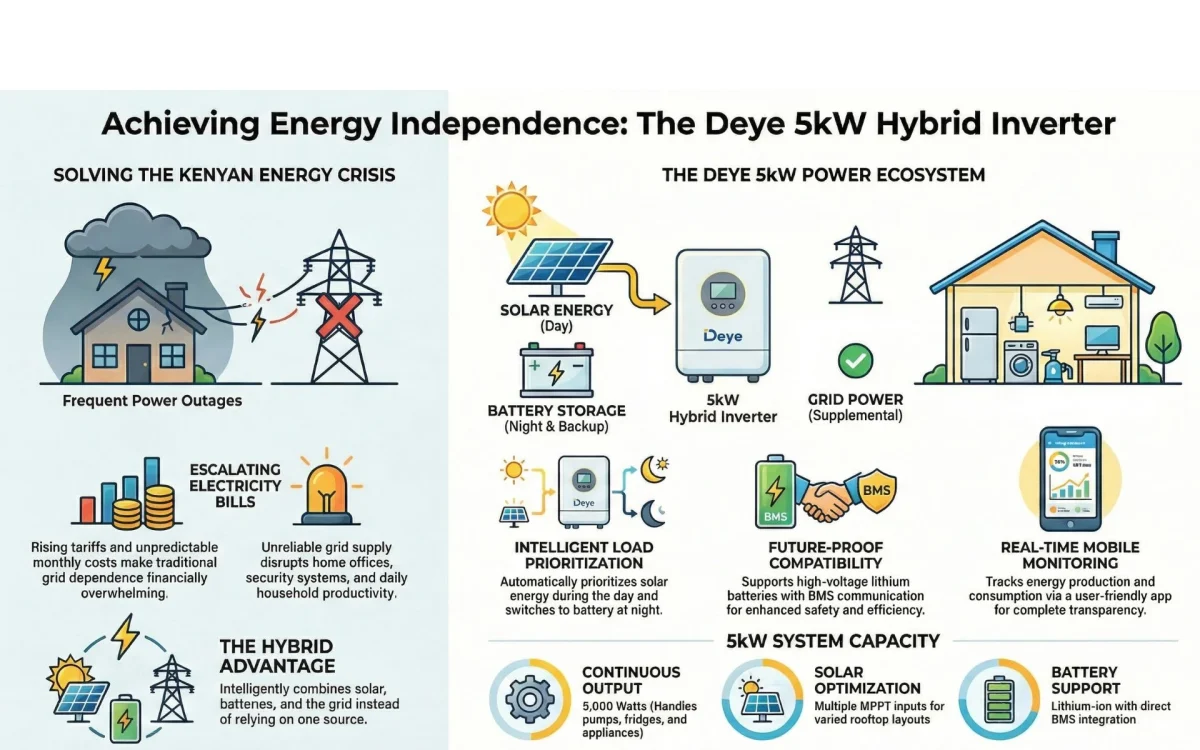
If you live in Kenya like I do, then you already know the feeling. You open your electricity bill and just stare at it for a minute, wondering how the numbers climbed so high again. Over the past few years, power tariffs have steadily increased, and for households running fridges, borehole pumps, electric fences, office equipment, and security systems, the monthly cost can feel overwhelming. I reached a point where I realized I wasn’t just paying for electricity—I was paying for unpredictability. One month it was manageable, the next month it was shocking. That inconsistency pushed me to start researching alternatives, especially solar solutions that could reduce dependence on the grid.
I wasn’t looking to completely disconnect from Kenya Power. I simply wanted control. I wanted to decide when to use solar, when to use batteries, and when to pull from the grid. The idea of a hybrid inverter immediately made sense because it allows a blend of solar panels, batteries, and grid supply. Instead of choosing one energy source, I could intelligently combine them. That’s when my serious research journey began.
Power Outages and Unreliable Supply
It wasn’t just about the bills. Power outages were becoming more frequent in my area, and sometimes they came without warning. If you run a home office or operate a small business from home, you understand how disruptive that can be. Internet routers shut down, security systems reboot, and productivity drops instantly. I started asking myself a simple question: why should I depend entirely on a grid that doesn’t guarantee continuity?
The thought of having a system that automatically switches to battery when the grid goes off felt empowering. No noise from a generator, no fuel refills, no maintenance headaches. Just seamless power. That’s when the Deye 5kW Hybrid Inverter started appearing repeatedly in my research. Reviews were strong, installers recommended it, and online discussions praised its reliability. I was intrigued.
www.happysolar.co.ke || www.solarpower.co.ke
Call | Text | WhatsApp: +254 741 163020
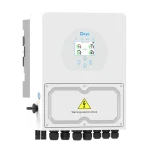
Discovering the Deye 5kW Hybrid Inverter
First Impressions and Research
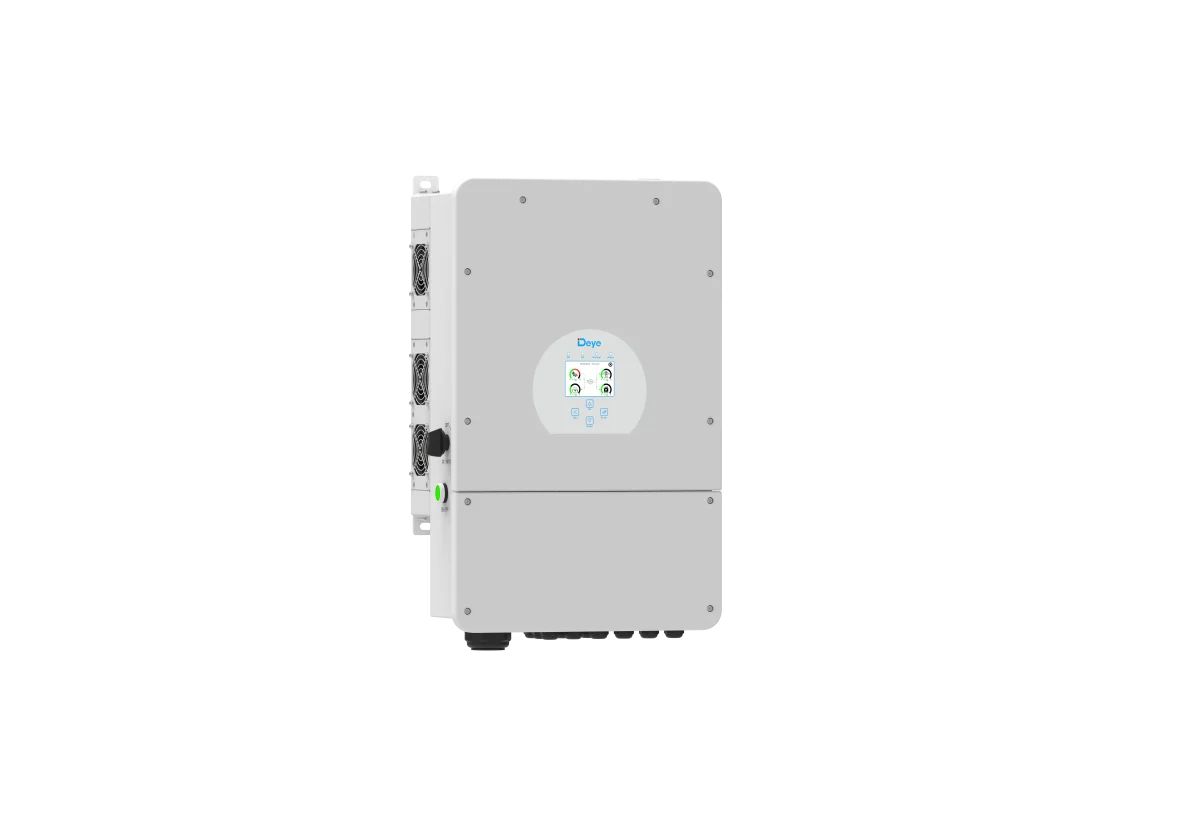
The first time I came across Deye, I was skeptical. I had heard of brands like Victron and SMA, but Deye seemed newer to me. So I dug deeper. I looked at product certifications, warranty terms, compatibility with lithium batteries, and user reviews from both homeowners and installers. What stood out was the strong global presence and the advanced hybrid functionality built into a relatively compact unit.
The 5kW model seemed perfect for a typical Kenyan home. It wasn’t oversized, and it wasn’t underpowered. It could comfortably handle lighting, refrigerators, televisions, Wi-Fi routers, water pumps, and even moderate appliances like microwaves or washing machines. I also noticed it supported high-voltage lithium batteries, which meant better efficiency and future scalability. That gave me confidence that I wasn’t buying something that would become obsolete in a few years.
Why Deye Stood Out from Other Brands
One of the biggest reasons I leaned toward Deye was flexibility. Some inverters lock you into specific battery brands or limit solar input capacity. The Deye 5kW hybrid inverter offered multiple MPPT inputs, allowing better solar optimization. That means if part of your roof faces slightly different angles, the inverter can still maximize output. In Kenya, where rooftop layouts vary significantly, that’s a major advantage.
Another key factor was smart monitoring. I didn’t want a “black box” system that I couldn’t track. I wanted real-time data—how much solar I’m generating, how much battery I’m using, and how much grid power I’m consuming. The Deye inverter offers app-based monitoring, which felt modern and user-friendly. In short, it wasn’t just about backup power; it was about intelligent energy management.
www.happysolar.co.ke || www.solarpower.co.ke
Call | Text | WhatsApp: +254 741 163020
Key Features of the Deye 5kW Hybrid Inverter
Hybrid Technology and Smart Energy Management
The beauty of a hybrid inverter lies in its brain. The Deye 5kW unit doesn’t just convert DC to AC; it actively decides the most efficient source of power at any given time. During sunny hours, it prioritizes solar energy. If batteries are charged and solar is still producing, it can feed excess power into loads or even export to the grid if configured accordingly. At night, it automatically switches to battery before pulling from the grid, depending on how you set it up.
That level of customization impressed me. I could set battery charging priorities, define grid charging schedules, and even control time-of-use settings. It felt like having a personal energy manager installed in my home. Instead of reacting to power issues, I was proactively controlling my energy ecosystem. It’s like upgrading from a basic feature phone to a smartphone—once you experience the smart features, you never want to go back.
Battery Compatibility and Solar Integration
One concern I had was compatibility with lithium batteries, which are becoming increasingly popular in Kenya. The Deye 5kW hybrid inverter supports various lithium brands and communicates directly with them through BMS integration. That improves safety and efficiency because the inverter and battery “talk” to each other. Overcharging, deep discharge, and imbalance risks are significantly reduced.
It also supports sufficient solar panel input to handle a reasonably sized residential array. For my setup, that meant I could install enough panels to comfortably cover daytime consumption while charging batteries simultaneously. This dual capability—powering loads and charging storage—makes a massive difference in overall system performance.
www.happysolar.co.ke || www.solarpower.co.ke
Call | Text | WhatsApp: +254 741 163020
Technical Specifications That Matter
Power Output and Efficiency
The Deye 5kW hybrid inverter delivers 5,000 watts of continuous power, which is ideal for medium-sized homes. What mattered to me wasn’t just the number, but how efficiently it converted energy. High efficiency means less wasted power and better overall system performance. When you invest in solar, every percentage point counts because it directly affects savings.
The inverter also handles surge loads effectively. Appliances like refrigerators and pumps draw higher startup currents, and a weak inverter can trip under that pressure. With the Deye unit, I’ve experienced stable operation even when multiple appliances switch on simultaneously. That reliability translates into peace of mind.
Monitoring and Smart Controls
The mobile monitoring app was a game-changer for me. I can check production and consumption from anywhere. If I’m away from home, I still know whether my batteries are full or if the grid is active. That transparency builds trust in the system. I’m not guessing; I’m informed.
Data logging also helps in planning future upgrades. By reviewing consumption trends, I can determine whether to add more panels or expand battery storage. The inverter isn’t just powering my home; it’s teaching me about my energy habits.
www.happysolar.co.ke || www.solarpower.co.ke
Call | Text | WhatsApp: +254 741 163020
Installation Experience in Kenya
Choosing the Right Solar Installer
Buying a great inverter is only half the story. Installation quality determines performance and longevity. I took time to compare installers, checking certifications, previous projects, and customer reviews. A professional installer properly sizes cables, ensures grounding, and configures inverter settings based on household needs.
During installation, the team explained each component—the inverter, batteries, DC isolators, AC breakers, and monitoring setup. That transparency made me confident in the system. It didn’t feel like a rushed job; it felt customized.
System Setup and Commissioning
Commissioning day was surprisingly smooth. The inverter powered on, connected to Wi-Fi, and started displaying real-time data. Watching the solar generation kick in felt almost magical. For the first time, I was producing my own electricity.
The system was configured to prioritize solar, then battery, then grid. That setup immediately reduced grid dependency. Even on partially cloudy days, the inverter intelligently balanced power sources without me lifting a finger.
www.happysolar.co.ke || www.solarpower.co.ke
Call | Text | WhatsApp: +254 741 163020
Performance in Real Kenyan Conditions
Handling Heat, Dust, and Grid Fluctuations
Kenyan weather can be harsh—intense heat, dust, and voltage fluctuations. The Deye inverter has handled these conditions impressively. It includes protective mechanisms against overvoltage and overheating, which are crucial in regions with unstable grid supply.
Even during extremely sunny afternoons, the system maintains stable output without performance drops. That resilience reassured me that the investment was built for our environment, not just mild climates elsewhere.
Daily Usage Experience at Home
In daily life, the system operates quietly in the background. Lights don’t flicker when the grid goes off. Appliances continue running. The transition is seamless. It feels like living in a different power reality—one where interruptions are no longer stressful.
Over time, I’ve become more energy-conscious. Seeing real-time data encourages smarter consumption habits. Solar power isn’t just about saving money; it changes how you think about electricity altogether.
www.happysolar.co.ke || www.solarpower.co.ke
Call | Text | WhatsApp: +254 741 163020
Cost, ROI, and Long-Term Value
Initial Investment Breakdown
A complete 5kW hybrid system includes the inverter, solar panels, lithium battery bank, mounting structure, and installation costs. While the upfront investment may seem significant, it’s important to view it as infrastructure rather than an expense. Unlike paying monthly bills that never end, solar shifts you toward ownership.
The Deye inverter itself offers strong value relative to its features. When compared to premium European brands, it provides similar smart functionality at a more accessible price point, making it ideal for Kenyan homeowners seeking balance between quality and affordability.
Savings and Return on Investment
Since installation, my electricity bills have reduced significantly. During sunny months, grid consumption drops drastically. The return on investment depends on consumption patterns, but in many cases, homeowners recover costs within a few years through savings.
Beyond financial ROI, there’s emotional ROI—peace of mind, independence, and resilience. Those benefits are hard to quantify but deeply felt.
www.happysolar.co.ke || www.solarpower.co.ke
Call | Text | WhatsApp: +254 741 163020
Who Should Buy the Deye 5kW Hybrid Inverter?
This inverter is ideal for medium-sized households, small offices, retail shops, and farms needing reliable backup. If your peak load is within 5kW and you want intelligent energy management, this system makes sense. It’s particularly suitable for people planning to expand into lithium battery storage.
If you value monitoring, flexibility, and future scalability, the Deye 5kW hybrid inverter ticks those boxes confidently.
Final Verdict and Recommendations
Looking back, choosing the Deye 5kW hybrid inverter was one of the smartest home upgrades I’ve made. It reduced my electricity bills, eliminated blackout stress, and gave me energy independence. The system performs reliably under Kenyan conditions and offers advanced features typically found in higher-end systems.
For anyone on the fence, my advice is simple: assess your load, consult a professional installer, and invest in quality components. Solar is no longer a luxury—it’s a strategic necessity.
Conclusion
The Deye 5kW Hybrid Inverter has transformed how I experience electricity at home. Instead of worrying about outages or unpredictable bills, I now enjoy stability and control. The combination of solar, battery storage, and grid integration creates a resilient and efficient power ecosystem. For homeowners in Kenya seeking reliable, future-ready energy solutions, this inverter stands out as a practical and powerful choice.
FAQs
1. Can the Deye 5kW Hybrid Inverter run a borehole pump?
Yes, provided the pump’s startup surge is within the inverter’s supported limit. Proper load assessment is essential.
2. Is it compatible with lithium batteries in Kenya?
Yes, it supports various lithium battery brands with BMS communication.
3. How long do the batteries last?
Most lithium batteries last 8–15 years depending on usage cycles and maintenance.
4. Can I expand the system later?
Yes, you can add more panels or increase battery capacity if designed correctly from the start.
5. Does it work without batteries?
Yes, it can operate as a grid-tied solar inverter, but batteries unlock full hybrid benefits.