

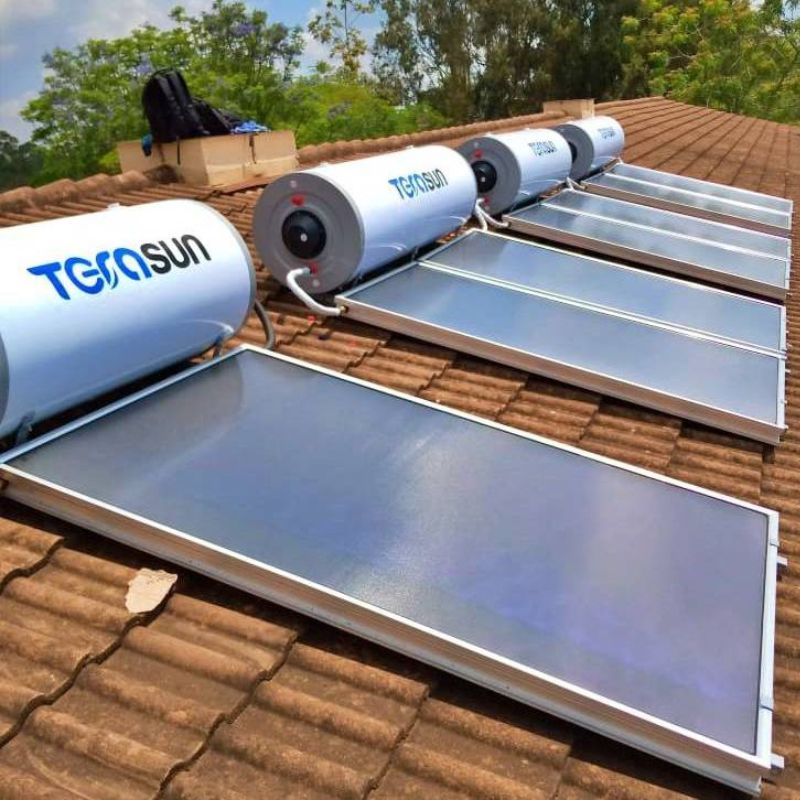
If you own, develop, or manage a building in Kenya — a residential home, an apartment block, a hotel, a hospital, a school, or a commercial premises — there is a legal requirement you need to know about. The Energy (Solar Water Heating) Regulations, 2025, gazetted by the Energy and Petroleum Regulatory Authority (EPRA) in July 2025, now requires all new buildings to incorporate solar water heating systems as a condition of design approval. Existing buildings with high hot water demand are also within the scope of this regulation.
This is not a new concept. Kenya has been working towards mandatory solar water heating for over a decade, but the 2025 regulations represent the most comprehensive and legally robust framework yet — and this time, enforcement is being taken seriously. Whether you are a homeowner planning a new house, a developer of an apartment block, an architect, a hotel owner, or a school administrator, this guide explains exactly what the law requires, who is responsible for compliance, what the penalties are for non-compliance, and how to ensure your building meets the required standard.
We have drawn from the official gazetted regulations, the Kenya Gazette Supplement, the Kenya Law database, and published commentary from legal practitioners and industry experts to ensure this guide is accurate and up to date as of March 2026.
1. The Legal Foundation — What Is EPRA and Where Does Its Authority Come From?
The Energy and Petroleum Regulatory Authority (EPRA) is Kenya’s primary energy sector regulator, established under the Energy Act, Cap. 314 of 2019. EPRA’s mandate includes regulating the importation, exportation, generation, transmission, distribution, supply, and use of energy in Kenya — including solar energy systems.
EPRA operates under the supervision of the Ministry of Energy and Petroleum and has the authority to develop, publish, and enforce technical regulations across all energy sectors. It also has the mandate to license energy professionals, approve installations, and carry out inspections across the country. All of EPRA’s regulations are published in the Regulations section of the EPRA website and in the Kenya Gazette.
The specific legal instrument governing solar water heating in Kenya is Legal Notice No. 115 of 2025 — the Energy (Solar Water Heating) Regulations, 2025, published in the Kenya Gazette Supplement No. 109 on 9th July 2025. The full text is available on the Kenya Law website and directly from the EPRA official PDF.
These 2025 regulations supersede the earlier draft regulations of 2022 and 2024, following EPRA’s extensive public consultation process. The previous Energy (Solar Water Heating) Regulations of 2012 had been annulled by the National Assembly in 2018, partly because the penalty provisions were found to contravene the Statutory Instruments Act. The 2025 regulations have been carefully drafted to address those shortcomings and are now fully in force.
☀ Need help with solar water heater installation or compliance?
Happy Solar Systems installs solar water heating systems for homes, apartments, hotels, schools, and commercial buildings across Kenya. We supply KEBS-compliant equipment and provide all installation documentation required for EPRA compliance.
Call or WhatsApp: +254 741 163020 | Email: info@happysolar.co.ke | Get a Free Quotation →
2. A Brief History — Kenya’s Long Road to Mandatory Solar Water Heating
Understanding the 2025 regulations requires some context. Kenya’s attempt to mandate solar water heating spans more than a decade and has gone through several significant revisions.
The 2012 Regulations — The First Attempt
EPRA gazetted the Energy (Solar Water Heating) Regulations, 2012, which required all premises within the jurisdiction of local authorities with hot water requirements exceeding 100 litres per day to install and use solar water heating systems covering at least 60% of their hot water needs. The regulations carried a penalty of up to KES 1 million or imprisonment for non-compliance.
Despite being in force for several years, the 2012 regulations faced significant challenges. Implementation was difficult to monitor because the presence of a solar water heater in a building did not necessarily indicate its actual use. Enforcement was inconsistent across counties. And the KES 1 million fine was eventually found to contravene the Statutory Instruments Act of 2013, which capped penalties at KES 20,000 or six months imprisonment.
As a result, the National Assembly annulled the 2012 regulations in 2018, leaving a regulatory gap that significantly slowed investment and confidence in the solar water heating industry.
The 2019 Review and 2022 Draft
Following the annulment, EPRA undertook a review that initially resulted in the Draft Energy (Solar Photovoltaic Systems) Regulations, 2019, which narrowed the requirement to commercial buildings only, excluding residential homeowners. A further draft — the Energy (Solar Water Heating) Regulations, 2022 — was published for public consultation in January 2022. This draft expanded the scope again, covering all premises including residential homes, commercial buildings, health institutions, and educational institutions, with a fine of KES 20,000 or six months imprisonment.
In November 2024, EPRA published a revised draft of the regulations for further public comment, incorporating feedback from industry stakeholders, architects, developers, and consumer groups. The consultation process culminated in the gazettal of the final 2025 regulations in July 2025.
The 2025 Regulations — Now in Force
In October 2025, EPRA’s Director-General Daniel Kiptoo Bargoria confirmed that the 2025 regulations were among 13 new energy and petroleum sector regulations that EPRA was actively pushing industry stakeholders to implement. The regulations are now fully in force, and EPRA has signalled that compliance enforcement is a priority.
3. Which Buildings Must Comply? — The Full Scope of the 2025 Regulations
The Energy (Solar Water Heating) Regulations, 2025 define “premises” broadly to include a wide range of building types. Understanding exactly which buildings fall within the scope of the regulations is the first step towards compliance.
According to Regulation 3 and the interpretation section of the 2025 Regulations, the following categories of premises are covered:
Residential Buildings
- Small domestic houses as defined in the Kenya Building Code
- All domestic dwellings and residential houses
- Apartment buildings and residential estates
- Housing estate developments of any scale
Commercial Buildings
- Hotels, lodges, clubs, resorts, and guest houses
- Restaurants, cafeterias, and food service establishments
- Laundries and dry cleaning facilities
- Office buildings and commercial premises
- Shopping centres and retail developments
Health Institutions
- Hospitals, health centres, and clinics
- Medical facilities of any size
- Maternity homes and nursing facilities
Educational Institutions
- Universities and colleges
- Boarding schools and secondary schools
- Primary schools with boarding facilities
- Technical and vocational training institutions
The regulations apply to all new premises — meaning every new building of any of the above types must incorporate provision for solar water heating in its design before construction approval is granted by the relevant County Government. The regulations also apply to alterations and extensions to existing buildings where the scope of works triggers a new building permit.
Critically, under Regulation 17 of the 2025 Regulations, every new premises must have solar water heating provision in the design. County governments are legally required to enforce this requirement when approving architectural and engineering designs. This means that from July 2025, no building permit should be issued for a new residential, commercial, health, or educational building without a solar water heating system incorporated into the design.
☀ Designing or renovating a building in Kenya?
Happy Solar Systems works directly with architects, developers, and building owners to specify, supply, and install EPRA-compliant solar water heating systems. We can provide system designs, technical drawings, and compliance documentation to support your building permit application.
Call or WhatsApp: +254 741 163020 | Email: info@happysolar.co.ke | Book a Free Consultation →
4. Who Is Responsible for Compliance?
The 2025 regulations are explicit about who bears legal responsibility for ensuring a building meets the solar water heating requirement. Regulation 19 states that the following parties are personally responsible for compliance:
- Developers of housing estates — responsible for incorporating solar water heating into the estate design
- Promoters of construction projects — responsible for ensuring the construction proceeds in compliance with the approved design
- Property owners — ultimately responsible for the compliance status of their buildings
- Architects — responsible for incorporating solar water heating provision into building designs submitted for approval
- Engineers — responsible for ensuring structural and technical compliance in the design and construction of solar water heating provision
This multi-party responsibility is significant. It means that an architect who submits a building design without solar water heating provision commits a regulatory offence, as does the developer who builds without it, and the owner who occupies the premises without installing the system. A contravention by any of these parties constitutes an offence under the regulations.
County Governments also have a direct role — they are legally mandated under Regulation 17(2) to enforce compliance when approving architectural and engineering designs. A county building approval office that issues a permit for a new building without solar water heating provision in the design is itself in breach of the regulations.
5. Technical Requirements — What the Law Says About System Specifications
The 2025 regulations do not simply require that a solar water heater be present in a building — they specify detailed technical standards that every system must meet. This section summarises the key technical requirements as set out in the regulations and the supporting Kenya Standards.
Approved Collector Types
Under the regulations, only the following types of solar collectors are permitted for use in building installations in Kenya:
- Glazed flat plate collectors — the most common type for residential installations
- Evacuated tube collectors — highly efficient, suitable for higher-demand and commercial applications
- Any other collector type that meets the relevant Kenya Standards (KS) as approved by the Kenya Bureau of Standards (KEBS)
Unglazed flat plate collectors may only be used for swimming pool heating installations and are not permitted for general building hot water systems.
Installation Angle Requirements
The regulations specify that stationary solar collectors must be installed at an angle between 10° and 20° from horizontal and facing the equator (i.e., north-facing in the Southern Hemisphere, south-facing in Kenya’s equatorial position). Adjustments are permitted as follows:
- The collector area should be increased by 10% for tilt angles up to 30°
- The collector area should be increased by 20% for tilt angles up to 40°
- The area should also be increased by 10% if the deviation from the equatorial direction exceeds 25°
Storage Tank Capacity
The storage capacity of a solar water heating system must be at least 1.5 times the daily hot water demand of the building. This is a critical sizing requirement. For example, if a household uses 150 litres of hot water per day, the storage tank must hold at least 225 litres. For a 50-room hotel using 2,000 litres per day, the storage capacity must be at least 3,000 litres.
Practical guidance on sizing requirements based on building type:
| Building / Application | Typical Daily Demand | Min. Tank Capacity (1.5×) |
|---|---|---|
| 1–3 person household | 100–150 litres | 150–225 litres |
| 3–5 person household | 200–300 litres | 300–450 litres |
| 6–10 person household | 400–600 litres | 600–900 litres |
| Apartment (per unit) | 150–200 litres | 225–300 litres per unit |
| Hotel (10–20 rooms) | 800–1,500 litres | 1,200–2,250 litres |
| Hotel (50+ rooms) | 3,000–5,000 litres | 4,500–7,500 litres |
| School (boarding) | 5,000–15,000 litres | 7,500–22,500 litres |
Backup Systems
The regulations permit conventional backup water heaters using electricity, gas, or other fuels to be installed alongside solar water heating systems. However, backup systems must be designed to supplement the solar system only — operating when absolutely necessary to cover the energy deficit from solar collectors during periods of low solar radiation. The backup system must not be the primary water heating source.
Materials and Components
All components used in solar water heating system installations must be corrosion resistant and comply with the Kenya Standards listed in the Seventh Schedule of the regulations, including:
- KS 1860:2009 — Code of Practice for Solar Water Heating for Domestic Hot Water
- KS ISO 21003-1:2008 — Multilayer piping systems for hot and cold-water installations inside buildings
- KS ISO 15874-2:2003 — Plastics piping systems for hot and cold-water installations
- All applicable provisions of the Kenya Building Code
Any manufacturer or importer supplying solar water heating components into the Kenyan market must ensure their products conform to these Kenya Standards. Products not meeting the standards cannot legally be sold or installed under the 2025 regulations.
☀ Need a KEBS-compliant solar water heater installed in your building?
Happy Solar Systems supplies and installs solar water heating systems that meet all Kenya Standards (KS 1860:2009 and related standards) required under the 2025 EPRA regulations. We serve residential homes, apartment developments, hotels, schools, hospitals, and commercial buildings across Kenya.
Call or WhatsApp: +254 741 163020 | Email: info@happysolar.co.ke | View Our Solar Water Heating Solutions →
6. The Licensing Regime — Who Is Allowed to Install Solar Water Heaters in Kenya?
One of the most significant aspects of the 2025 regulations is the mandatory licensing of all solar water heating system workers, contractors, manufacturers, importers, and vendors. This is a major change from the informal market that has existed in Kenya for many years, where unqualified individuals could install solar water heaters without any professional oversight.
Who Needs a Licence?
Under the 2025 regulations, the following categories of persons are required to hold a valid EPRA licence:
- Solar water heating system workers — anyone who installs, tests, commissions, maintains, or repairs a solar water heating system
- Solar water heating contractors — companies that undertake solar water heating installation and maintenance contracts
- Manufacturers — any person who manufactures solar water heating systems or components in Kenya
- Importers — any person who imports solar water heating systems or components into Kenya
- Vendors — any person who sells solar water heating systems or components in Kenya
Classes of Worker Licence
Worker licences are issued in two classes, as set out in the First Schedule of the 2025 regulations:
- Class SHW1 — Entitles the holder to install, test, commission, maintain, and repair standalone/single unit solar water heating systems (typically for individual homes or small commercial installations)
- Class SHW2 — Entitles the holder to install, test, commission, maintain, and repair centralised solar water heating systems (typically for apartment blocks, hotels, hospitals, and institutions)
How to Apply for a Licence
Licence applications are made to EPRA using Form EPRA 001 (for worker licences) or Form EPRA 002 (for contractor, manufacturer, importer, or vendor licences), as set out in the Fourth Schedule of the regulations. Applications can be submitted electronically through the EPRA portal or in person at EPRA offices.
The application must be accompanied by the documentation listed in the Second Schedule, including academic qualifications, professional certificates, training records, and proof of insurance. EPRA is required to process worker licence applications within 60 days and contractor/manufacturer/importer/vendor applications within 30 days.
Further guidance on the licensing procedure is also available through the eProcedures Kenya official government portal.
Licence Validity and Renewal
All licences issued under the 2025 regulations are valid for a maximum of three years. Workers seeking to renew their licence must accumulate a minimum of 30 continuing professional development (CPD) credit points during the three-year licence period. Renewal applications must be submitted before expiry to avoid a late renewal fee.
7. Penalties and Consequences for Non-Compliance
The 2025 regulations carry real financial and legal consequences for non-compliance. This section outlines the specific penalties as set out in Part IX of the regulations — Offences, Fines and Penalties (Regulations 28 and 29).
Practising Without a Licence
This is the most serious offence under the regulations. Any person who, without a valid EPRA licence, undertakes the importation, manufacture, sale, testing, installation, commissioning, maintenance, or repair of a solar water heating system commits a criminal offence. Upon conviction, they are liable to:
- A fine not exceeding KES 100,000, or
- Imprisonment not exceeding six months, or
- Both the fine and imprisonment
Other Specific Offences and Fines
The regulations also set out a schedule of specific fines for particular breaches, including:
- KES 1,000 per day — for continuing a breach after notification (daily accumulating fine)
- KES 5,000 per incident — for specific technical or procedural violations
- KES 20,000 per incident — for more serious compliance failures
- KES 50,000 per day — for continued serious violations after a warning (daily accumulating fine)
Repeat Offenders
Where a licensee has previously been penalised for an offence and commits another such offence, the fine payable is automatically doubled. This escalating penalty structure is designed to deter persistent non-compliance.
Forced Decommissioning
Where a solar water heating system has been installed in violation of the regulations, the responsible licensee is required to decommission the installation at their own cost. If the licensee fails to do so, EPRA may cause the decommissioning to take place and recover the cost from the licensee. This means a non-compliant installation can be ordered to be removed entirely.
Design Non-Compliance
Failure to include a provision for solar water heating in a building design constitutes an offence committed by the developer, promoter, owner, architect, or engineer responsible for the design. This applies regardless of whether the building has been built — the offence occurs at the design stage, and county governments are required to reject non-compliant designs.
Unpaid fines under the regulations are treated as civil debts recoverable summarily — meaning EPRA can pursue recovery through the courts without the need for a full criminal prosecution in every case.
☀ Is your building at risk of non-compliance?
Do not wait for an EPRA inspection. Happy Solar Systems can assess your building, recommend the right system, and handle the full installation — ensuring you are legally compliant and protected from penalties. We serve all counties in Kenya.
Call or WhatsApp: +254 741 163020 | Email: info@happysolar.co.ke | Book a Free Site Assessment →
8. Documentation Requirements — What You Need to Keep
The 2025 regulations place significant emphasis on documentation. Upon completion of a solar water heating installation, the licensed installer or contractor is required to provide the system owner with a full documentation pack. This documentation is essential for demonstrating EPRA compliance, supporting warranty claims, and providing evidence for any future inspections.
Required documentation includes:
- A copy of the installer’s valid EPRA licence
- A completed and signed installation declaration form
- System design documentation, stamped and signed by the licensed engineer or contractor
- Commissioning test records, showing the system was tested and operating correctly at handover
- Warranty certificates for all components, as set out in the Eighth Schedule of the regulations
- Manufacturer’s compliance certificates confirming the system components meet the relevant Kenya Standards
Warranty Requirements
The Eighth Schedule of the 2025 regulations sets out minimum warranty periods that manufacturers, workers, and contractors must provide to customers for all components of a solar water heating system. These warranty obligations are legally enforceable. If you purchase a solar water heating system, insist on receiving the full documentation pack and warranty certificates before accepting the installation as complete.
EPRA Inspections
The regulations grant EPRA or its authorised agents the right to carry out compliance inspections of any solar water heating installation in Kenya. During an inspection, the system owner may be required to produce the documentation pack. Failure to produce documentation, or evidence that the system was installed by an unlicensed contractor, can trigger enforcement action.
9. The Net-Metering Opportunity — Solar Water Heating and Kenya’s Wider Energy Policy
The 2025 solar water heating regulations do not exist in isolation. They are part of a much broader push by the Kenyan government to accelerate the adoption of renewable energy across all sectors, in line with Kenya’s National Energy and Petroleum Policy and its commitments under the Paris Agreement on climate change.
One of the other major regulatory developments published alongside the solar water heating regulations is the Energy (Net-Metering) Regulations, 2024, which empowers consumers who generate excess solar electricity to feed that power back into the national grid and receive credits against their Kenya Power bills. This is a landmark development that significantly improves the financial case for solar investment in Kenya.
Buildings that invest in solar water heating systems now are well-positioned to take advantage of these combined regulatory incentives — reducing their hot water energy costs through solar thermal energy while also potentially generating electricity credits through solar PV systems under the net-metering framework. The two technologies are highly complementary, and many buildings are beginning to implement both in a single integrated energy upgrade.
The broader context was articulated clearly by EPRA Director-General Daniel Kiptoo Bargoria, who described the new regulatory framework as “strategic tools designed to help us plan more effectively for Kenya’s growing energy demand, align sector priorities with national development goals, and ensure that Kenyans have access to reliable, affordable, and sustainable petroleum and energy.”
10. What Building Owners Need to Do Right Now — A Step-by-Step Compliance Checklist
Whether you are building a new property or managing an existing one, here is a practical step-by-step guide to ensuring your building is compliant with the 2025 EPRA solar water heating requirements.
For New Buildings (Under Design or Construction)
- Instruct your architect to include solar water heating in the design. This is legally required for building permit approval. The design must specify the system type, tank capacity (at least 1.5× daily demand), collector type, installation angle, and backup heating arrangement.
- Engage a licensed solar water heating contractor early in the process to provide system specifications that can be incorporated into the architectural and engineering drawings.
- Verify that the county building permit office is applying the EPRA requirement during design review. If they are approving designs without solar water heating, flag this as a regulatory concern.
- Ensure the installation contractor holds a valid EPRA SHW1 or SHW2 licence relevant to your building type. Request proof of licence before engaging any contractor.
- Collect all documentation at handover — installation certificate, commissioning records, warranty certificates, and licensed contractor details.
For Existing Buildings
- Assess your building’s current hot water system. If you are using electric showers, electric geysers, or gas water heaters as your primary hot water source, you are operating in a way that the 2025 regulations are designed to phase out.
- Calculate your daily hot water demand to determine the minimum system size required. Use the sizing guidance in Section 5 above.
- Contact a licensed solar water heating supplier and installer for a site assessment and compliance quotation.
- Plan your system installation ahead of any renovation, change of use, or building permit application that might bring your property within the full scope of enforcement.
- Retain all installation documentation in a building file for future EPRA inspections.
For Architects and Developers
- Standardise your building designs to include solar water heating provision as a default element, not an afterthought.
- Build relationships with licensed solar water heating contractors whose technical specifications you can incorporate directly into your standard drawing package.
- Advise your clients of their legal obligations under the 2025 regulations as part of your professional duty of care.
- Stay updated on EPRA enforcement activity by monitoring the EPRA website and the Kenya Law portal for any amendments or enforcement guidance.
☀ Ready to make your building EPRA-compliant?
Happy Solar Systems supplies and installs solar water heating systems for all building types across Kenya. We provide full compliance documentation, KEBS-certified equipment, and professional installation by qualified technicians. One call is all it takes to get started.
Call or WhatsApp: +254 741 163020 | Email: info@happysolar.co.ke | Location: Ridgeways, Kiambu Road, Nairobi (next to AAR Hospital)
11. Frequently Asked Questions (FAQs)
Does the EPRA solar water heater requirement apply to my single residential home?
Yes. The 2025 regulations explicitly include all domestic dwellings and residential houses, including small domestic houses as defined in the Kenya Building Code. If you are building a new home and applying for a building permit, your design must include provision for a solar water heating system.
My building was constructed before 2025 — am I required to retrofit a solar water heater?
The regulations primarily target new construction and extensions. However, if you undertake significant alterations or extensions to your existing building that require a new building permit, the solar water heating requirement will apply. It is also worth noting that EPRA has the authority to carry out inspections and that future enforcement action may target existing high-demand buildings. The most prudent course of action is to plan a retrofit proactively rather than wait for enforcement.
Can I use any installer to fit my solar water heater?
No. The 2025 regulations require all solar water heating installations to be carried out by a licensed EPRA solar water heating worker or contractor. Using an unlicensed installer is an offence. Always request proof of a valid EPRA licence before engaging any solar water heating contractor.
What if I already have a solar water heater installed — do I need to do anything?
If your system was installed by a licensed contractor using KEBS-compliant equipment, you should ensure you hold the full documentation pack (installation certificate, commissioning records, warranty certificates). If you are unsure whether your installation is compliant, contact a licensed contractor for an assessment.
How do I verify that a contractor is licensed by EPRA?
You can request to see the contractor’s original EPRA licence and verify its validity directly with EPRA. Licences should display the licence number, class (SHW1 or SHW2), and expiry date. EPRA also maintains a register of licensed practitioners — you can contact EPRA directly at www.epra.go.ke/contact-us to verify a licence number.
What is the difference between SHW1 and SHW2 licences?
An SHW1 licence covers standalone/single unit installations — typically for individual homes or small buildings. An SHW2 licence covers centralised systems used in apartment blocks, hotels, hospitals, schools, and other multi-unit or high-demand installations. Make sure the contractor you engage holds the appropriate licence class for your building type.
What are the financial benefits of installing a solar water heater?
Beyond regulatory compliance, solar water heating offers significant financial benefits. Residential installations typically reduce hot water energy costs by 60–80%, with a payback period of 2–4 years. Commercial and institutional systems often show even faster payback due to higher hot water volumes. Once the system is paid off, hot water is essentially free for the remaining 15–25 year lifespan of the system.
Key Official Resources and Links
- Energy (Solar Water Heating) Regulations, 2025 — Full Text (Kenya Law)
- Energy (Solar Water Heating) Regulations, 2025 — Official EPRA PDF
- Revised Draft Solar Water Heating Regulations 2024 — EPRA (background)
- EPRA Regulations Overview Page
- EPRA Official Website
- Kenya Law Portal — Full Text of Kenyan Legislation
- Energy Act, Cap. 314 of 2019 — The Parent Act
- Solar Water Heating Licence Application — eProcedures Kenya
- Kenya Bureau of Standards (KEBS) — Standards for Solar Systems
- Ministry of Energy and Petroleum — National Energy Policy
- EPRA’s 13 New Energy Regulations 2025 — HapaKenya Report
Conclusion — Compliance Is Not Optional, But It Does Not Have to Be Complicated
The Energy (Solar Water Heating) Regulations, 2025 represent Kenya’s most serious and legally robust attempt to accelerate the adoption of solar water heating across the built environment. With the regulations now fully in force, enforced through EPRA’s inspection regime, and backed by financial penalties and criminal sanctions, the question for any building owner, developer, architect, or contractor in Kenya is not whether to comply — it is when and how.
The good news is that compliance is entirely achievable, the technology is proven, the systems are cost-effective over their lifetime, and the professional support needed to achieve compliance is readily available. A well-specified and professionally installed solar water heating system will reduce your hot water energy costs by 60–80%, pay for itself within 2–4 years, and provide reliable hot water for 15–25 years with minimal maintenance.
If you are in the process of designing a new building, renovating an existing one, or managing a commercial property, hotel, school, or apartment block in Kenya, now is the right time to address this requirement. Do not wait for an inspection or a penalty notice. Act proactively, engage a licensed contractor, and make your building compliant today.
Ready to get your building EPRA-compliant?
Happy Solar Systems installs solar water heating systems for homes, apartments, hotels, hospitals, schools, and commercial buildings across Kenya. Free site assessment. KEBS-compliant equipment. Full compliance documentation provided.
☀ Call or WhatsApp: +254 741 163020
Email: info@happysolar.co.ke | sales@happysolar.co.ke
Ridgeways, Kiambu Road, Nairobi — Next to AAR Hospital | Open Mon–Fri 8:30am–5:30pm | WhatsApp 7am–8pm daily
Disclaimer: This article is for general informational purposes only and does not constitute legal advice. While we have made every effort to ensure the information is accurate as of March 2026, regulations are subject to amendment and enforcement guidance may change. For advice specific to your building or situation, consult a qualified legal practitioner or contact EPRA directly at www.epra.go.ke.
================================================================
TAGS
================================================================
EPRA solar water heater Kenya, solar water heating regulations Kenya, EPRA compliance Kenya, solar water heater requirements Kenya, Energy Solar Water Heating Regulations 2025, mandatory solar water heater Kenya, solar water heater apartment Kenya, EPRA licence Kenya, solar water heating installation Kenya, Kenya Building Code solar, KEBS solar water heater Kenya