
A Step-by-Step Technical Guide
Harnessing solar energy is a sustainable solution for Kenya’s energy challenges, especially in rural and off-grid areas. However, designing an efficient off-grid solar system requires careful planning. Here’s a technical guide to help you size your system correctly Size Your Off-Grid Solar Power System in Kenya.
1. Assess Your Energy Needs
Step 1: List All Appliances
Create an inventory of all electrical devices you plan to power, including:
- Lights (LED bulbs: 5–20W)
- Phone chargers (5–10W)
- Refrigerator (100–300W)
- TV (50–150W)
- Water pump (500–1000W)
Step 2: Calculate Daily Energy Consumption
Use the formula:Daily Watt-Hours (Wh)=Power (W)×Hours of Use/DayDaily Watt-Hours (Wh)=Power (W)×Hours of Use/Day
Example:
- 5 LED bulbs (10W each) × 5 hours = 250 Wh
- TV (100W) × 4 hours = 400 Wh
- Total daily consumption = 250 + 400 = 650 Wh
Step 3: Account for System Losses
Solar systems have inefficiencies (inverter losses, temperature, wiring). Multiply total Wh by 1.3 (30% buffer):650 Wh×1.3=845 Wh650Wh×1.3=845Wh
2. Determine Solar Panel Capacity
Step 1: Calculate Peak Sun Hours
Kenya’s average daily sunlight ranges from 4–6 peak sun hours (PSH), depending on location (e.g., Nairobi: 5 PSH, Coastal regions: 6 PSH).
Step 2: Size Your Solar ArraySolar Panel Wattage (W)=Adjusted Daily WhPeak Sun HoursSolar Panel Wattage (W)=Peak Sun HoursAdjusted Daily Wh
Example:845 Wh5 PSH=169 W5PSH845Wh=169W
Round up to 200–300W to account for cloudy days and future expansion.
3. Battery Bank Sizing
Step 1: Decide on Days of Autonomy
Choose how many days the system should run without sun (typically 2–3 days).
Step 2: Calculate Total Storage CapacityBattery Capacity (Ah)=Daily Wh×Days of AutonomySystem Voltage (12V/24V)×Depth of Discharge (DoD)Battery Capacity (Ah)=System Voltage (12V/24V)×Depth of Discharge (DoD)Daily Wh×Days of Autonomy
Assumptions:
- 12V system
- Lead-acid battery (DoD = 50%)
- 2 days autonomy
Example:845 Wh×212V×0.5=16906≈282 Ah12V×0.5845Wh×2=61690≈282Ah
Use 2 × 150Ah batteries (connected in series/parallel).
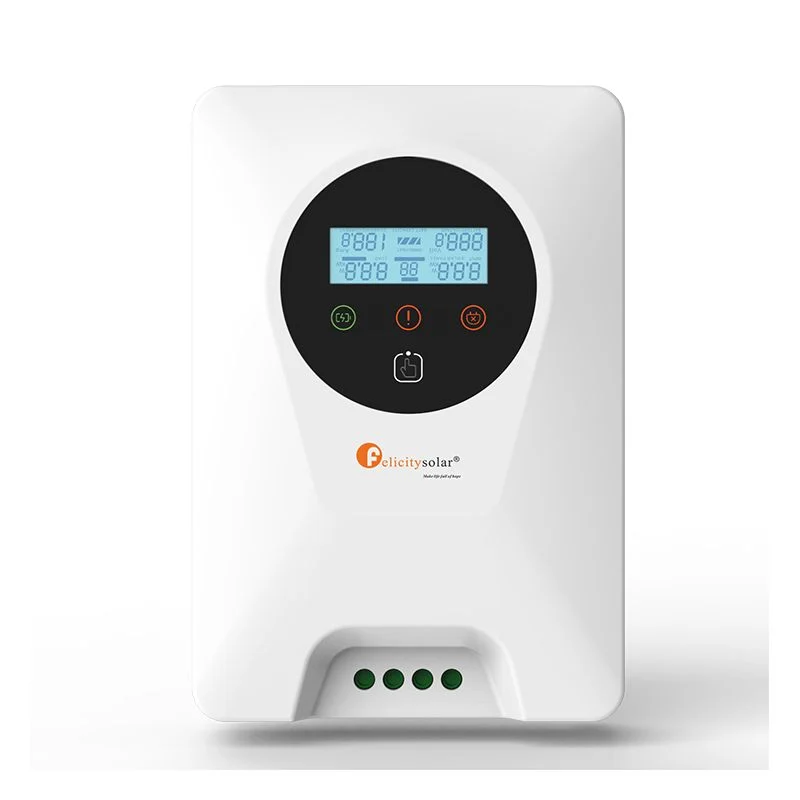
4. Charge Controller Sizing
Match the controller to your solar array’s current:Controller Current (A)=Solar Panel WattageSystem Voltage×0.8 (safety margin)Controller Current (A)=System Voltage×0.8Solar Panel Wattage(safety margin)
Example (200W panel, 12V system):200W12V×0.8≈20.8A→Use a 25A MPPT controller12V×0.8200W≈20.8A→Use a 25A MPPT controller
MPPT controllers are more efficient than PWM in Kenya’s variable sunlight conditions.
5. Inverter Sizing
Select an inverter that handles your total surge (starting) power and continuous load:
- Continuous Power: Sum of all running appliances (e.g., 300W).
- Surge Power: Highest surge from devices like refrigerators (3× running wattage).
Example:
A 1000W inverter can handle a 300W continuous load and a 900W surge.
6. Local Considerations in Kenya
- Solar Irradiation: Northern Kenya has higher irradiation (6+ PSH) than Central regions.
- Component Availability: Opt for locally available deep-cycle batteries (e.g., Trojan, SolarMD) and monocrystalline panels.
- Dust and Heat: Clean panels monthly and use ventilated battery enclosures.
- Regulations: Comply with Kenya’s Energy Act 2019 for off-grid installations.
More details on how to size the solar power system in Kenya
Sample System for a Rural Household
- Appliances: 5 lights (10W), TV (50W), fridge (150W), phone charger (10W).
- Daily Consumption: 800 Wh (adjusted).
- Solar Panels: 2 × 200W panels (400W total).
- Batteries: 4 × 100Ah 12V (400Ah @ 24V system).
- Inverter: 1000W pure sine wave.
- Charge Controller: 30A MPPT.
Final Tips on How To Size Your Off-Grid Solar Power System
- Use solar sizing tools like PVWatts or consult local experts (e.g., SolarAfrica Kenya).
- Prioritize energy-efficient appliances (DC lights, inverter refrigerators).
- Budget for maintenance (battery replacements every 3–5 years).
By accurately sizing your off-grid solar system, you ensure reliability and cost-effectiveness—key to thriving in Kenya’s sunny yet energy-challenged landscape.