
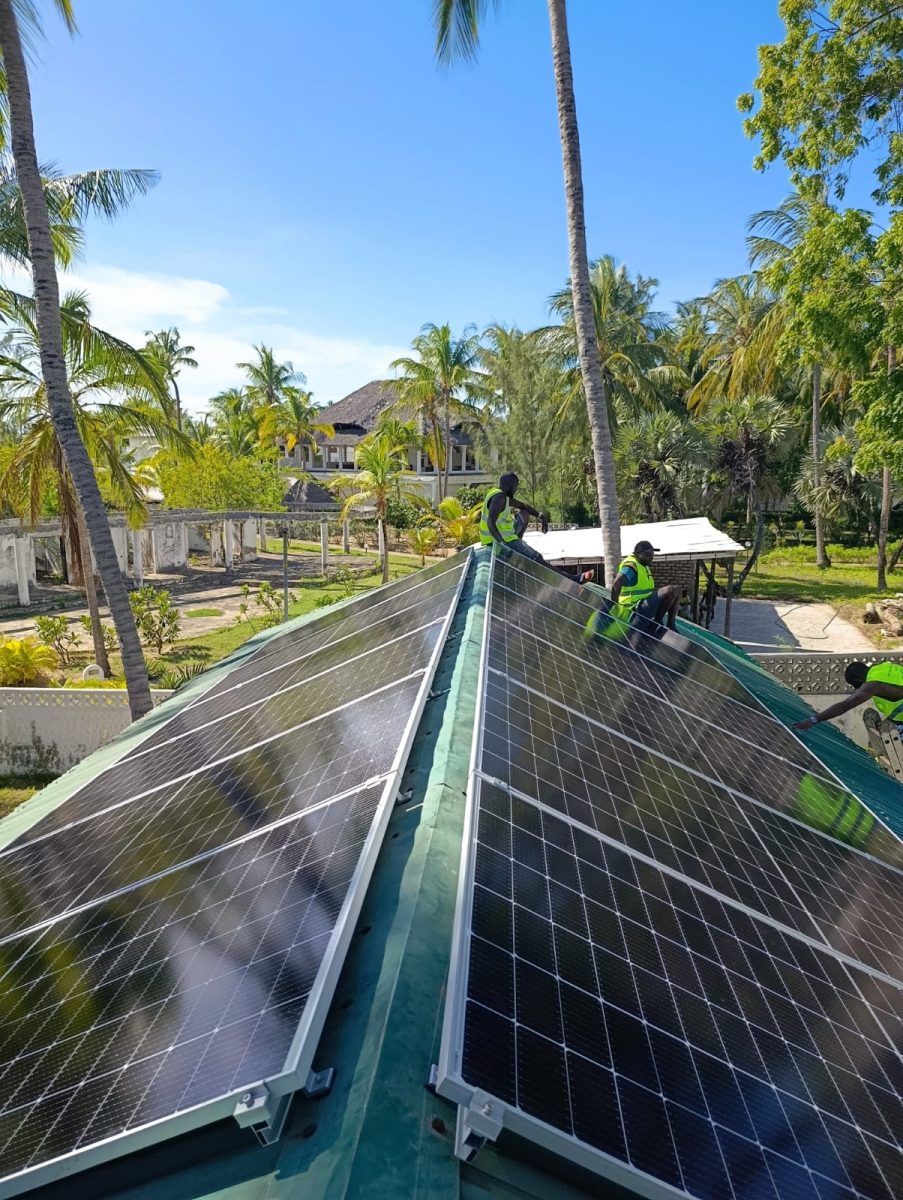
Yes — just at a reduced level, not zero. This is probably the single most common worry we hear from people considering solar, and it’s a fair one to ask before spending money. So let’s walk through exactly what happens on a cloudy or rainy day, in plain terms.
What solar panels actually need to work
Solar panels need daylight, not direct sunshine specifically. They’ll still generate power under cloud cover, just less of it than on a clear day, because some of the sunlight is being scattered and blocked by the clouds before it reaches the panel.
Think of it like this: a clear day is a wide-open tap. A cloudy day is the same tap, turned down — still flowing, just slower.
How much less power, roughly
On a heavily overcast day, panels typically produce somewhere between 10% and 25% of their clear-day output. On a lightly cloudy or hazy day, that figure is much higher, often 50–80% of normal. Light rain with some cloud break actually doesn’t hurt generation nearly as much as people assume — it’s the thick, persistent cloud cover (common during Kenya’s longer rains) that has the biggest effect.
Worried about a specific location — maybe a part of the country that gets heavier rains than Nairobi? Call or WhatsApp us on +254 741 163020 and we’ll talk through what to expect for your area specifically.
This is exactly why a battery matters
Here’s the part that actually solves the problem: a well-sized battery doesn’t care whether today was sunny. It stores power generated on good days and releases it during the bad ones. A properly sized hybrid system accounts for a run of cloudy days as part of its design — that’s not an edge case, it’s a normal part of how we size every system we install, especially for homes in areas that see extended rainy seasons.
This is also one of the reasons we always push back gently on clients who want to size a system to the absolute minimum budget. A system sized too tightly has very little buffer for a stretch of bad weather, and that’s exactly when you’ll notice it.
What about during the actual rainy season (March–May and October–December)?
Kenya’s long and short rains do bring more cloud cover for sustained stretches, and yes, generation drops during these periods compared to the dry season. But it rarely drops to zero for days on end — even during the heaviest rains, there are usually some hours of brighter sky most days, and a properly sized system with a hybrid connection to the grid has the grid as a fallback on the rare day that generation genuinely isn’t enough.
Not sure if your current or planned system is sized with enough buffer for rainy season? Email info@happysolar.co.ke or WhatsApp +254 741 163020 and we’ll check it against your actual usage.
One actual upside of rain
Rain cleans your panels. Dust buildup is one of the main things that gradually reduces panel output over time (we cover this properly in our maintenance guide), and a good rain shower does a lot of that cleaning job for free. So while rainy days individually generate less, they also tend to leave your panels performing better once the sky clears.
Does lightning damage solar panels?
A fair question we get occasionally, and a quick one to answer: a properly installed system includes surge protection and proper earthing specifically to protect against lightning-related power surges, the same way your home’s regular electrical system should be protected. This is part of why installation quality matters — a poorly earthed system is more vulnerable here, which is one more reason to use a licensed installer rather than cut corners on this part of the job.
The bottom line
Solar works in Kenya’s climate, cloudy days and rainy seasons included — it’s been proven across thousands of installations in a country that, overall, has excellent solar resource. What makes the difference between a system that quietly handles a run of grey days and one that leaves you frustrated isn’t the weather. It’s whether the system was sized properly in the first place, with real buffer for exactly this kind of stretch.
Get in touch or call +254 741 163020 for a free site assessment — we’ll size your system with your area’s actual weather patterns in mind, not just a generic average.


