
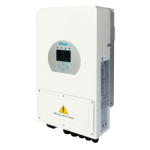

Looking for reliable power backup solutions in Kenya? Whether you need to keep your home running during a power outage or prevent interruptions at your business, choosing the right inverter and battery system can make a big difference.
Power backup systems are useful for homeowners, offices, shops, restaurants, salons, clinics and other businesses that depend on electricity. Depending on your needs, you can choose a simple inverter and battery setup or a complete solar power system with battery storage.
At Happy Solar Systems, we supply solar power equipment, including inverters, batteries, solar panels and accessories. We can help you explore the available options based on your power requirements and budget.
Need a power backup quotation?
Contact Happy Solar Systems on +254 741 163020 or visit www.happysolar.co.ke.
1. What Are Power Backup Solutions?
A power backup system provides electricity when the main power supply is unavailable. It stores energy in a battery and supplies that energy to selected appliances when needed.
Most modern home and business backup systems use an inverter together with a battery. The inverter converts the battery’s DC electricity into AC electricity that ordinary household and office appliances can use.
Some systems also include solar panels, allowing the battery to recharge using sunlight. Hybrid inverters can manage power from the grid, solar panels and batteries, depending on the model and how the system is configured.
The best power backup solution depends on three main things: the appliances you want to run, how long you need them to run, and how much you want to spend.
2. Types of Power Backup Systems Available in Kenya
There is no single backup system that suits every home or business. Here are the main options to consider.
A. Inverter and Battery Backup Systems
An inverter and battery system is a practical option for customers who want backup power without necessarily installing solar panels.
The battery charges from the grid through a compatible inverter or charger. When the main supply fails, the inverter supplies electricity to the connected appliances.
These systems can be used for:
- Lighting and ceiling fans.
- Wi-Fi routers and internet equipment.
- TVs and entertainment systems.
- Laptops, desktop computers and office equipment.
- Selected refrigerators and other appliances, if correctly sized.
The main advantage is that you can get backup power without purchasing a solar panel system immediately. However, the battery will eventually need to be recharged from the grid or another compatible charging source.
B. Hybrid Solar Inverter and Battery Systems
A hybrid solar inverter combines several functions, allowing solar panels, batteries and grid electricity to work together.
During the day, solar panels can supply power to your appliances and charge the battery when sufficient solar energy is available. When solar generation is insufficient, the system can use the battery or grid supply according to its settings and configuration.
A hybrid solar system is worth considering if you want backup power and would also like to reduce your reliance on grid electricity.
The initial cost may be higher than a basic inverter and battery setup because the complete installation may require solar panels, mounting structures, cabling, protection equipment and labour.
C. Solar Power Backup Systems
A solar power backup system uses solar panels, an inverter and batteries to provide electricity for selected appliances or a larger portion of a property’s energy needs.
The size of the system depends on daily electricity consumption, daytime solar availability, battery storage requirements and the power demand of the connected appliances.
Solar power backup is especially worth considering for homes and businesses that experience regular outages or want to make greater use of solar energy.
Keep in mind that solar panels alone do not guarantee backup during a power cut. The system must be designed with suitable backup capability, and the inverter must be configured to operate safely during an outage.
D. Larger Commercial Power Backup Systems
Businesses with higher electricity demands may need larger inverters, additional battery storage or a more advanced energy management system.
Examples include offices with several computers, shops with refrigeration equipment, restaurants, workshops and commercial premises with multiple circuits.
For these applications, it is important to assess both the total running load and the starting current of equipment such as motors, pumps and compressors.
A professional system assessment helps prevent a situation where the inverter switches off because the connected equipment demands more power than it can supply.
Talk to Happy Solar Systems: Call +254 741 163020 or visit happysolar.co.ke to enquire about inverter, battery and solar backup options.
3. How Much Does a Power Backup System Cost in Kenya?
The cost of a power backup system in Kenya depends on the inverter capacity, battery size, battery technology, installation requirements and whether solar panels are included.
A small system designed for lights and internet equipment will have different requirements from a system intended to run a fridge, computers and several other appliances.
When comparing quotations, check whether the price covers the inverter, battery, installation, cabling, circuit protection, changeover equipment and any other required components.
The following table explains the main cost categories. It is a guide to system selection, not a current supplier price list.
| Type of system | Typical application | Main cost considerations |
|---|---|---|
| Small inverter and battery system | Lights, Wi-Fi and a few essential appliances | Inverter capacity and battery size |
| Medium home backup system | Essential household appliances and selected electronics | Higher battery capacity and appliance demand |
| Larger home backup system | More appliances and longer backup periods | Larger inverter, additional batteries and wiring |
| Office or shop backup | Computers, networking equipment, lighting and selected business equipment | Load requirements and business operating hours |
| Hybrid solar backup | Home or business using solar, grid and battery power | Inverter, batteries, panels, mounting and installation |
| Larger commercial backup | Multiple circuits and higher-demand equipment | Detailed load assessment, storage and electrical protection |
Prices can change with product availability, manufacturer, battery capacity and installation requirements. For an accurate quotation, the system should be sized according to your actual requirements.
What affects the price of a backup system?
1. Inverter capacity
The inverter must be capable of supplying the combined power demand of the appliances connected to it. Equipment with motors or compressors may also require additional starting power.
2. Battery capacity
A larger battery can store more energy and may provide longer backup time, provided the connected load remains the same.
3. Battery technology
Lithium batteries are commonly used in modern solar and backup systems because of their useful energy capacity and performance characteristics. Other battery technologies may also suit particular budgets and applications.
4. Solar panels
If you want solar charging, the cost will include appropriately sized panels and the equipment required to install and connect them.
5. Installation and electrical protection
The final cost may include cables, breakers, isolators, changeover arrangements, mounting materials and labour. The exact requirements depend on the property and system design.
Before choosing the cheapest quotation, compare the equipment specifications, usable battery capacity, warranty, installation scope and after-sales support.
4. How Do You Choose the Right Inverter Size?
One of the most important steps in choosing a power backup system is calculating the power required by the appliances you want to run.
An inverter’s power rating and a battery’s energy capacity measure different things. Inverter capacity is usually expressed in watts or kilowatts, while battery energy is expressed in watt-hours or kilowatt-hours.
For example, a 5kWh battery stores a quantity of energy. It does not automatically mean the battery can supply every appliance in a home. The inverter must also be capable of handling the appliances’ combined running power and starting surges.
Consider this illustrative appliance list:
| Appliance | Assumed power | Daily backup use | Energy required |
|---|---|---|---|
| LED lights | 60W total | 5 hours | 300Wh |
| Wi-Fi router | 15W | 8 hours | 120Wh |
| Television | 100W | 4 hours | 400Wh |
| Laptop | 65W | 4 hours | 260Wh |
| Total | 240W combined | — | 1,080Wh (1.08kWh) |
These figures are examples only. Actual appliance consumption varies, and the calculation excludes inverter losses.
In this example, the appliances consume approximately 1.08kWh over the stated periods. The battery would need to supply more than this amount of stored energy to account for conversion losses and any limits on usable battery capacity.
If you also want to run a refrigerator, water pump, microwave or other high-demand appliance, the calculation must be revised.
The inverter’s size should be based on the maximum power demand, while the battery size should be based on the energy required over the desired backup period.
5. How Long Will a 5kWh or 10kWh Battery Last?
This is one of the most common questions customers ask when comparing inverter and battery backup systems.
The answer depends on the power consumption of the connected appliances, the battery’s usable capacity and the efficiency of the inverter.
For a simplified estimate:
Backup time in hours = usable battery energy (kWh) × inverter efficiency ÷ load (kW)
Suppose a 5kWh battery has 4.5kWh of usable energy available for the calculation, and the inverter operates at an assumed efficiency of 90%.
The approximate energy delivered to the appliances would be:
4.5kWh × 0.90 = 4.05kWh.
At a constant 300W load, or 0.3kW, the estimated runtime would be:
4.05kWh ÷ 0.3kW = 13.5 hours.
This is a theoretical estimate, not a guaranteed runtime. Actual performance may be affected by battery settings, temperature, inverter consumption, battery condition and changes in appliance demand.
For comparison, a 10kWh battery with the same assumed usable proportion and efficiency would provide approximately twice the runtime under the same conditions.
The key point is simple: the same battery can last much longer when powering a few essential appliances than when powering an entire house.
If you want an estimate for your home or business, prepare a list of appliances and their power ratings, then specify how many hours of backup you need.
6. Lithium Battery vs Lead-Acid Battery for Power Backup
Battery selection affects the cost, usable energy, maintenance requirements and long-term performance of a backup system.
Lithium batteries, particularly lithium iron phosphate (LiFePO4) models, are popular for many modern solar installations. Lead-acid batteries can still be suitable for some applications, depending on budget and system requirements.
Here are some factors to compare.
Lithium batteries
- Often offer a relatively high usable proportion of their rated capacity.
- Generally support many charge and discharge cycles, depending on the model and operating conditions.
- Commonly include a battery management system to monitor and protect the battery.
- May support communication with compatible hybrid inverters.
- Usually have a higher initial purchase cost than comparable basic lead-acid options.
Lead-acid batteries
- May have a lower initial purchase price.
- Require careful charging and operation within the manufacturer’s recommended discharge limits.
- May require more frequent replacement depending on the battery type, usage and maintenance.
- Can be heavier and bulkier for a comparable amount of usable energy.
When comparing batteries, do not look at price alone. Check the usable capacity, rated cycle life and conditions attached to that rating, warranty, charging requirements and compatibility with your inverter.
A battery with a larger headline capacity is not necessarily the best choice if it is unsuitable for your system or operating conditions.
7. Is a Hybrid Solar Inverter Better Than a Normal Inverter?
The right choice depends on what you want your power backup system to achieve.
A basic inverter and battery setup can be suitable if your main concern is keeping selected appliances running during outages.
A hybrid solar inverter may be a better fit if you also want to connect solar panels, recharge batteries from solar energy and manage multiple power sources.
| Feature | Inverter and battery backup | Hybrid solar inverter |
|---|---|---|
| Backup power | Yes, when correctly configured | Yes, when the system supports backup operation |
| Grid charging | Available on compatible models | Available on compatible models |
| Solar panel connection | Depends on the inverter | Supported by suitable hybrid models |
| Battery storage | Yes | Yes, with compatible batteries |
| Reducing grid electricity use | Limited without another charging source | Possible when suitable solar generation is available |
| System cost | Depends on inverter and battery | May be higher for a complete solar installation |
Not every inverter supports every battery, and not every hybrid inverter can operate in the same way during an outage. Confirm the model specifications, backup output and battery compatibility before buying.
Happy Solar Systems can help you explore suitable equipment options for your requirements.
8. Power Backup Solutions for Offices and Businesses in Kenya
Power interruptions can affect business operations, customer service and productivity. A suitable backup system can help keep essential equipment running until the main supply returns.
Different businesses have different requirements.
Offices
Offices may need backup for computers, routers, network equipment, selected lights and printers. Equipment should be prioritised according to what staff need to continue working.
Shops and retail outlets
Shops may need backup for point-of-sale equipment, routers, security equipment, lighting and selected refrigeration appliances.
Salons and small service businesses
Salons and service businesses may need backup for lighting, computers, routers and selected equipment. Hair dryers, heaters and other high-power devices must be assessed carefully because they can place a substantial demand on the inverter.
Clinics and professional premises
Clinics and other professional facilities should identify critical equipment and assess their backup requirements carefully. Medical equipment may require dedicated, appropriately designed power protection and backup arrangements.
For businesses, it is often sensible to prioritise essential circuits rather than trying to run every appliance during an outage.
A properly designed system can be built around the equipment that matters most to daily operations.
9. Can You Run a Fridge, Water Pump or Washing Machine on Backup Power?
Yes, a suitable system may be able to run these appliances, but their electrical characteristics must be considered before choosing an inverter and battery.
Refrigerators and water pumps often require additional power when their motors start. Washing machines may have changing power demands throughout a cycle, especially when heating water.
Microwaves, kettles, irons and electric cookers can also consume substantial power. Running several of these appliances simultaneously may require a much larger inverter and battery system.
Before requesting a quotation, check the appliance rating label or manual. If you cannot find the rating, share the appliance model with the supplier so the requirements can be assessed.
It is also important to decide which appliances need to run at the same time. A system designed for lights, Wi-Fi and a television may not be suitable for a water pump and refrigerator running together.
10. Can You Install Power Backup Without Solar Panels and Add Solar Later?
Yes, this can be possible.
Some customers prefer to start with an inverter and battery system that charges from the grid. They can then add solar panels later if the equipment supports the proposed upgrade.
However, future expansion should be considered before purchasing the initial system. The inverter must support the intended solar configuration, and the battery must be compatible with the equipment and its charging settings.
If you already know that you want solar panels in the future, tell your supplier before buying. This helps ensure the system is selected with a sensible upgrade path.
Adding solar later can be a practical way to spread the initial cost, but compatibility and the additional installation cost should be checked in advance.
11. What Should You Check Before Buying a Power Backup System?
Before paying for an inverter or battery, take time to confirm the following details.
Inverter capacity: Is it sufficient for the appliances you want to operate, including starting surges?
Battery capacity: Is there enough usable energy to provide your expected backup duration?
Compatibility: Does the battery work with the inverter, including any required communication and charging settings?
Warranty: What is covered, for how long and under what conditions?
Installation: Does the quotation include cabling, electrical protection, changeover equipment and labour where required?
Backup operation: Which circuits will remain powered when the grid goes off? Will the system switch over automatically, if required?
Future expansion: Can the system accommodate additional battery storage or solar panels if your needs change?
After-sales support: Who should you contact if the system develops a fault or needs servicing?
These checks can help you compare quotations fairly and avoid buying equipment that does not meet your actual needs.
12. Why Choose Happy Solar Systems for Power Backup Equipment?
Happy Solar Systems supplies solar power equipment, including inverters, batteries, solar panels and accessories.
Whether you are looking for backup for a few essential household appliances or a larger system for a business, the starting point is understanding your requirements.
When contacting us, share your location, the appliances you want to power, their approximate power ratings and the number of hours of backup you need.
Also let us know whether you want a battery backup system only or a complete solar installation. This information helps us narrow down the options and prepare a more relevant quotation.
You can also browse our solar accessories category to explore available equipment.
13. Get a Power Backup Quotation from Happy Solar Systems
If you are searching for power backup solutions in Kenya, inverter and battery backup, or a solar system for your home or business, Happy Solar Systems can help you explore the available options.
We can discuss your power requirements, the equipment needed and the most suitable way to approach your backup project.
To get started, prepare these details:
- Your location.
- The appliances you need to power.
- The number of hours of backup you want.
- Whether you want battery backup only or solar panels as well.
- Your preferred budget, if you have one.
Contact Happy Solar Systems today.
- Phone / WhatsApp: +254 741 163020
- Email: info@happysolar.co.ke
- Website: www.happysolar.co.ke
Ask us about inverter and battery options for your home or business, and let us help you work towards a practical power backup solution.
Frequently Asked Questions
What is the best power backup system for a home in Kenya?
The best system depends on the appliances you need to power, how long you need backup and your budget. An inverter and battery may be sufficient for essential appliances, while a hybrid solar system may be better if you also want to use solar energy.
How much does a power backup system cost in Kenya?
The cost depends on the inverter size, battery capacity, battery type, installation requirements and whether solar panels are included. Request a quotation based on your actual power requirements rather than choosing a system based on price alone.
How long can a 5kWh battery provide backup?
Runtime depends on usable battery energy, inverter efficiency and the connected load. A battery powering a few lights and a router will generally last longer than one powering several large appliances.
Can an inverter and battery power an entire house?
It may be possible with a sufficiently sized system, but the inverter and battery must be designed for the property’s peak demand and energy consumption. Many homes find it more practical to back up selected essential circuits.
Can I use a lithium battery with my existing inverter?
Possibly. The inverter must support the battery’s voltage, charging requirements and operating settings. Battery communication may also be required, depending on the equipment.
Does a solar backup system work at night?
Yes, if the system has sufficient stored battery energy and is configured to supply the connected loads at night. Solar panels do not generate meaningful electricity in darkness, so the battery or another available power source must supply the energy.
Can solar panels recharge batteries during a power outage?
They can, provided the system is designed to operate in that mode and sufficient sunlight is available. The inverter and solar configuration must support the required operation.
Where can I buy inverters and lithium batteries in Kenya?
You can enquire with Happy Solar Systems through happysolar.co.ke or call +254 741 163020 to ask about available products and suitable power backup options.


