Electricity costs can put pressure on homes, offices, shops, workshops, hotels, farms, and other businesses in Kenya. As a result, more property owners are considering solar energy to reduce their dependence on grid electricity and make better use of the sunshine available throughout the year.
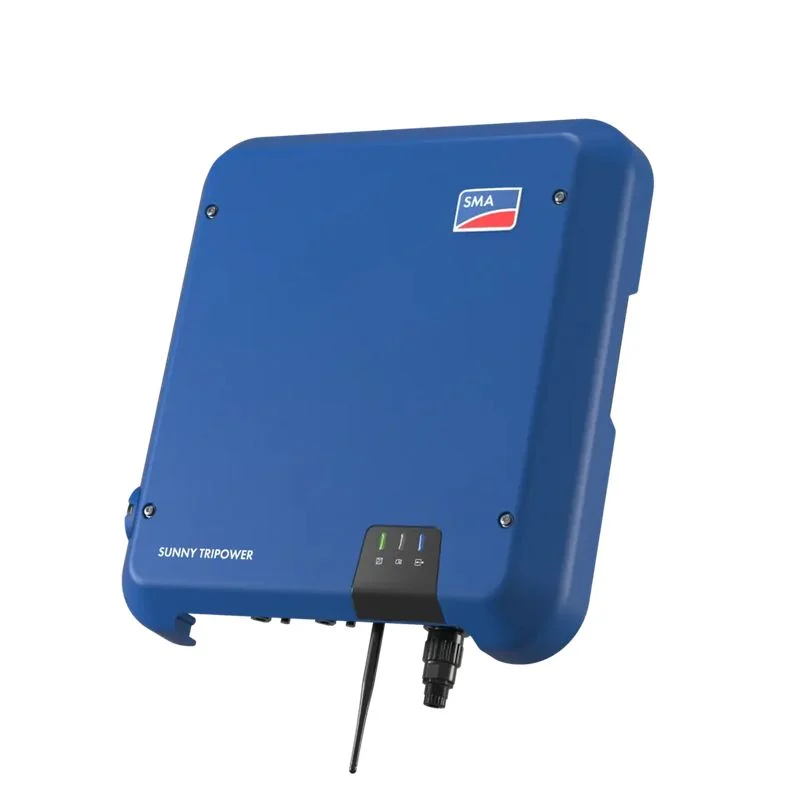
One product worth understanding is the SMA Sunny Tripower STP8000TL 8kW solar inverter. Manufactured by SMA Solar Technology, this three-phase inverter converts electricity generated by solar panels into alternating current (AC) that compatible electrical systems can use.
The Sunny Tripower 8000TL belongs to an established generation of grid-connected solar inverters designed for applications that require three-phase power. Depending on the exact model version, its features can include multiple maximum power point trackers, integrated electrical protection functions, communications facilities, and a high conversion efficiency.
At Happy Solar Systems, choosing the right inverter starts with understanding what you want your solar installation to achieve. Whether you’re planning a commercial rooftop system, a workshop installation, or a large home solar project, matching the inverter to your electrical supply and energy needs is essential.
1. What Is the SMA Sunny Tripower STP8000TL 8kW Solar Inverter?
The SMA Sunny Tripower STP8000TL is a photovoltaic inverter that converts the direct current (DC) generated by solar panels into alternating current (AC) for a compatible electrical installation.
Solar panels generate DC electricity when exposed to sunlight. Most conventional electrical appliances and buildings use AC electricity. The inverter bridges this gap, allowing solar-generated power to serve suitable electrical loads.
Unlike a small inverter intended for a basic single-phase household circuit, the Sunny Tripower STP8000TL is designed for three-phase grid-connected applications. This makes it a potential option for properties with three-phase electricity supplies and suitable daytime energy demand.
What does 8kW mean?
The 8kW rating represents the inverter’s nominal AC power output under its specified operating conditions.
In practical terms, 8kW equals 8,000 watts of AC power. However, this doesn’t mean the inverter will generate 8kW continuously throughout the day.
Actual solar output depends on several factors, including:
- The total capacity of the connected solar panels.
- The intensity of sunlight at a particular time.
- Panel orientation, tilt, and shading.
- Solar panel temperature and system losses.
- Grid conditions and the inverter’s operating limits.
For example, an appropriately designed solar installation may generate substantial power around midday but considerably less in the early morning, late afternoon, or during cloudy weather.
Understanding the model number
When searching for an SMA Sunny Tripower inverter, you may encounter descriptions such as STP8000TL, STP8000TL-10, STP8000TL-20, or STP8.0 models from newer product families.
These names shouldn’t automatically be treated as interchangeable.
Different generations can have different electrical specifications, communications options, monitoring capabilities, and installation requirements. Always use the complete model designation on the inverter’s nameplate to identify the correct documentation.
This is particularly important when buying an older inverter, replacing a damaged unit, or integrating it into an existing solar system.
2. Seven Important Features and Benefits
The SMA Sunny Tripower STP8000TL offers several features that can make it worth considering for an appropriately designed solar project.
2.1 Three-phase power output
One of its main characteristics is three-phase AC output. This suits installations with a compatible three-phase supply, including some commercial premises, workshops, agricultural facilities, and larger homes.
Three-phase systems distribute electrical power across three phases. This can be useful where equipment and loads are designed for three-phase operation.
Nevertheless, an 8kW inverter doesn’t automatically suit every three-phase property. An installer should assess the building’s phase arrangement, electricity demand, grid requirements, and load distribution before recommending the equipment.
2.2 High conversion efficiency
Efficiency measures how much of the DC electricity entering the inverter becomes usable AC electricity.
Some published STP8000TL specifications list a maximum efficiency of approximately 98.1% and a European weighted efficiency of around 97.5%. These are model-specific laboratory figures, not a guarantee of the efficiency achieved in every installation.
Higher conversion efficiency can reduce the electricity lost during conversion. Even so, overall solar system performance also depends on panel quality, cable sizing, shading, temperature, installation workmanship, and other factors.
2.3 Multiple maximum power point trackers
Certain STP8000TL versions feature two independent maximum power point trackers, commonly called MPPTs.
An MPPT helps the inverter find a suitable operating voltage and current for the connected solar panel array so that it can extract available power efficiently.
Multiple trackers can offer design flexibility when compatible panel groups experience different conditions. For example, one section of a roof might face a different direction from another.
However, the number of trackers and permitted string arrangements must be verified against the exact model’s technical documentation. Different versions may have different input current limits and string configurations.
2.4 Integrated monitoring and protection functions
Depending on the model version, the Sunny Tripower range includes electrical monitoring and protection functions intended to support safe, controlled operation.
Published documentation describes features such as grid monitoring, ground-fault monitoring, reverse-polarity protection, and an integrated DC disconnection facility on applicable versions.
These functions don’t remove the need for proper installation. Correct circuit protection, earthing, surge protection, isolation, and compliance with applicable electrical requirements remain essential.
2.5 Communication and performance monitoring
Some versions offer communications features, including Bluetooth and SMA Webconnect or related monitoring arrangements, depending on the product generation and configuration.
Monitoring can help an owner or technician review solar production, identify abnormal operation, and investigate certain faults.
Before purchasing a used unit, check whether its communications hardware works and whether the intended monitoring service or interface remains supported.
2.6 Outdoor installation suitability
Published specifications for certain STP8000TL versions list an IP65 enclosure rating for the inverter electronics and IP54 for the connection area.
These ratings shouldn’t be interpreted as permission to mount the inverter anywhere outdoors without protection.
A suitable location should allow the required ventilation, provide safe electrical access, reduce unnecessary exposure to harsh weather, and meet the manufacturer’s mounting clearances.
2.7 A recognised manufacturer
SMA is an established name in the solar inverter market. For customers, manufacturer documentation can be useful when planning a system, checking compatibility, or arranging technical service.
However, a recognised brand doesn’t automatically make an older inverter the best purchase. Its operating history, component condition, repairability, warranty, and availability of suitable replacement parts all matter.
Our recommendation: Consider the STP8000TL when its specifications fit your project, but compare its overall value and support arrangements with those of currently supported inverter models.
3. Technical Specifications of the SMA Sunny Tripower STP8000TL
Before buying the SMA Sunny Tripower STP8000TL 8kW solar inverter in Kenya, it’s worth reviewing its main technical characteristics.
The table below summarises specifications published for the STP8000TL family. Exact figures should be confirmed against the nameplate and the official documentation for the specific unit.
| Specification | Published specification for applicable versions |
|---|---|
| Manufacturer | SMA Solar Technology |
| Product family | Sunny Tripower 8000TL |
| Rated AC output | 8,000 W |
| Maximum DC input voltage | Up to 1,000 V |
| Maximum DC power | Approximately 8,200 W for certain versions |
| MPPT voltage range | Varies by version; examples include 320–800 V |
| Number of MPPTs | Two on applicable versions |
| AC output | Three-phase |
| Nominal grid voltage | 230/400 V on applicable versions |
| Maximum efficiency | Approximately 98% on certain versions |
| Communications | Varies by model and configuration |
| Battery operation | Not a stand-alone battery-hybrid function; verify the exact system design |
| Product generation | Older STP8000TL family |
Why the exact model suffix matters
The table isn’t a substitute for the inverter’s technical datasheet. Different STP8000TL versions may have different input currents, MPPT voltage limits, string connections, and other specifications.
This matters because the solar panel array must operate within the inverter’s permitted voltage and current ranges. Incorrect string design can damage equipment or prevent the system from operating properly.
For customers buying an older inverter, we recommend requesting:
- A clear photograph of the model and serial-number label.
- The manufacturer’s datasheet for that exact version.
- Confirmation of the inverter’s operating condition.
- Details of the warranty and available technical support.
- An assessment of compatibility with the proposed solar panels and grid connection.
These simple checks can help prevent expensive surprises after installation.
4. How the SMA Sunny Tripower Works in a Solar Power System
A solar inverter is one part of a complete photovoltaic installation. To understand its value, it helps to see how electricity moves through the system.
Step 1: Solar panels generate DC electricity
Solar panels capture sunlight and produce direct current. Their output changes throughout the day, depending on sunlight intensity, temperature, shading, and other environmental conditions.
Step 2: The inverter converts DC into AC
The Sunny Tripower converts the solar array’s DC electricity into grid-compatible AC electricity for a suitable three-phase installation.
Its control system adjusts the operating point of the solar panels to help extract available power, within the inverter’s design limits.
Step 3: The building uses the available solar electricity
Where the system is properly designed and connected, solar-generated electricity can supply compatible appliances, lighting, office equipment, pumps, machinery, and other loads.
If the building is using less electricity than the solar system produces, the treatment of the surplus depends on the installation and the applicable grid arrangements.
For a conventional grid-connected inverter, the utility grid is an essential part of normal operation.
Step 4: The grid supplies any shortfall
When solar production is lower than demand, a grid-connected installation can draw the remaining electricity from the utility supply, provided the system is configured and connected accordingly.
For example, if a business needs more power than the panels are producing, the grid can supply the difference in a standard grid-connected arrangement.
Step 5: The system monitors operating conditions
The inverter monitors electrical parameters and can disconnect from the grid under certain fault or abnormal-grid conditions.
A conventional grid-following inverter generally does not provide backup power during a grid outage. It must not be assumed to keep the building running when the utility supply fails.
If backup power is important, a suitably designed hybrid or battery-based system may be more appropriate.
5. Choosing Solar Panels for an 8kW Inverter
Selecting the right solar panel capacity is a key part of designing an efficient installation. An 8kW inverter doesn’t automatically require exactly 8kW of panels, but the panel array must remain within the inverter’s permitted DC input limits.
How many solar panels do you need?
The number depends on the rated wattage of the panels.
For illustration, a proposed array using 550W panels would require approximately 15 panels to reach 8.25kWp:
15 × 550W = 8,250W, or 8.25kWp.
This is an arithmetic example, not an approved design for the STP8000TL. An array of that size must only be used if its total power, open-circuit voltage, operating voltage, current, and string arrangement meet the exact inverter model’s limits.
An installer should calculate the maximum string voltage under the relevant temperature conditions and check the maximum permissible current for each MPPT.
Factors that affect solar panel sizing
The following factors should be assessed before the panels are purchased:
- Panel wattage: Higher-wattage panels can reduce the number of modules required, but their electrical characteristics must be compatible with the inverter.
- Roof orientation: Panels facing different directions may produce different amounts of electricity throughout the day.
- Shading: Trees, buildings, water tanks, and other obstacles can reduce output.
- Available roof space: The roof must accommodate the planned panel layout and safe access.
- Daily energy demand: The system should be designed around the building’s electricity consumption, not just the inverter’s rated power.
- Future expansion: If the customer plans to add more panels or equipment, the design should account for that from the beginning.
Is an 8kW inverter enough for your property?
The answer depends on when and how electricity is used.
A business that operates heavy machinery during the day may benefit from a properly sized solar installation. A home with high evening consumption, on the other hand, may need battery storage or another suitable energy-management arrangement to make better use of daytime solar generation.
It’s also important to distinguish power from energy. Kilowatts (kW) measure the rate of electricity use or production, while kilowatt-hours (kWh) measure energy consumed or generated over time.
A solar system’s expected daily energy production cannot be determined from the 8kW inverter rating alone. The panel capacity, local solar conditions, losses, and operating constraints must also be considered.
6. Suitable Applications in Kenya
The SMA Sunny Tripower STP8000TL may suit several types of properties where a three-phase grid-connected solar installation is appropriate.
Commercial buildings and offices
Offices often use electricity for computers, lighting, printers, networking equipment, air conditioning, and other services. Where these loads operate during daylight hours, solar generation can help offset some grid electricity consumption.
The actual savings depend on the building’s demand profile and the amount of solar energy used on-site.
Workshops and light industrial facilities
Workshops may operate machinery, compressors, pumps, and other equipment that benefits from a three-phase supply. However, starting currents, motor loads, and power quality requirements must be assessed before selecting an inverter.
An 8kW inverter shouldn’t be assumed to start or operate every machine simply because the machine’s stated rating appears close to 8kW.
Hotels, lodges, and hospitality businesses
Hotels and lodges may use solar energy to support daytime electricity demand, including office equipment, refrigeration, lighting, and suitable building services.
For properties with significant evening or overnight consumption, the solar design should be reviewed alongside the site’s backup power requirements.
Farms and agricultural facilities
Solar power can support suitable daytime loads such as water pumps, irrigation controls, and farm buildings.
Pump motor requirements deserve particular attention. The starting current and operating characteristics of a motor may differ substantially from its normal running demand.
Larger homes
Some larger homes in Kenya have three-phase electricity supplies and substantial daytime demand. In such cases, an 8kW three-phase inverter may be worth assessing as part of a grid-connected solar system.
However, a conventional STP8000TL isn’t a direct substitute for a hybrid inverter when the homeowner needs battery charging and automatic backup during grid outages.
7. Installation Requirements and Safety Considerations
Correct installation is essential to the safety, performance, and service life of any solar power system.
The SMA Sunny Tripower STP8000TL must be installed in accordance with the manufacturer’s instructions and applicable electrical requirements.
Selecting a suitable installation location
The installation site should provide:
- A strong mounting surface capable of supporting the equipment.
- Adequate ventilation and the clearances specified by the manufacturer.
- Protection against unsuitable environmental exposure.
- Safe access for inspection and maintenance.
- Appropriate separation from combustible materials and other hazards.
- A suitable route for AC, DC, communications, and earthing conductors.
The inverter’s weight and dimensions should also be checked before mounting. Some published STP8000TL documentation lists a weight of approximately 59–65kg, depending on the version.
Electrical protection and earthing
A complete installation needs correctly selected protective devices, suitable conductors, proper earthing, and appropriate isolation arrangements.
Surge protection should be considered in accordance with the design, site exposure, applicable standards, and the manufacturer’s instructions.
Solar panels can produce dangerous DC voltages whenever they’re exposed to light. For this reason, installation, testing, and repairs should be undertaken by qualified personnel following the correct isolation and safety procedures.
Commissioning and documentation
Before handover, the installer should verify that the solar array, inverter, grid connection, protective devices, and monitoring arrangements are operating correctly.
Customers should request the system design, installation documentation, warranty information, and maintenance guidance.
A well-documented installation makes it easier to identify the correct equipment and obtain technical support later.
8. Can the SMA Sunny Tripower STP8000TL Work with Solar Batteries?
This is an important question for Kenyan customers who experience frequent power interruptions or want to store daytime solar energy for evening use.
The conventional Sunny Tripower STP8000TL is a grid-connected photovoltaic inverter. It isn’t the same product as an SMA hybrid inverter or a dedicated battery inverter. Its standard PV inputs should not be treated as battery inputs.
What does this mean for a customer?
If your main goal is to reduce daytime electricity bills, a suitable grid-connected installation may meet your needs.
If you want to store excess solar energy in batteries, you may need a compatible battery inverter or another appropriately designed storage arrangement.
If you want the building to continue receiving power when the grid fails, the complete system must have a suitable backup function. This includes the correct inverter equipment, battery system, protection, controls, and backup-load arrangement.
Before choosing a battery, ask the installer to confirm the proposed equipment’s compatibility and explain how the system will behave during a grid outage.
Don’t purchase batteries on the assumption that they’ll connect directly to the STP8000TL. Confirm the full system architecture first.
9. Monitoring Solar Production and System Performance
Monitoring is useful because it helps property owners understand how much solar electricity their installation produces and whether the system is operating as expected.
Depending on the inverter version and available communications equipment, monitoring may be available through supported SMA interfaces or services.
What should you monitor?
Useful performance indicators include:
- Daily and monthly solar energy production.
- Current inverter operating status.
- Fault messages and grid disconnection events.
- Changes in production compared with similar weather conditions.
- Differences between expected output and actual performance.
A drop in solar production doesn’t always mean the inverter is faulty. Dust, shading, damaged wiring, panel problems, grid conditions, or seasonal changes can also affect performance.
If an inverter displays a fault, record the exact error message and contact a qualified technician. Avoid opening the inverter or attempting electrical repairs yourself.
For older equipment, check whether the communications interface works and whether the intended monitoring service remains available for that specific model.
10. Maintenance and Troubleshooting the SMA Sunny Tripower
Solar inverters require less routine attention than many mechanical systems, but periodic inspection remains important.
Recommended maintenance checks
A qualified technician should inspect the system at intervals appropriate to the site and manufacturer’s guidance. Checks may include:
- Reviewing inverter status and recorded fault messages.
- Inspecting accessible cables, conduits, and electrical enclosures.
- Checking the mounting arrangement for damage or deterioration.
- Examining the solar array for shading, soiling, and visible damage.
- Inspecting protective devices and earthing arrangements.
- Reviewing production records for unexplained changes.
Cleaning should be carried out safely and in accordance with the panel manufacturer’s recommendations. Electrical equipment must not be opened or cleaned internally by unqualified personnel.
Common problems and what they may mean
| Symptom | Possible explanation | Recommended response |
|---|---|---|
| No solar production | Low sunlight, isolation, or an electrical fault | Check the displayed status and contact a technician if needed |
| Unexpectedly low output | Shading, soiling, panel faults, or system losses | Arrange a solar performance inspection |
| Grid fault message | Grid voltage or frequency outside permitted conditions | Record the message and have the grid connection assessed |
| Inverter repeatedly disconnects | Grid conditions, wiring, configuration, or equipment faults | Request a qualified technical assessment |
| Monitoring unavailable | Communications settings, network problems, or unsupported equipment | Check the manual for the exact model and investigate the communications system |
These are possible causes, not definitive diagnoses. The correct response depends on the exact fault code, operating conditions, and model version.
What if the inverter is an older unit?
If you’re considering a used STP8000TL, its history matters. Ask whether it has been operating continuously, whether it has been repaired, and whether the seller can demonstrate normal operation.
An older inverter may still be useful, but its purchase price should be considered alongside the expected service life, warranty, repair options, and potential replacement costs.
11. SMA Sunny Tripower STP8000TL vs Other Solar Inverters
The best inverter depends on your energy needs, electrical supply, budget, and backup requirements. Comparing products by brand name alone can lead to the wrong choice.
| Feature | SMA Sunny Tripower STP8000TL | Modern grid-connected inverter | Hybrid inverter |
|---|---|---|---|
| Main purpose | Solar generation for a compatible grid connection | Solar generation for a compatible grid connection | Solar generation plus supported battery functions |
| Three-phase options | Yes, for the applicable model | Depends on the model | Depends on the model |
| Battery connection | Not a direct standard battery-input function | Depends on the design | Supported when compatible |
| Backup during a grid outage | Not normally provided by the conventional grid-following unit alone | Depends on the complete system | Available on suitable models and configurations |
| Monitoring | Depends on model and communications support | Varies by manufacturer | Varies by manufacturer |
| Buying considerations | Condition, exact version, support, and compatibility | Warranty, efficiency, support, and specifications | Battery compatibility, backup capability, and total system cost |
When should you consider the STP8000TL?
It may be worth considering when you need an 8kW three-phase grid-connected inverter and the exact model fits the solar array and electrical installation.
It may be less suitable if you require a modern integrated hybrid system, straightforward battery integration, or a product with readily available current-generation support.
Why compare total system cost?
The lowest inverter purchase price doesn’t always mean the lowest overall cost.
A fair comparison should include installation, protection, wiring, monitoring, warranty, maintenance, and any additional equipment required to achieve your objectives.
For older products, also consider the cost and availability of repairs or replacement parts.
12. SMA Sunny Tripower STP8000TL Price in Kenya and Buying Advice
The price of an SMA Sunny Tripower STP8000TL in Kenya depends on availability, model version, condition, warranty, and the seller’s supply arrangements.
Because this is an older product family, customers may encounter used units, remaining stock, or equipment sourced through different channels. These products shouldn’t automatically be priced or evaluated as though they’re identical to a new inverter with current manufacturer support.
What affects the price?
The main considerations include:
- Condition: New, refurbished, and used equipment may have different prices and risks.
- Model version: The full designation determines the relevant specifications.
- Warranty: Check whether the warranty is valid and who will honour it.
- Availability of service: Consider access to suitable technical assistance and spare parts.
- Installation requirements: The cost of the complete system can be significantly higher than the inverter price alone.
- System compatibility: Changes to the panel array, protection, or wiring may affect the total project cost.
Get a quotation for your project
At Happy Solar Systems, we recommend starting with your property’s electricity requirements and the type of solar system you want to install.
Before requesting a quotation, prepare the following information:
- Whether the property has a single-phase or three-phase supply.
- Your approximate electricity consumption or recent power bills.
- The main equipment you intend to run on solar.
- Whether you need battery storage or backup power.
- Your preferred installation location.
- Any existing solar panels, inverters, or batteries.
With this information, a solar professional can assess whether the STP8000TL is suitable or whether a newer alternative would provide better value.
You can also review the official SMA Solar Technology Sunny Tripower operating manual to check product documentation for applicable model versions.
13. Frequently Asked Questions About the SMA Sunny Tripower STP8000TL
1. What is the SMA Sunny Tripower STP8000TL 8kW solar inverter?
It’s a three-phase photovoltaic inverter designed to convert DC electricity from solar panels into AC electricity for a compatible grid-connected installation. Its suitability depends on the exact model version and the electrical requirements of the property.
2. How much power can the SMA Sunny Tripower STP8000TL produce?
Applicable versions have a rated AC output of 8,000 watts, equivalent to 8kW. Actual output varies with sunlight, panel capacity, temperature, shading, and operating conditions.
3. Is the SMA Sunny Tripower STP8000TL suitable for homes in Kenya?
It may be suitable for larger homes with a compatible three-phase electrical supply and appropriate daytime solar demand. A professional assessment is necessary to confirm that the inverter matches the property’s electrical installation and energy needs.
4. Can the STP8000TL provide electricity during a Kenya Power blackout?
The conventional STP8000TL is a grid-following solar inverter and normally shuts down during a grid outage. It shouldn’t be relied upon for backup power unless the complete installation includes separately designed, compatible equipment that provides this function.
5. Can I connect a lithium battery directly to the STP8000TL?
Don’t assume that you can. The conventional STP8000TL is a photovoltaic inverter, not a standard battery-hybrid inverter. Battery storage requires a compatible system design and suitable battery-inverter equipment.
6. How many solar panels are required for an 8kW SMA inverter?
The number depends on the wattage and electrical characteristics of the panels. For example, 15 panels rated at 550W each would total 8.25kWp. However, the array must be checked against the exact inverter’s maximum DC power, voltage, current, and string requirements before installation.
7. What is the efficiency of the SMA Sunny Tripower STP8000TL?
Some published versions have a maximum efficiency of approximately 98.1%, with a European weighted efficiency of around 97.5%. The exact figures vary by version, and real-world performance depends on operating conditions.
8. Is the SMA Sunny Tripower STP8000TL still worth buying?
It may be worth considering if the unit is in good condition, the price is reasonable, and its specifications meet your requirements. Since it’s an older product family, verify the warranty, service options, communications support, and availability of replacement parts before purchasing.
9. How do I know whether my solar panels are compatible?
Check the panel specifications against the inverter’s technical documentation. An installer should verify the maximum string voltage, operating voltage, current limits, MPPT configuration, and total DC array power.
10. Where can I get advice on buying an SMA solar inverter in Kenya?
Contact Happy Solar Systems to discuss your proposed solar installation, inverter requirements, and available alternatives. Provide your electricity consumption, phase supply, and backup requirements so the right equipment can be recommended.
14. Conclusion: Is the SMA Sunny Tripower STP8000TL Right for You?
The SMA Sunny Tripower STP8000TL 8kW solar inverter remains a product worth understanding when planning a suitable three-phase grid-connected solar installation in Kenya.
Its key attractions include an 8kW rated AC output, high published conversion efficiency on applicable versions, and solar-array management and protection features. However, it’s essential to distinguish the older STP8000TL family from newer SMA products and hybrid inverters.
Before purchasing, confirm the exact model, condition, solar panel compatibility, installation requirements, warranty, and availability of technical support. If your priority is backup electricity during grid outages or integrated battery storage, compare the STP8000TL with suitable hybrid systems before making a decision.
Planning a solar installation in Kenya?
Happy Solar Systems can help you assess your energy needs, compare inverter options, and plan a suitable solar power system for your home, office, business, or farm.
Contact our team on +254 741 163020 or visit Happy Solar Systems to discuss your requirements.
15. External References and Further Reading
For additional technical information, consult these resources:
- SMA Sunny Tripower operating manual — manufacturer documentation covering installation, operation, configuration, and technical specifications
- SMA Sunny Tripower technical specifications — technical information for applicable inverter versions.
- Energy and Petroleum Regulatory Authority (EPRA) — information on renewable energy regulation and solar photovoltaic licensing in Kenya.