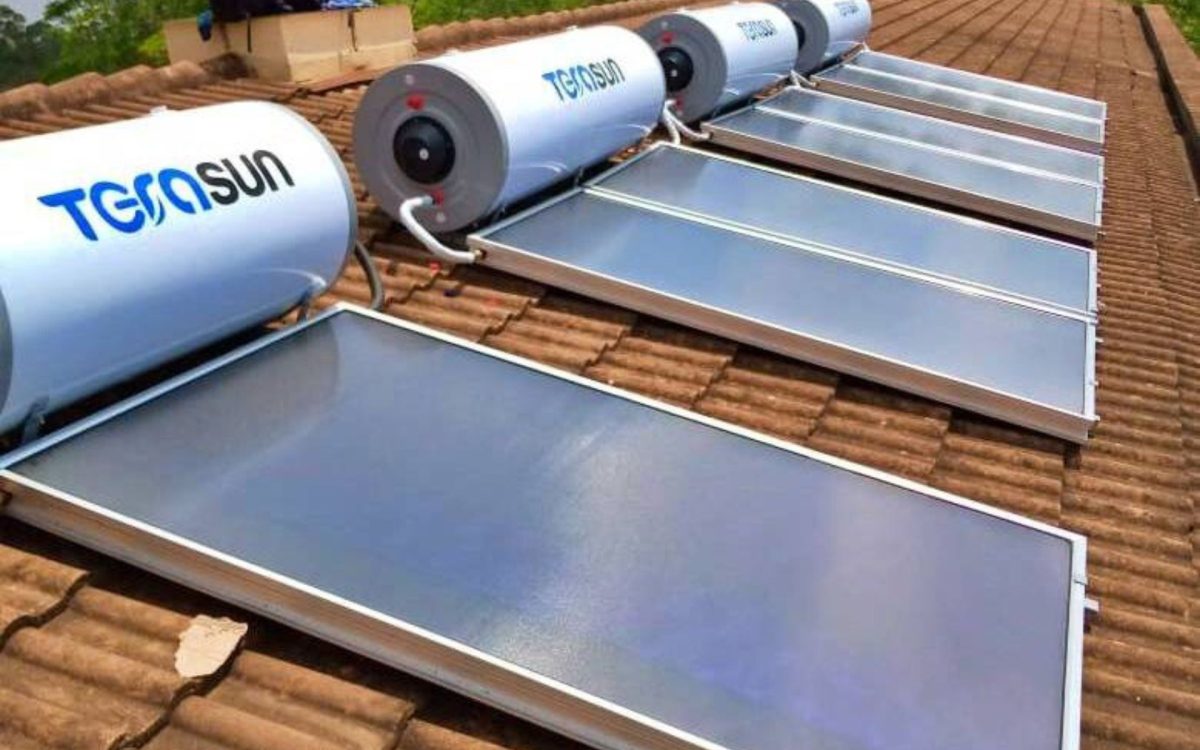
Water heating is one of the biggest, most consistent electricity costs in a Kenyan household — an electric geyser running daily adds up to a meaningful chunk of your monthly KPLC bill, month after month, for something the sun could be doing for free. Solar water heating is one of the fastest-paying-back solar investments available, precisely because hot water is a genuinely predictable, daily need rather than an occasional one.
How Solar Water Heating Actually Works
A solar water heating system uses roof-mounted solar collectors — either flat-plate panels or evacuated (vacuum) tubes — to absorb heat from sunlight and transfer it directly into water stored in an insulated tank, ready for use in showers, kitchens and laundry. Unlike solar electricity systems, which convert sunlight to electrical power, solar water heaters convert sunlight to heat directly, which is a considerably more efficient process for the specific job of heating water — meaning a comparatively modest solar water heating setup can meet a household’s full daily hot water needs.
Most systems include a backup electric element within the tank for cloudy stretches or unusually high demand days, so hot water supply isn’t entirely weather-dependent even without a battery-backed electricity system behind it.
Curious what a system would cost for your household? Call or WhatsApp us on +254 741 163020 and we’ll size a system to your household’s actual hot water usage.
Solar Water Heater vs Electric Geyser: The Real Cost Difference
An electric geyser is one of the most expensive individual appliances to run in a typical Kenyan home, given how much energy is required to heat water and how often it cycles to maintain temperature throughout the day. A solar water heater eliminates the vast majority of that electricity draw, since the sun does the actual heating work — the backup electric element only activates during genuinely low-sun periods, dramatically reducing how often it needs to run compared to a standard electric geyser working around the clock.
Over a typical household’s usage pattern, this translates into one of the more noticeable line-item reductions on a KPLC bill available from any single household upgrade — hot water is used daily by nearly every household, which is exactly why the savings compound so consistently compared to less frequently used appliances.
Flat-Plate vs Evacuated Tube Collectors
Flat-plate collectors are a simpler, more robust design — a dark absorber plate under glass, heating water flowing through attached pipes. They perform reliably in Kenya’s generally strong sun conditions and tend to be the more affordable option. Evacuated tube collectors use a series of vacuum-sealed glass tubes, which insulate more effectively and perform somewhat better in cooler or overcast conditions, at a moderately higher cost. For most of Kenya’s climate, flat-plate systems perform very well and represent the more cost-effective standard choice; evacuated tubes are worth considering specifically for higher-altitude, cooler regions where ambient temperature affects heat retention more.
What Solar Water Heating Costs in Kenya
Cost depends primarily on tank capacity (matched to household size and hot water demand) and collector type, with flat-plate systems generally offering the more accessible entry point and evacuated tube systems commanding a moderate premium for their improved cold-weather performance. As with any solar investment, the upfront cost is offset by the ongoing electricity savings — for a household currently running an electric geyser daily, the payback period is often considerably faster than for a full solar electricity system, precisely because water heating is such a consistent, predictable daily load.
Is Solar Water Heating Worth It If I Already Have Solar Electricity?
Yes, and for a specific reason worth understanding: heating water electrically, even from your own solar-generated electricity, is a relatively inefficient use of that power compared to a dedicated solar thermal water heater, which converts sunlight to heat directly rather than converting sunlight to electricity and then converting that electricity back into heat. For households with both solar electricity and solar water heating, the electricity system can focus on lighting, appliances and backup power, while the water heating system handles hot water far more efficiently on its own — the two systems complement rather than duplicate each other.
Maintenance and Lifespan
Solar water heaters are genuinely low-maintenance systems. Periodic checks of the tank’s insulation and backup element, keeping collector glass reasonably free of dust for optimal absorption, and occasional professional servicing of the plumbing and thermostat components are generally all that’s needed. A well-installed system typically delivers many years of reliable service, with tank and collector components rated for long working lifespans well beyond a typical electric geyser’s usable life.
Frequently Asked Questions
Does solar water heating work during Kenya’s cloudy or rainy seasons? Yes — the backup electric element ensures consistent hot water supply even during lower-sun periods, though the system still substantially reduces electricity use compared to a full-time electric geyser even on cloudier days.
How big a tank do I need for my household? This depends on household size and hot water usage patterns (number of bathrooms, typical shower frequency, whether you run a washing machine on hot cycles) — a proper sizing conversation avoids under- or over-specifying tank capacity.
Can solar water heating be added to an existing electric geyser setup? In many cases yes, with the solar system working alongside or replacing the existing geyser depending on your specific plumbing and roof layout — worth a site assessment to confirm the best configuration for your property.
How quickly does a solar water heater pay for itself compared to an electric geyser? Given how consistently households use hot water daily, payback tends to be faster than for many other solar investments — an exact figure depends on your current electric geyser usage and local electricity rates.
Get a Solar Water Heating System Sized for Your Household
Book a free site assessment: Call or WhatsApp +254 741 163020 or email info@happysolar.co.ke Browse our full range: Happy Solar Systems shop
Stop paying to heat water with electricity when the sun will do it for free — sized to your household’s actual usage, not a generic tank size.