
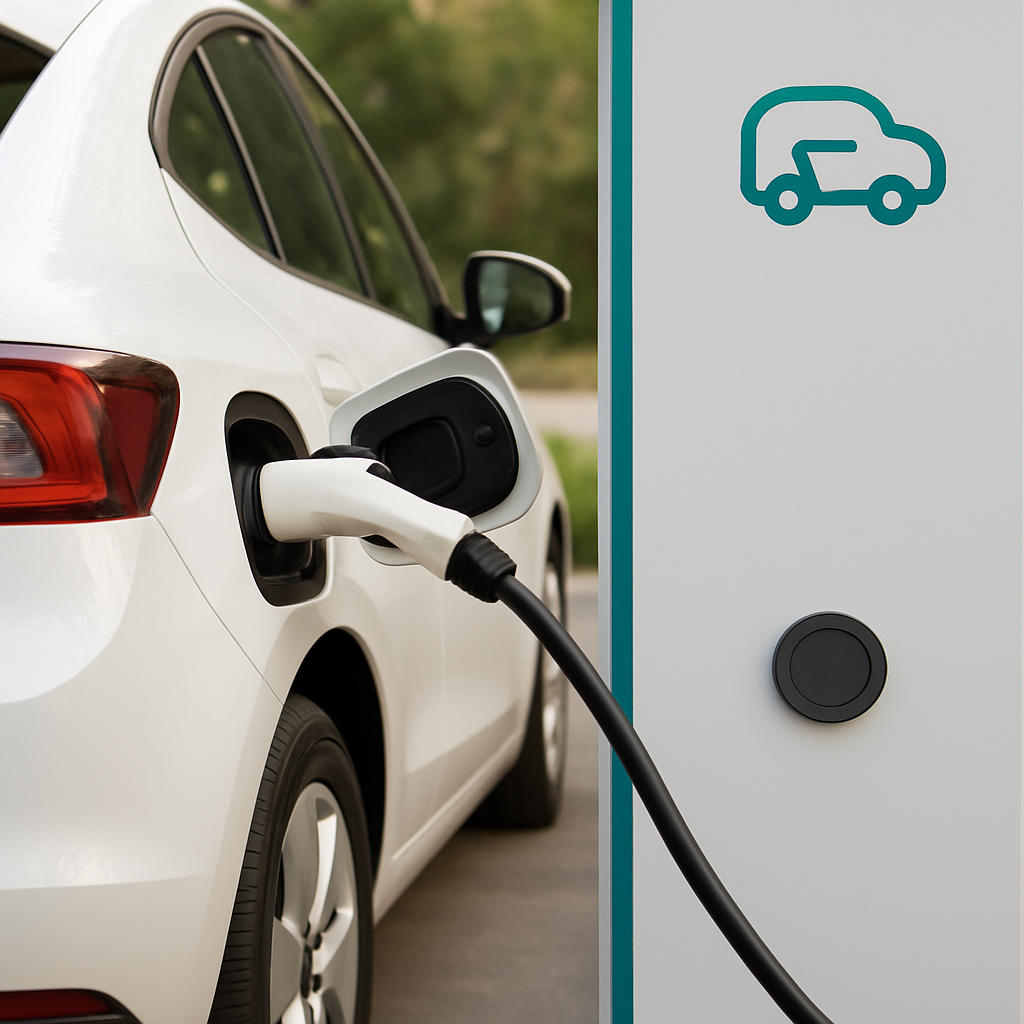
Electric vehicle ownership is still a relatively new conversation in Kenya, but it’s growing quickly enough that Kenya Power has rolled out a dedicated e-mobility tariff specifically for EV charging — which tells you the utility expects meaningful growth in home charging demand. If you’re an EV owner, or considering becoming one, here’s how solar fits into that picture.
KPLC’s e-mobility tariff, briefly
Kenya Power now offers a specific discounted tariff for customers metered for EV charging — a lower per-unit rate during off-peak hours compared to peak hours, specifically to encourage charging at times that ease pressure on the grid. It’s a genuinely useful option if you’re charging primarily overnight and can get metered under this category.
Curious whether the e-mobility tariff makes sense for your charging pattern, and how it compares to charging from a solar-backed system? Call or WhatsApp us on +254 741 163020 and we’ll talk through it.
Where solar fits into the picture
Here’s the interesting overlap: EV charging is one of the single largest, most predictable loads you can add to a home’s electricity demand — often larger than everything else in the house combined over a full charge cycle. That makes it exactly the kind of load worth evaluating against solar generation, because the savings on a large, recurring load compound meaningfully over time.
Daytime charging and solar line up well, if your schedule allows it — charging while you’re home during the day (weekends, or if you work from home) means your EV can draw directly from your panels’ real-time generation, displacing grid electricity entirely for that charge.
Overnight charging needs either battery storage or the grid. Most EV owners charge overnight for convenience, which means without battery storage, that charge comes from the grid (ideally at the lower e-mobility off-peak rate) rather than directly from solar. A hybrid system with sufficient battery capacity can shift some of that overnight charging onto stored solar power instead, though this requires a meaningfully larger battery than a standard home backup setup, given how much energy a full EV charge actually requires.
Sizing a system around EV charging
This is genuinely different from sizing a standard home solar system, because an EV charge adds a large, somewhat flexible load on top of your regular household usage. The key questions we’d ask: how often are you charging at home versus elsewhere, what’s your typical daily driving distance (which determines how much charge you actually need, rather than assuming a full charge every time), and is your charging schedule flexible enough to shift toward daytime hours where solar can cover it directly?
Thinking about adding solar alongside an EV, or already have both and want to optimise how they work together? Email info@happysolar.co.ke or WhatsApp +254 741 163020 with your vehicle and typical driving pattern, and we’ll help you size it properly.
A realistic way to think about it
If your schedule allows flexible or partial daytime charging, solar can meaningfully offset your EV’s electricity cost, on top of the savings it already provides for your regular household usage. If your charging is strictly overnight and daytime-shifting isn’t practical, the e-mobility tariff on its own is still a genuine cost saving over standard domestic rates, and solar continues to deliver its usual value for the rest of your home’s daytime and evening usage.
Either way, the two aren’t competing options — they’re complementary, and most EV owners we’ve spoken with end up using both: the e-mobility tariff for convenient overnight charging, and solar to offset as much of their daytime household and vehicle charging load as their schedule allows.
Where to start
Get in touch or call +254 741 163020 — whether you’re sizing a new solar system with EV charging in mind, or adding solar to a home that already has an EV, we’ll build the numbers around your actual driving and charging pattern rather than a generic assumption.


