
If you are looking for a solar inverter in Kenya, you have probably come across the same four names again and again: Deye, Growatt, TBB and Felicity Solar. And if you have been asking different solar suppliers for quotations, you may have noticed something interesting. One supplier recommends Deye, another says Growatt is better, someone else prefers TBB, while another installer is happy with Felicity Solar.
So, which one should you buy?
The answer is not as simple as saying one brand is automatically better than the others. Solar inverters come in different sizes, configurations and price ranges, and what works well for a three-bedroom house may not be the right choice for a large home, farm, office or commercial property. Even within the same brand, one inverter can be designed for a completely different application from another.
For a Kenyan customer, the more useful question is: Which inverter matches my solar panels, battery, electricity consumption, backup requirements and budget? That is what this comparison looks at. Rather than simply throwing four brands into a “best inverter” competition, let’s look at the things that actually matter when you’re spending hundreds of thousands of shillings on a solar system.
Happy Solar Systems
Call / WhatsApp: +254 741 163020
Email: info@happysolar.co.ke
Ridgeways, Kiambu Road, Nairobi
Deye vs Growatt vs TBB vs Felicity Solar at a Glance
All four brands have hybrid inverter options, but their product ranges are not identical.
Deye has a broad hybrid inverter range covering residential and larger three-phase applications. Growatt also has residential and commercial energy-storage products. TBB has hybrid and energy-storage equipment aimed at residential, commercial and specialised applications, while Felicity Solar currently offers hybrid inverter families ranging from smaller residential units to much larger three-phase systems.
Here is the important bit: the brand name alone doesn’t tell you whether an inverter is suitable for your property. You need to look at the actual model.
| Brand | Typical applications | Hybrid options | Battery systems | Larger systems |
|---|---|---|---|---|
| Deye | Homes, farms, offices, businesses | Yes | Yes | Yes |
| Growatt | Homes, businesses, energy storage | Yes | Yes | Yes |
| TBB | Homes, businesses, backup and ESS | Yes | Yes | Yes |
| Felicity Solar | Homes, businesses, larger installations | Yes | Yes | Yes |
The specifications can vary significantly between models, so the table should be treated as a starting point rather than a substitute for a proper system design.
Happy Solar Systems
+254 741 163020 | info@happysolar.co.ke
Deye Hybrid Inverters in Kenya
Deye has become a familiar name in the Kenyan solar market, particularly among customers looking for hybrid solar inverters that can work with solar panels, batteries and the grid.
One reason the brand attracts attention is the range of sizes available. Happy Solar currently lists Deye models including 6KVA, 8kW, 12kW and 20KVA, while its residential packages also use 5kW Deye hybrid inverters. Current Happy Solar website prices checked for this article are KSh 110,000 for the listed 6KVA model, KSh 147,000 for the 8kW model, KSh 234,000 for the 12kW three-phase model and KSh 375,000 for the 20KVA model. These prices can change with stock and model specification.
Deye hybrid inverters are designed around energy management, allowing solar generation, batteries, loads and the grid to work together. Depending on the model, features can include battery management, monitoring, multiple MPPT inputs and backup operation.
For a Kenyan home, this can be useful because the system doesn’t have to work in only one way. You can use solar during the day, charge your batteries, use stored energy later and fall back to the grid when necessary.
Happy Solar Systems
Call / WhatsApp: +254 741 163020
Email: info@happysolar.co.ke
Deye for Home Solar Systems
For many homeowners, the Deye 5kW hybrid inverter is a sensible starting point.
Happy Solar currently uses a 5kW Deye inverter in its residential Family and Standard packages. Its Family Package includes a 5kW Deye inverter, 5kWh Lithium Valley battery and four 585W Jinko solar panels, while the Standard Package uses the same inverter with 10kWh of battery storage and eight 585W panels.
That shows an important point about solar system design. The inverter doesn’t work on its own. A 5kW inverter can be paired with different amounts of battery and solar capacity depending on the design and manufacturer’s limits.
For larger homes, Happy Solar’s current packages move to multiple Deye inverters. Its Premium package, for example, uses two 5kW Deye hybrid inverters, while the Ultimate package uses two 8kW units.
Happy Solar Systems
+254 741 163020 | info@happysolar.co.ke
Growatt Solar Inverters in Kenya
Growatt is another well-known name in the solar industry, with products covering residential solar, battery storage and larger energy systems.
One of the reasons Growatt appears frequently in solar quotations is the variety of equipment available. Depending on the series, customers can find grid-tied, hybrid and battery-storage solutions.
For a homeowner, the important thing is to identify whether the particular Growatt model is intended for the job you want it to do. A grid-tied inverter designed primarily to reduce daytime electricity consumption is not the same thing as a hybrid inverter designed to provide battery backup during a blackout.
This distinction is easy to miss when comparing quotations. Two quotations might both say “Growatt 5kW,” but the actual model numbers can have different features, battery compatibility and PV input specifications.
Happy Solar Systems
Call / WhatsApp: +254 741 163020
Email: info@happysolar.co.ke
Growatt Hybrid Inverters for Kenyan Homes
For residential customers, the biggest question is usually whether you need solar backup as well as electricity-bill reduction.
If you only want to use solar power during the day, a grid-tied solution may be enough for your particular situation. If you want the lights, Wi-Fi, refrigerator and other selected appliances to continue operating when the grid goes off, then you need an inverter and system configuration capable of backup operation.
That is where hybrid inverters become useful.
The same principle applies regardless of brand. You need to look at the inverter’s rated output, battery compatibility, maximum PV input, MPPT range and backup capability. Don’t choose an inverter simply because somebody tells you, “This brand is the best.”
Happy Solar Systems
+254 741 163020 | info@happysolar.co.ke
TBB Solar Inverters in Kenya
TBB Power is another brand worth considering when looking at hybrid solar inverter systems in Kenya.
TBB’s current Ingesola hybrid range includes three-phase models such as the TP10, TP12 and TP15. The manufacturer’s published specifications show 40–60V DC battery voltage, up to 1000V maximum PV input voltage and IP65 protection for the listed Ingesola range. TBB also describes applications including hybrid energy-storage systems, AC-coupled PV systems, backup power and EV charging applications.
One feature that stands out in the current TBB information is the use of multiple MPPT trackers. The Ingesola range listed by TBB has three MPPT trackers, which can be useful where solar panels are installed on different roof orientations.
For example, imagine a commercial building where part of the roof faces one direction and another section faces a different direction. Having multiple MPPT trackers can give the installer more flexibility when designing the solar array.
Happy Solar Systems
Call / WhatsApp: +254 741 163020
Email: info@happysolar.co.ke
TBB for Larger Solar Systems
TBB becomes particularly interesting when you move beyond the typical small home installation.
The manufacturer’s current Ingesola information describes three-phase 10kW, 12kW and 15kVA-class systems and includes applications such as hybrid ESS, AC-coupled PV and backup power. The system can also support generator integration through its programmable smart port.
That type of flexibility can be useful for Kenyan businesses, farms and larger properties where a generator may already be part of the backup strategy.
A solar system does not necessarily have to replace every other power source. In some installations, solar, batteries, the grid and a generator can all have their place.
The installer simply needs to configure the system properly so that the different sources work together safely.
Happy Solar Systems
+254 741 163020 | info@happysolar.co.ke
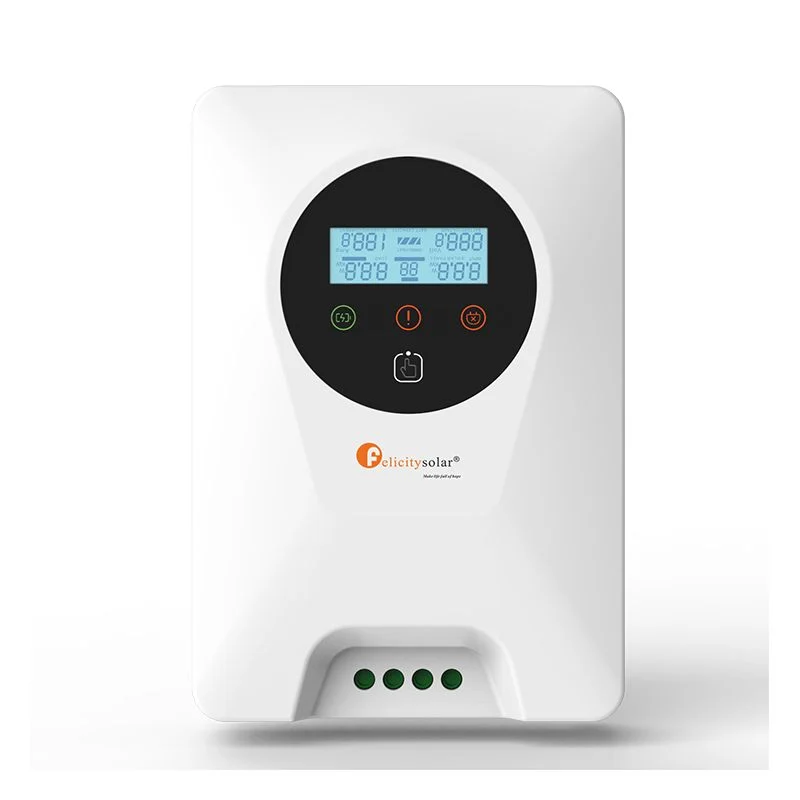
Felicity Solar Inverters in Kenya
Felicity Solar has also built a wide range of hybrid inverters for residential and commercial applications.
The manufacturer’s current hybrid inverter range covers systems from around 3kW all the way to much larger three-phase installations. Felicity’s current product information lists single-phase, split-phase and three-phase options, with different battery voltage ranges and PV input capacities.
For example, Felicity’s IVGM5–8kW range includes 5kW, 6kW, 7.6kW and 8kW models. The manufacturer’s specifications show recommended PV power of 7.5kW for the 5kW model and up to 12kW for the 8kW model in that series.
That gives installers room to design a reasonably sized solar array around the inverter rather than treating the inverter’s AC rating as the maximum amount of solar equipment that can ever be connected.
Happy Solar Systems
Call / WhatsApp: +254 741 163020
Email: info@happysolar.co.ke
Felicity Solar 5kW and 8kW Inverters
The Felicity 5kW and 8kW models are relevant to customers looking at residential and small-business solar systems.
The manufacturer’s current specifications show 40–60V battery voltage for its IVGM5–8kW-P1G1 range. The 5kW model has a recommended PV power of 7.5kW, while the 8kW model has a recommended PV power of 12kW. The same product family also lists Wi-Fi cloud monitoring and IP65 protection.
The manufacturer also describes the system as supporting remote monitoring through its Fsolar Smart Cloud platform. That means users can monitor the system remotely rather than depending entirely on the physical inverter display.
For someone comparing a Felicity 5kW vs Deye 5kW, the sensible approach is to put the exact model numbers side by side. Look at PV input, MPPT configuration, battery compatibility, backup output, monitoring and warranty instead of comparing only the logo printed on the front.
Happy Solar Systems
+254 741 163020 | info@happysolar.co.ke
Deye vs Growatt vs TBB vs Felicity: What Should You Compare?
This is where things get interesting.
Instead of asking, “Which inverter brand is the best?” ask these questions:
| Feature | Why it matters |
|---|---|
| Inverter output | Determines how much load can run at once |
| Battery voltage | Determines which battery systems are suitable |
| Maximum PV input | Determines the solar array size |
| MPPT count | Gives flexibility when arranging panels |
| Backup output | Important when you want power during outages |
| Battery communication | Helps inverter and battery work together |
| Monitoring | Allows you to see system performance |
| Phase configuration | Important for larger homes and businesses |
| Parallel operation | Useful when the system needs expansion |
| Warranty | Important for long-term ownership |
| Local technical support | Useful when troubleshooting is required |
These specifications matter much more than internet arguments about which brand is “number one.”
A good installer should be able to explain why a particular inverter has been selected for your property.
Happy Solar Systems
Call / WhatsApp: +254 741 163020
Email: info@happysolar.co.ke
Solar Inverter Battery Compatibility
This is one of the areas where you should be particularly careful.
A lithium battery is not simply a big rechargeable box that can be connected to any inverter. The inverter and battery need to be compatible electrically, and where applicable, their communication systems need to work together.
Deye’s systems support lithium battery configurations on relevant models, while TBB and Felicity also provide battery-management and communication options on their respective systems. Felicity’s current documentation, for example, describes battery communication and high-current charging and discharging on its larger hybrid inverter models.
When buying a complete system, it is better to have the installer confirm the exact inverter and battery combination rather than buying the two separately and hoping they will work together.
This is especially important if you intend to expand the battery bank later.
Happy Solar Systems
+254 741 163020 | info@happysolar.co.ke
Solar Inverter PV Input and MPPTs
Another specification people often overlook is MPPT.
MPPT stands for Maximum Power Point Tracking. In simple terms, the MPPT helps the inverter get useful energy from the solar panels under changing conditions.
The number of MPPT trackers can also affect how flexibly the solar panels can be arranged.
TBB’s current Ingesola information, for example, lists three MPPT trackers, while Felicity’s current IVGM5–8kW range uses two MPPT channels.
That doesn’t automatically make one configuration better for every installation. If all your panels are on one roof section with similar conditions, you may not need many MPPTs. If the panels are split between different roof orientations, additional MPPT flexibility can become useful.
Happy Solar Systems
Call / WhatsApp: +254 741 163020
Email: info@happysolar.co.ke
Solar Inverter Backup During KPLC Blackouts
For many Kenyan homeowners, this is actually the main reason for buying a hybrid inverter.
The power goes off and you don’t want the house to go completely dark. You want your Wi-Fi, lights, refrigerator, CCTV, television and other important equipment to continue working.
A hybrid inverter with a suitable battery can provide this backup.
But there is an important catch: not every appliance has to be placed on the backup output. High-power appliances such as electric cookers, water heaters, pumps and air conditioners can consume a lot of energy. The system needs to be designed according to the loads you actually want backed up.
That is why a proper load assessment is important before choosing between a 5kW, 8kW, 12kW or larger inverter.
Happy Solar Systems
+254 741 163020 | info@happysolar.co.ke
Single-Phase vs Three-Phase Solar Inverters
If you’re installing solar in a normal home, you may be dealing with single-phase electricity.
Large homes, commercial buildings, factories, farms and other properties may have three-phase electrical systems.
This distinction matters because you cannot simply take a single-phase inverter and assume it will work correctly with a three-phase property.
Felicity’s current range includes both single-phase and three-phase hybrid inverters. Its IVGM10–20kW-P3G1 range, for example, is a three-phase low-voltage hybrid system covering 10kW through 20kW models.
TBB’s Ingesola TP10–TP15 range is also specified as three-phase.
Happy Solar Systems
Call / WhatsApp: +254 741 163020
Email: info@happysolar.co.ke
Which Inverter Is Suitable for a 3-Bedroom House?
This is probably one of the most common questions.
There isn’t a magic inverter size for a three-bedroom house.
One three-bedroom house may have lights, a fridge, TV and Wi-Fi. Another may have an electric cooker, washing machine, borehole pump, several refrigerators, air conditioning and other heavy loads.
Those two homes have completely different requirements.
A 5kW hybrid inverter can be suitable for many residential systems, but the correct choice depends on the actual load. Happy Solar currently uses 5kW Deye hybrid inverters in its smaller residential packages, while larger packages use additional inverter capacity.
Happy Solar Systems
+254 741 163020 | info@happysolar.co.ke
Which Inverter Is Suitable for a Large Home?
For a larger home, the conversation changes.
You may need to consider 8kW, 10kW, 12kW or even larger inverter capacity. You may also need three-phase power, especially if the property has substantial electrical loads.
The important thing is to calculate the peak simultaneous load. If your appliances can draw 9kW at the same time, a 5kW inverter obviously cannot supply all of them simultaneously.
Battery capacity then becomes the next question. A large inverter doesn’t automatically mean long backup. The inverter determines how much power can be supplied at once; the battery determines how much stored energy is available.
Happy Solar Systems
Call / WhatsApp: +254 741 163020
Email: info@happysolar.co.ke
Which Inverter Is Suitable for a Business?
For businesses, solar should normally start with the electricity bill and load profile.
Look at when the business consumes the most electricity. If most of the electricity is consumed during daylight hours, solar panels can directly offset a significant portion of the daytime load. If the business operates into the evening, battery storage may become more important.
A business with refrigeration, pumps, machinery or air conditioning may also have high starting currents that need to be considered.
TBB’s current Ingesola range, for example, is designed for applications including hybrid ESS, backup power, generator integration and AC-coupled PV.
Happy Solar Systems
+254 741 163020 | info@happysolar.co.ke
Solar Inverter Prices in Kenya
Price is obviously important.
But there is a big difference between cheap and good value.
A cheaper inverter may look attractive until you discover that it doesn’t have enough PV input, cannot communicate with your chosen battery, doesn’t support the phase configuration you need or lacks the backup capability you expected.
The current Happy Solar website lists Deye models at different price points, while the actual cost of Growatt, TBB and Felicity systems depends on the specific model and package. For this reason, customers should request a quotation showing the exact inverter model rather than accepting a quotation that only says “8kW hybrid inverter.”
Happy Solar Systems
Call / WhatsApp: +254 741 163020
Email: info@happysolar.co.ke
Don’t Forget the Solar Accessories
A solar inverter cannot operate as a complete system by itself.
You also need the right cables, connectors, breakers, isolators, fuses, surge protection, battery protection and mounting equipment.
Happy Solar currently offers solar accessories and installation bundles for different system sizes. These include items such as MC4 connectors, PV cable, surge protection, battery fuse and holder, aluminium rails and changeover equipment.
You can view the current accessories range here:
Solar Accessories Archives – Happy Solar Systems
It may look like a small part of the quotation, but proper protection and correctly sized cabling are essential parts of a properly installed solar system.
Happy Solar Systems
+254 741 163020 | info@happysolar.co.ke
Where to Buy Solar Inverters in Kenya
If you’re buying a Deye, Growatt, TBB or Felicity inverter in Kenya, don’t only ask for the price.
Ask for the exact model number.
Ask whether it is hybrid or grid-tied. Ask what battery voltage it uses. Ask about maximum PV input. Ask how many MPPTs it has. Ask whether it can be expanded later. Ask who will install and commission the system.
Happy Solar Systems supplies solar equipment and complete solar installations from its Nairobi base at Ridgeways, Kiambu Road.
For customers who aren’t sure which inverter to choose, providing your recent electricity bill and a list of major appliances is a good starting point for system sizing.
Happy Solar Systems
Call / WhatsApp: +254 741 163020
Email: info@happysolar.co.ke
Ridgeways, Kiambu Road, Nairobi
Final Thoughts: Choosing a Solar Inverter in Kenya
Deye, Growatt, TBB and Felicity Solar all have different inverter models and system configurations. The right choice depends on what you are trying to achieve.
If you need a solar system for a normal home, start with your electricity consumption and backup requirements. If you’re powering a farm, look at pumps and other heavy equipment. If you’re running a business, study your daytime load and peak demand. For larger properties, three-phase requirements and future expansion also become important.
The most useful comparison is therefore not simply “Deye vs Growatt vs TBB vs Felicity — who wins?” It is “Which exact inverter model gives my property the electrical capacity, battery compatibility, solar input and backup functionality I actually need?”
That is the conversation worth having before you spend your money.
Happy Solar Systems
Call / WhatsApp: +254 741 163020
Email: info@happysolar.co.ke
Ridgeways, Kiambu Road, Nairobi
Frequently Asked Questions
Is Deye better than Growatt?
Deye and Growatt have different inverter models and specifications. Instead of comparing the brands generally, compare the exact models for PV input, battery compatibility, output capacity, monitoring, backup operation and warranty.
Is Felicity Solar a hybrid inverter?
Yes. Felicity Solar currently manufactures a range of hybrid inverters, including residential and three-phase models. Its current IVGM range covers systems from smaller residential capacities to much larger commercial installations.
Is TBB suitable for solar systems in Kenya?
TBB has hybrid and energy-storage inverter systems that can be used for applications including backup power, hybrid ESS and commercial installations. Its current Ingesola range includes three-phase models and supports multiple MPPT trackers.
How many solar panels can a 5kW hybrid inverter handle?
It depends on the exact inverter model. For example, Felicity’s current 5kW IVGM model has a recommended PV capacity of 7.5kW, while its 8kW model is listed with a recommended PV capacity of 12kW. The inverter’s maximum PV voltage, input current and MPPT range must also be checked.
Which solar inverter should I buy in Kenya?
Start with your electricity consumption, maximum simultaneous load, battery requirements and solar-panel capacity. Then compare the exact models from the brands you’re considering rather than choosing solely on brand name or price.