


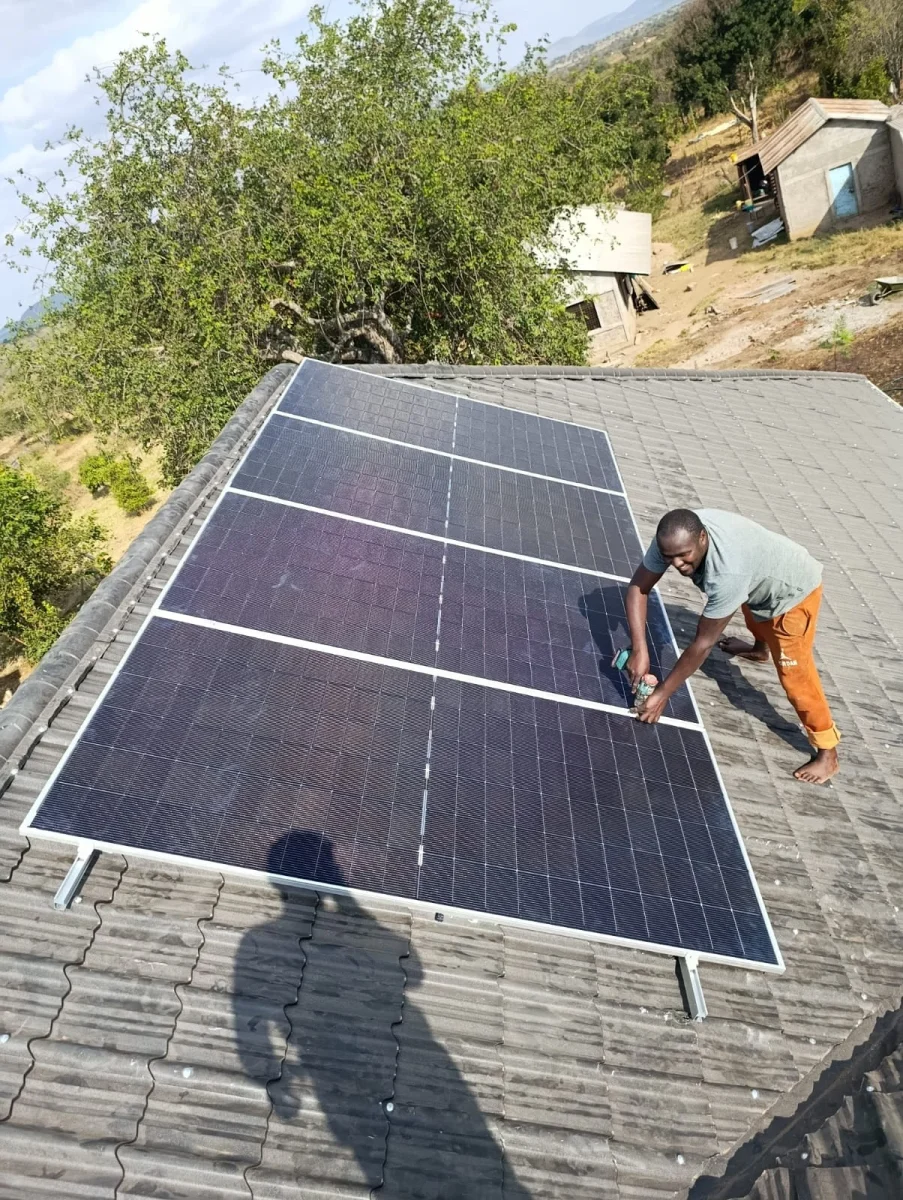
Solar systems get sold on how little maintenance they need, and that’s mostly true — there’s no engine, no oil changes, nothing burning fuel. But “low maintenance” isn’t the same as “no maintenance,” and the handful of things that do need attention are the difference between a system that performs well for 25 years and one that quietly loses output for months before anyone notices.
Here’s what actually matters.
Panel cleaning — more important than people assume
Dust, Nairobi’s dry-season harmattan-like haze, bird droppings, and in some areas, proximity to dust roads, all build up on panel surfaces over time and reduce how much sunlight actually reaches the cells. It’s gradual enough that most homeowners don’t notice the drop in output — they just assume that’s how the system performs, when really it’s been quietly underperforming for weeks.
A simple rinse with clean water every 4–6 weeks (more often in dusty areas or dry season, less in consistently rainy periods) keeps panels performing close to their rated output. Avoid harsh detergents or abrasive scrubbing — plain water and a soft cloth or sponge is genuinely all you need, done early morning or evening when panels are cool, not under full midday sun.
Not sure if your panels need cleaning, or want us to check your system’s actual output while we’re there? Call or WhatsApp +254 741 163020 and we’ll take a look.
Battery care — where most problems actually start
For lithium batteries, maintenance is minimal — no watering, no special handling, just avoid extreme heat exposure where possible and let the inverter’s battery management system do its job. For gel batteries, it’s more hands-on: avoid deep, repeated discharges below the recommended threshold, since this is the single biggest thing that shortens gel battery life, and keep the battery compartment ventilated and reasonably cool.
The warning sign most people miss, regardless of battery type: a noticeably shorter backup duration than when the system was new. If your battery used to carry the house through a 4-hour outage comfortably and now struggles past 90 minutes, that’s not normal wear — it’s worth having checked before it gets worse.
Noticed your battery backup time dropping? That’s usually fixable if caught early. Email info@happysolar.co.ke or WhatsApp +254 741 163020 and describe what you’re seeing — we can often diagnose it over the phone before a visit is even needed.
Inverter checks
Modern hybrid inverters do a lot of their own self-monitoring, and most — Growatt, Deye, and similar brands — come with an app that shows daily generation, battery status, and fault alerts in real time. Check it occasionally, not obsessively; the point is catching a genuine fault code or an unexplained generation drop early, not watching it hourly.
Keep the inverter’s physical location clear of dust and well-ventilated — inverters generate heat during operation, and poor airflow around the unit shortens its working life over time.
Wiring, connectors, and mounting — the parts nobody thinks about
Once a year, it’s worth having a technician check cable connections for wear, confirm mounting hardware is still secure (especially after a heavy storm season), and inspect for any rodent or insect damage to exposed cabling — a surprisingly common issue in rural and semi-rural installations that otherwise run perfectly for years.
This is the kind of check that’s easy to skip because nothing seems wrong — until it is. We offer annual system check-ups for exactly this reason. Call +254 741 163020 to book one, or ask us about it next time you’re in touch.
Signs something’s wrong that people dismiss too long
A few things worth acting on immediately rather than waiting: a noticeable drop in daily generation with no obvious cause (weather, dust) to explain it; the inverter showing a fault code or error light; a burning smell anywhere near the inverter or battery, which should be treated as urgent; or batteries that feel unusually warm to the touch. None of these are common, but all of them are worth a same-day call rather than a “we’ll keep an eye on it.”
What good maintenance actually buys you
A well-maintained system doesn’t just avoid breakdowns — it keeps performing at close to its rated output for its full 20–25 year lifespan, rather than quietly degrading in ways that go unnoticed until the bill creeps back up or the backup time shrinks. Most of what’s needed takes minutes a month and costs nothing beyond water and attention.
If it’s been a while since your system was checked, or you’re noticing any of the warning signs above, get in touch or call +254 741 163020 — we service systems we didn’t even install, and a check-up is often far cheaper than waiting for a small issue to become an expensive one.


