
A solar system is sold as low-maintenance, and it genuinely is — compared to a generator, there’s no fuel, no oil changes, no engine wear. But “low-maintenance” isn’t “no-maintenance,” and the gap between a well-kept system and a neglected one shows up directly in your monthly savings, whether or not you’re actively watching for it.
Does Dust Really Affect Solar Panel Output?
Yes, and more than most people expect, particularly in Kenya’s dustier regions and during dry seasons. A layer of dust, pollen, bird droppings, or general grime sitting on a panel’s surface blocks a portion of the sunlight that would otherwise reach the solar cells beneath — the panel isn’t damaged, it’s just not receiving full sun exposure. In dusty conditions without regular cleaning, output loss can become meaningful over weeks, quietly reducing your system’s generation without any obvious fault or alarm.
Not sure how much your uncleaned panels might be costing you? Call or WhatsApp us on +254 741 163020 and we can advise based on your location and roof conditions.
How Often Should Solar Panels Be Cleaned in Kenya?
This depends genuinely on your specific location and conditions rather than a single fixed schedule. Properties in dusty areas, near unpaved roads, agricultural dust, or during Kenya’s dry seasons generally benefit from cleaning every one to two months. Properties in cleaner, less dusty environments, or those that get regular rain to naturally rinse panels, can often go longer between cleanings — sometimes every three to four months — without significant output loss. Coastal properties face a different consideration: salt spray and higher humidity can leave a film on panels that rainfall alone doesn’t fully clear, generally warranting more frequent attention than a dry inland location.
The honest answer for most properties is to check panel output periodically (through your system’s app monitoring, if fitted) rather than cleaning on a rigid calendar — a noticeable dip in generation on an otherwise sunny day is usually your clearest signal that cleaning is due.
How to Clean Solar Panels Safely
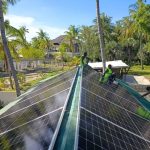
Solar panels are durable but not indestructible, and improper cleaning can cause more harm than the dust itself. Use water and a soft cloth, sponge, or soft-bristle brush — never abrasive scrubbers, wire brushes, or harsh chemical cleaners, which can scratch the glass surface and permanently reduce transparency. Clean during cooler parts of the day, ideally early morning or late afternoon, since applying water to a hot panel surface in direct midday sun can cause thermal stress on the glass. And if your panels are on a roof, safety matters as much as technique — for anything beyond ground-level or easily accessible installations, a professional cleaning visit is generally the safer and more practical option.
What Else Needs Regular Attention
Cleaning gets most of the attention, but a complete maintenance routine covers more than just the panel surface. Connections and cabling should be visually inspected periodically for looseness, corrosion, or wear, particularly at junction boxes and connector points exposed to weather. Mounting hardware should be checked for security, especially after storms or high winds, since a loose mount is both a performance and safety issue. Battery terminals (for gel/AGM batteries especially) benefit from periodic corrosion checks, while lithium batteries with a proper BMS need considerably less manual attention. Inverter ventilation should be kept clear of dust and obstruction, since inverters generate heat and rely on adequate airflow to perform reliably. And charge controller and inverter settings are worth an occasional professional review, particularly after any firmware update or unusual system behaviour.
A Simple Maintenance Checklist
Monthly: Check system output via app monitoring (if fitted) for any unexplained dip in performance; visually check for obvious shading from new growth in nearby trees.
Every 1–3 months (adjust for your local dust conditions): Clean panel surfaces with water and a soft cloth or brush.
Every 6 months: Inspect visible cabling and connections for wear or corrosion; check mounting hardware security; check battery terminals if running gel/AGM batteries.
Annually: Professional system inspection covering inverter and charge controller performance, battery capacity testing, and a full connection and mounting check — catching gradual wear before it becomes a fault.
Why Regular Maintenance Protects Your Investment, Not Just Your Bill
This is worth framing properly: a solar system is a 20–25 year investment, and the return you actually realise over that period depends on the system performing close to its rated output for as much of that time as possible. Neglected maintenance doesn’t usually cause dramatic failure — it causes a slow, easy-to-miss erosion of output that quietly reduces your actual savings below what the system is capable of, month after month, without ever triggering an obvious “something’s wrong” moment. Regular maintenance is what keeps the gap between your system’s rated performance and its real-world performance as small as possible.
Frequently Asked Questions
Can I clean my own solar panels, or does it need to be professional? Ground-level or easily accessible panels can often be cleaned safely yourself with water and a soft cloth. Roof-mounted panels, particularly on multi-storey buildings, are generally safer and more practical to have professionally cleaned.
Does rain clean panels well enough on its own? Rain helps, particularly for light dust, but it doesn’t fully substitute for periodic manual cleaning — especially for stubborn residue like bird droppings, sap, or the salt film common in coastal areas.
How much output can dirty panels actually lose? It varies by how heavily soiled the panels are and how long dust has accumulated, but the loss is genuinely meaningful over weeks of neglect in dusty conditions — regular cleaning is one of the highest-value, lowest-cost maintenance tasks available for protecting your system’s output.
Do we offer maintenance visits, or only new installations? Yes — we provide maintenance and servicing for systems we installed and for systems installed by others, including cleaning, connection checks, and full system health assessments.
Book a Maintenance Visit
Book a maintenance or cleaning visit: Call or WhatsApp +254 741 163020 or email info@happysolar.co.ke Browse our full range: Happy Solar Systems shop
Protect the investment you’ve already made — a small amount of regular attention keeps your system performing at its rated output.