
“Comes with a warranty” is one of the most repeated phrases in solar marketing in Kenya, and one of the least explained. Different components carry different warranty types, different lengths, and different conditions — and knowing the difference is the kind of thing that only becomes urgent the day something actually fails, which is exactly the wrong time to be learning it for the first time.
Panels have two separate warranties — not one
This catches almost everyone out the first time they hear it. Solar panels typically carry:
A product warranty (usually 10–12 years) — covers manufacturing defects: faulty cells, frame issues, junction box problems. If the panel itself is defective, this is what applies.
A performance warranty (usually 25–30 years) — covers how much output the panel still produces as it ages. Panels naturally degrade a small amount each year — commonly guaranteed at around 80–87% of original output even after 25 years. This warranty guarantees a minimum output curve over time, not that the panel will never fail.
These are genuinely different promises. A 25-year “warranty” headline, without specifying which type, can quietly mean only a 10-year defect warranty with a separate, longer performance guarantee attached — not that any failure in year 20 is automatically covered for free replacement.
Not sure which type of warranty applies to a quote you’ve received? Send it to info@happysolar.co.ke or WhatsApp +254 741 163020 and we’ll clarify exactly what’s covered.
Inverters — shorter warranties, and here’s why that’s normal
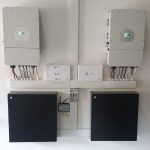
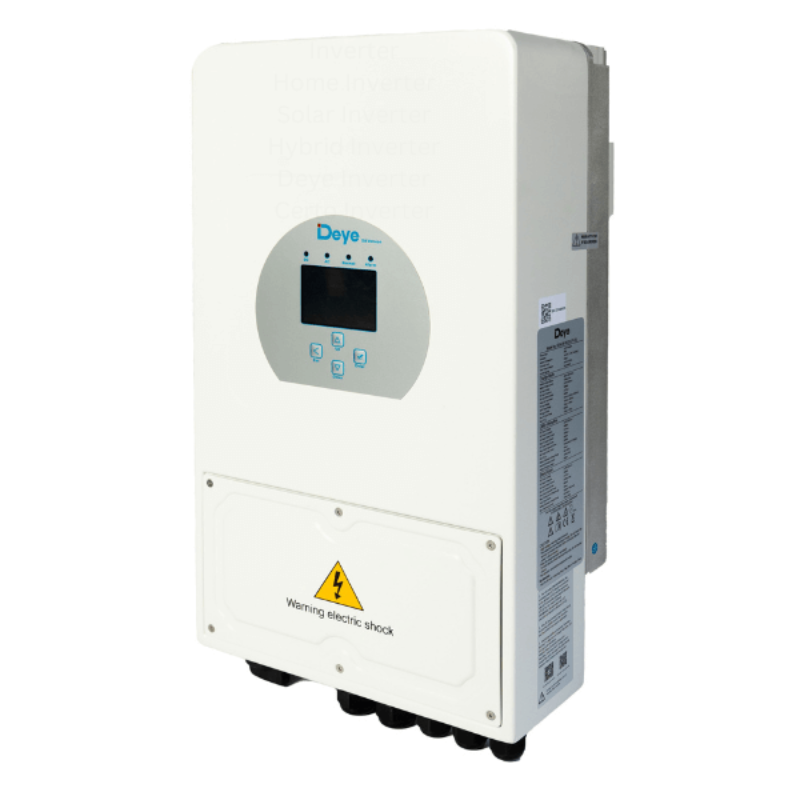
Inverters typically carry 5-year warranties as standard (sometimes extendable to 10 with an additional purchase, depending on the brand), noticeably shorter than panel warranties. This isn’t a sign of lower quality — inverters have more active electronic components doing continuous work, so a shorter standard warranty window is normal across the industry, not specific to any one brand.
What’s worth checking: whether the warranty is handled locally through your installer or distributor, or whether you’d need to ship a faulty unit back to the manufacturer directly — which, for an imported inverter with no strong local distributor presence, can mean weeks or months without power backup while you wait.
Batteries — the warranty that varies the most
Battery warranties differ significantly by chemistry and brand. Lithium (LiFePO4) batteries commonly carry warranties in the 5–10 year range, often specified by cycle count as well as years (for example, “10 years or 6,000 cycles, whichever comes first”). Gel batteries typically carry shorter warranties, often 1–2 years, reflecting their shorter realistic lifespan.
Pay attention to whether the warranty is void if the battery is discharged beyond the manufacturer’s recommended depth repeatedly — this is a common exclusion clause, and it means misusing the battery (deep-discharging a gel battery routinely, for instance) can forfeit coverage even within the warranty period.
Want the specific warranty terms for the batteries we install, in writing, before you decide? Call or WhatsApp +254 741 163020 — we’ll give you the exact figures, not a rounded-up marketing number.
Installation workmanship — often the most overlooked warranty of all
Equipment warranties cover the equipment. They generally don’t cover a mounting bracket installed incorrectly, a loose connection, or wiring that wasn’t done to standard — that’s workmanship, and it should be covered separately by your installer, typically for 1–2 years after installation. Ask specifically: “If something fails because of how it was installed, not because of a faulty part, who fixes that and is it free?” A good installer answers this clearly. A less reputable one tends to point you toward the manufacturer and step back.
What voids a warranty — read this before you need it
A few common ways warranties get voided, often without the owner realising at the time: installation by an unlicensed or unauthorised technician, modifications to the system without the installer’s involvement, physical damage from incorrect handling, and — for batteries specifically — operating outside the manufacturer’s recommended temperature or discharge range. Keep your installation documentation and any manufacturer certificates somewhere safe; you’ll need them if you ever do need to make a claim.
What to ask before you buy, not after something breaks
- What’s the product warranty length, separate from the performance warranty, for the panels?
- What’s the inverter warranty, and is it handled locally or through the manufacturer directly?
- What’s the battery warranty, in years and in cycles?
- What’s the installer’s own workmanship warranty, and what does it cover?
- What specifically voids each of these?
Want all of this spelled out clearly for your specific system before you commit? Get in touch or call +254 741 163020 — we’ll give you the actual terms in writing, component by component, not a vague “fully warrantied” line.
Our position on this
We’d rather a client ask us every question on this list and walk away satisfied with clear answers than sign based on a warranty they didn’t fully understand. Every quote we send breaks down exactly what’s covered, for how long, and by whom — equipment and workmanship both — because the time to understand your warranty is before you need it, not during an argument three years later.


