
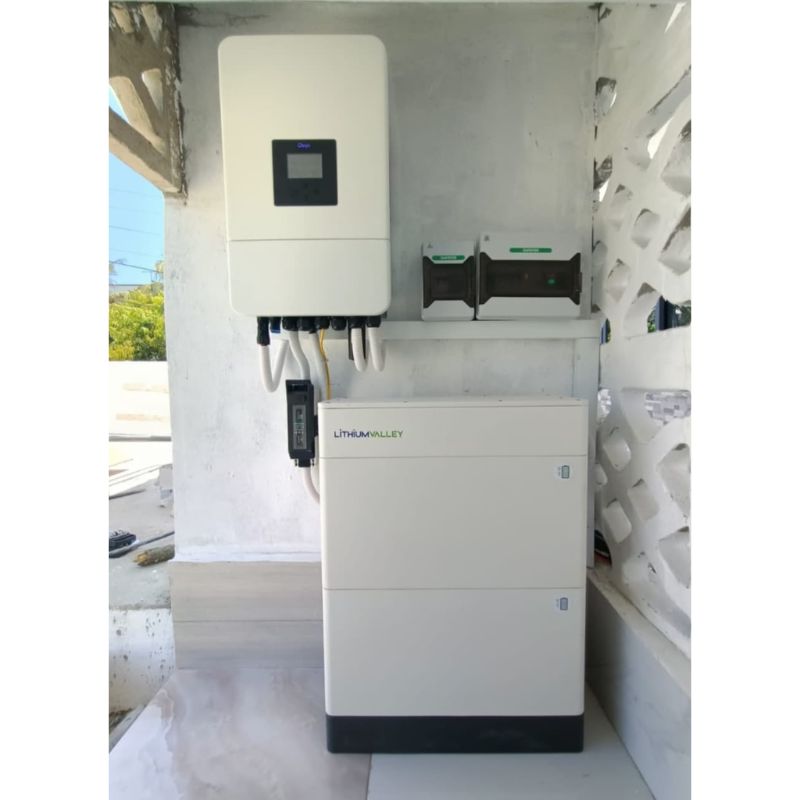
When the power goes off, the first things many homeowners want to keep running are the lights, Wi-Fi, television, fridge and other essential appliances. The challenge is choosing a backup system that can handle these appliances without spending money on equipment you do not really need.
If you are looking for a home power backup system in Kenya, the cost will depend on what you want to power, how long you need backup and whether you want an inverter and battery only or a complete solar system.
At Happy Solar Systems, we supply solar power equipment, including inverters, batteries, solar panels and accessories. In this guide, we explain the main factors that affect the cost of home power backup and how to choose a system that suits your household.
For an overview of available options, visit our Power Backup Solutions in Kenya – Happy Solar Systems.
1. What Is the Cost of a Home Power Backup System in Kenya?
There is no single price for every home backup system. A small setup for lighting and internet equipment has different requirements from a system intended to run a fridge, computers, a water pump and several other appliances.
The main cost components are the inverter, battery, electrical protection equipment, cabling and installation. If you choose a solar-powered system, you will also need solar panels and the materials required to mount and connect them.
Here are the main options homeowners can consider:
| Type of backup system | Suitable application | What affects the price? |
|---|---|---|
| Small inverter and battery system | Lights, Wi-Fi and selected electronics | Inverter rating and battery capacity |
| Medium home backup system | Several essential household appliances | Combined appliance load and backup duration |
| Larger home backup system | More appliances and higher power demand | Larger inverter and additional battery storage |
| Hybrid solar backup system | Homes needing battery backup and solar charging | Hybrid inverter, batteries, panels and installation |
| Whole-home backup system | Multiple circuits and higher household demand | Maximum load, energy consumption and system design |
These categories are intended to help you compare options, not to represent fixed equipment packages. The actual price must be confirmed against available products and your home’s requirements.
If you want to compare the different system types, start with our guide to Power Backup Solutions in Kenya.
2. What Determines the Price of a Home Backup System?
Before asking for a quotation, it helps to understand why two households may receive very different prices for what appears to be the same type of system.
Inverter capacity
The inverter determines how much power the system can supply to appliances at a given time. A home running a few LED lights and a Wi-Fi router will have different requirements from one running a fridge, water pump and several computers simultaneously.
The inverter must be sized for the combined running load and any additional starting power required by appliances with motors or compressors.
Choosing a larger inverter than you need can increase the initial cost, while choosing one that is too small can cause overloads or shutdowns.
Battery capacity
The battery determines how much energy can be stored for use during an outage. If you need your appliances to run for several hours, you may need more battery capacity than someone who only needs short periods of backup.
Battery capacity is commonly expressed in kilowatt-hours (kWh). A larger capacity generally allows more energy to be stored, although the actual runtime depends on the usable battery energy and the load connected.
Battery technology
Lithium batteries, particularly lithium iron phosphate batteries, are commonly used in modern solar and backup systems. They may offer useful advantages in usable capacity and cycle life, depending on the model.
Lead-acid batteries can also be suitable for some applications. Compare the usable energy, expected cycle life, warranty, maintenance requirements and overall cost rather than looking only at the purchase price.
Solar panels
If you want to recharge the battery using sunlight, the system will need suitable solar panels and a compatible inverter or charge controller.
A solar system may cost more initially than a battery-only system, but it can also provide electricity from solar generation when sunlight is available. The financial benefit depends on your electricity usage, system design and how much solar energy you can use.
Installation and protection equipment
A complete quotation may include cables, circuit breakers, isolators, changeover equipment, mounting materials and labour. The requirements vary according to the property and the type of installation.
When comparing prices, check exactly what is included. A low equipment-only price is not directly comparable with a quotation that includes a complete installation.
3. Which Appliances Do You Want to Power During an Outage?
This is the most important question to answer before buying a home backup system.
Many households do not need to run every appliance during a power cut. You may only need to keep essential equipment running until the electricity supply returns.
Start by making a list of the appliances you want to connect.
| Appliance | Example power rating | Main consideration |
|---|---|---|
| LED lights | 10W each | Number of lights and hours used |
| Wi-Fi router | 10–20W | Continuous operating time |
| Television | 60–150W | Actual model and screen size |
| Laptop | 45–100W | Charging and operating demand |
| Refrigerator | Varies by model | Compressor starting power and cycling |
| Water pump | Varies by model | Starting surge and running power |
| Microwave | Often several hundred watts or more | High power demand during use |
| Electric kettle | Commonly 1,500–3,000W | Very high short-term demand |
These are illustrative figures, not guaranteed specifications. Check the rating label or manufacturer’s documentation for your actual appliances.
For example, a backup system intended for lights, a router, a laptop and a television may be much smaller than one expected to run a fridge and water pump as well.
Once you have your appliance list, it becomes easier to identify an appropriate inverter and estimate the battery capacity needed.
4. How Much Battery Capacity Does a Home Need?
The battery capacity you need depends on how much electricity your appliances consume and how long you want to run them.
Consider this example of a household powering a few essential appliances during an outage:
| Appliance | Assumed consumption | Usage time | Energy required |
|---|---|---|---|
| LED lights | 60W total | 5 hours | 300Wh |
| Wi-Fi router | 15W | 8 hours | 120Wh |
| Television | 100W | 4 hours | 400Wh |
| Laptop | 65W | 4 hours | 260Wh |
| Total | 1,080Wh (1.08kWh) |
This household would use approximately 1.08kWh over the stated periods, before accounting for inverter losses.
The battery must have enough usable energy to cover that demand. You should also consider the battery manufacturer’s recommended operating limits and allow for conversion losses.
A 5kWh battery does not mean every household can run for the same number of hours. A household using only a few efficient appliances may get substantially more runtime than one operating several high-power appliances.
If you want help choosing a suitable setup, visit our Power Backup Solutions in Kenya page and contact Happy Solar Systems with your appliance list and desired backup duration.
5. Is It Cheaper to Buy an Inverter and Battery or a Complete Solar System?
That depends on your main objective.
Option A: Inverter and battery only
This option may suit households whose priority is to maintain power during outages. A compatible inverter and battery can charge from the grid and provide backup when the main supply is unavailable.
The main advantage is that you do not need to purchase solar panels immediately. The limitation is that the battery will need to be recharged from the grid or another suitable energy source.
Option B: Hybrid inverter, battery and solar panels
A hybrid solar system can combine grid electricity, solar generation and battery storage, depending on the equipment and configuration.
During the day, solar panels may supply appliances and recharge the battery. Stored energy can then be used when solar generation is low or during an outage.
This option involves a larger initial investment in many cases, but it may be worth considering if you want both backup power and greater use of solar electricity.
Which option should you choose?
If you mainly want to keep essential appliances running during short outages, start by assessing a suitable inverter and battery system.
If you also want to use solar energy to supply your household, a hybrid system may be a better fit.
For a more detailed comparison, see Power Backup Solutions in Kenya – Happy Solar Systems.
6. Can a Home Backup System Run a Fridge, Water Pump or Washing Machine?
Yes, a correctly designed system may be able to run these appliances. However, they require more careful sizing than simple electronic devices.
A refrigerator or water pump may draw considerably more power when its motor starts. A washing machine may have varying demand throughout its cycle, especially if it heats water.
Electric kettles, irons, microwaves and cookers can also use substantial amounts of power. Running several of these appliances together may require a larger inverter and more battery capacity.
Before purchasing a system, identify which appliances must operate together and which can be switched off during an outage.
If your priority is to run a fridge or water pump, share the appliance model or rating with your supplier so the inverter’s capacity and starting-power requirements can be checked.
7. What About a Home That Already Has Solar Panels?
If you already have solar panels, you may not need to start from scratch. Depending on your existing equipment, it may be possible to add compatible battery storage or upgrade the inverter.
However, not every grid-tied inverter can provide backup power during an outage. Some systems are designed to shut down when the grid supply fails unless they have the appropriate backup functionality.
Before buying a battery, confirm:
- The model and type of your existing inverter.
- Whether it supports battery storage.
- Whether it can provide backup power during a grid outage.
- Which battery types and voltages it supports.
- Whether additional electrical protection or changes to the wiring are required.
This assessment helps prevent buying a battery that cannot work with your current system.
8. Five Mistakes to Avoid When Buying Home Power Backup
1. Choosing a system based on price alone
A low-priced system may not provide enough usable battery energy or inverter capacity for your requirements. Compare specifications and the complete installation scope.
2. Confusing kW with kWh
Kilowatts measure power, while kilowatt-hours measure energy. The inverter’s power rating and the battery’s energy capacity answer different questions.
3. Expecting the battery to run every appliance
A battery that can comfortably power a few lights and electronics may not be suitable for several large appliances. Size the system around your actual load.
4. Ignoring appliance starting power
Motors and compressors may require additional power when starting. This should be considered when choosing an inverter.
5. Forgetting future needs
If you expect to add solar panels or more battery storage later, discuss this before buying. Not every system can be expanded in the same way.
For help understanding the available equipment and system options, visit Happy Solar Systems’ Power Backup Solutions in Kenya.
9. How to Get an Accurate Power Backup Quotation
The easiest way to start is to share a few details about your home.
Prepare the following information:
- Your location.
- A list of appliances you want to power.
- The power ratings of those appliances, where available.
- How many hours of backup you need.
- Whether you want an inverter and battery only or a complete solar system.
- Your preferred budget, if you have one.
With this information, a supplier can assess the inverter capacity, battery storage and other equipment required.
Ask for a quotation that clearly identifies the products, their specifications, warranty terms, installation scope and any additional charges.
10. Get Home Power Backup Advice from Happy Solar Systems
Choosing a backup system does not have to be complicated. Start with the appliances you need to run, decide how long you need them to operate, and choose equipment that matches those requirements.
Happy Solar Systems supplies solar power equipment, including inverters, batteries, solar panels and accessories for different applications.
Whether you need backup for a few essential appliances or are planning a more complete solar installation, contact us to discuss your requirements and available options.
Get started here: Power Backup Solutions in Kenya – Happy Solar Systems
Contact Happy Solar Systems
- Phone / WhatsApp: +254 741 163020
- Email: info@happysolar.co.ke
- Website: www.happysolar.co.ke
Send us your appliance list, location and required backup time so we can help you explore a suitable solution.
Frequently Asked Questions
How much does a home power backup system cost in Kenya?
The price depends on the inverter, battery capacity, battery technology, installation requirements and whether solar panels are included. Request a quotation based on the appliances you need to power.
What size inverter is suitable for a home?
The appropriate size depends on the combined power demand of the appliances you want to operate and the starting power required by equipment such as refrigerators and pumps.
Is a 5kWh battery enough for a home?
It may be enough for selected essential appliances, depending on their energy consumption and the required backup duration. Larger loads or longer backup periods may require more storage.
Can I add solar panels to a battery backup system later?
Yes, if the inverter and system design support the intended solar configuration. It is best to plan for future expansion before buying the initial equipment.
Where can I buy power backup equipment in Kenya?
You can contact Happy Solar Systems through happysolar.co.ke or visit the Power Backup Solutions in Kenya page to enquire about suitable equipment.


