

Almost every call we get starts the same way: “I want solar, which system do I need?” And the honest answer is, it depends on one thing more than anything else — whether you still want KPLC in the picture at all, and what you’re trying to solve.
Let’s break down the three properly, because the terminology alone confuses most people, and the marketing around it doesn’t help.
Grid-tie: the cheapest way to cut your daytime bill
A grid-tie system has solar panels and an inverter, connects directly to the grid, and has no battery. During the day, while the sun’s out, your panels feed power straight into your house, reducing what you draw from KPLC. At night, you’re back on 100% grid power, same as before.
The upside: it’s the cheapest type of system to install, because you’re not paying for battery storage, which is usually the single biggest line item on any quote.
The catch, and it’s a real one: grid-tie systems shut down during a blackout. This isn’t a flaw, it’s a safety requirement — if the grid goes down and your system kept feeding power into the lines, it could injure someone working to repair the fault. So if blackouts are a big part of why you want solar, grid-tie alone won’t solve that problem, no matter how well-designed the system is.
Who it suits: offices, factories, and homes with high daytime electricity use (AC running during work hours, for example) where blackout protection isn’t the main concern and the priority is simply cutting the bill.
Off-grid: complete independence, no KPLC at all
An off-grid system has panels, batteries, and an inverter, and isn’t connected to the grid in any way. Everything you use comes from what your panels generate and your batteries store. No KPLC bill, no KPLC connection, full stop.
This is the right call for properties where grid connection isn’t available or isn’t reliable enough to bother with — farms far from the main line, remote lodges, that kind of site. It’s also, sometimes, a deliberate choice for people who simply want to be done with KPLC entirely, bill and all.
The trade-off is that your system has to be sized generously enough to cover your worst-case scenario — a stretch of cloudy days, or a period of unusually high usage — because there’s no grid to fall back on if you run short. That usually means a bigger battery bank than a hybrid system serving the same house would need, which pushes the price up.
Hybrid: the one most of our clients actually choose
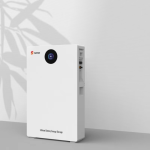
A hybrid system has panels, batteries, and an inverter, and stays connected to the grid. During the day, you’re running mostly on solar. At night, you draw from your battery. If the battery runs low, or there’s a stretch of bad weather, the system automatically pulls from the grid to fill the gap — and when the grid goes down, it switches to battery automatically, usually fast enough that you won’t notice the lights flicker.
It’s the best of both, honestly, which is why it’s what most Kenyan homes end up with. You get real blackout protection (unlike grid-tie), you don’t need to oversize the battery for worst-case scenarios (unlike off-grid, since the grid is still there as a backup), and your bill still drops significantly from the solar generation you’re using instead of buying from KPLC.
The trade-off, if there is one, is that you’re still a KPLC customer — you’ll still get a bill, just a much smaller one, and you’re not fully independent of the grid the way an off-grid system is.
A rough way to decide
Ask yourself two questions:
Do I have grid access, and is it reasonably stable where I am? If no — off-grid is your only real option, regardless of anything else.
Is surviving a blackout important to me, or am I only trying to cut my bill? If blackouts matter, you need batteries, which rules out grid-tie. If you genuinely don’t care about outages and just want a lower bill, grid-tie is the cheapest route to that specific goal.
For most homes we visit in and around Nairobi — grid access is there, but so are the blackouts, and both things matter to the homeowner. That’s why hybrid ends up being the system we recommend most often. It’s not that the other two are inferior, they’re just solving different problems.
Don’t guess — get it measured
We say this in pretty much every post, but it matters here specifically: the “right” system isn’t really a category choice, it’s a sizing exercise once you’ve picked the category. Two households both choosing “hybrid” can need very different battery sizes depending on how many people are home during the day, what appliances run overnight, and how long their typical outages last.
Book a free site assessment and we’ll tell you honestly which category fits, and what size within it actually matches your home — not just the one with the biggest margin for us.


