If you are planning to install solar at home, one question will probably come up very quickly: “How much is the battery?”
And honestly, this is one of the first things most customers ask us at Happy Solar Systems. Someone calls and says, “I have a 5kW inverter. I want a battery. How much?” Another person sends a photo of their electricity bill and asks, “How many batteries will I need?” Then there are those who simply say, “I want solar that can keep the house running when KPLC goes off.”
All these are fair questions. The problem is that there is no single answer because the right battery depends on how much electricity you use, what you want to power, how long you want backup and, of course, your budget.
These days, we are seeing more customers asking about lithium solar batteries, especially LiFePO4 batteries. They cost more than the old lead-acid batteries at the beginning, but they are becoming popular because they are designed for regular charging and discharging and can be a good fit for modern hybrid solar systems.
At Happy Solar Systems, we supply and install different solar batteries for homes, offices, businesses, farms and other properties across Kenya.
Happy Solar Systems
Call / WhatsApp: +254 741 163020
Email: info@happysolar.co.ke
Ridgeways, Kiambu Road, Nairobi
So, How Much Is a Solar Battery in Kenya?
Let’s start with the question everyone wants answered.
How much does a solar battery cost in Kenya?
The honest answer is: it depends on the battery.
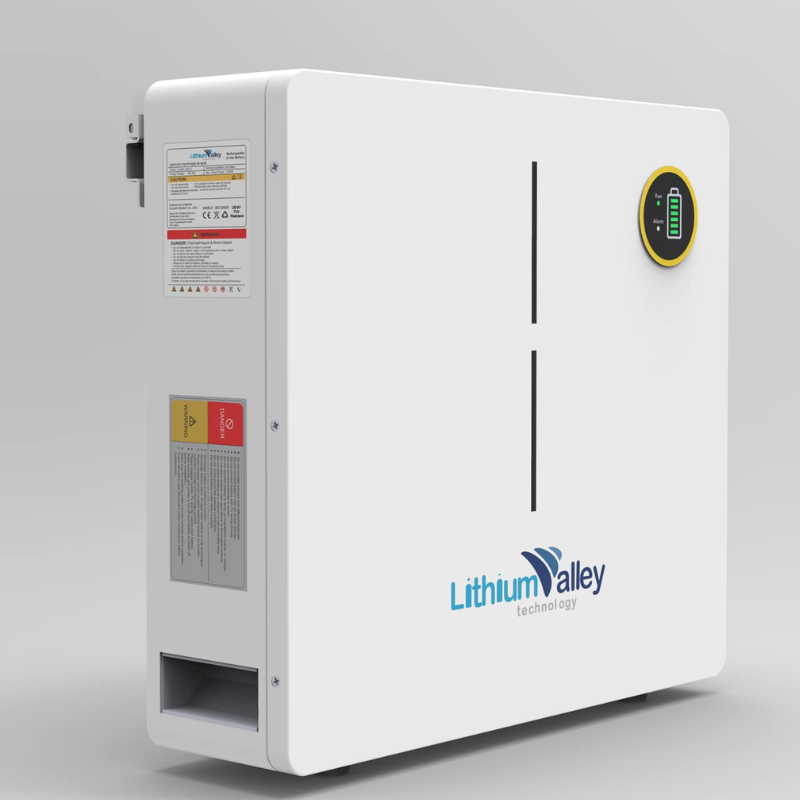
For example, our current website prices include a 5kWh Lithium Valley battery at KSh 107,000, a 10kWh Lithium Valley battery at KSh 189,900, an SRNE 5kWh battery at KSh 107,000, and an SRNE 10kWh battery at KSh 195,000. We also have larger options such as the WECO 16K0-LV 16kWh lithium battery, currently listed at KSh 280,000.
These prices can change depending on stock, model and supplier pricing, so it is always a good idea to confirm the current price before making a purchase.
Now, you may be wondering why one battery costs KSh 30,000 while another one costs more than KSh 100,000.
This is where things get interesting.
You cannot compare batteries just by looking at the price. You have to look at battery capacity, voltage, battery chemistry, usable capacity, cycle life, charging and discharge limits, warranty and compatibility with your inverter.
Happy Solar Systems
+254 741 163020 | info@happysolar.co.ke
Lithium Batteries: Why Are So Many Kenyans Choosing Them?
If you have been asking around about solar recently, you have probably heard the word lithium many times.
There is a reason for that.
Most of the newer hybrid solar systems we see today are being designed around lithium batteries, particularly LiFePO4 batteries. They are well suited to systems where the battery is charged during the day and used again in the evening or whenever the grid goes off.
Think about a normal Kenyan home.
The sun is out during the day when many people are at work or school. Your solar panels are producing power, but your biggest need for stored electricity may come later in the evening when everyone is back home.
You can use the solar energy during the day and store some of it in the battery. Later, when the sun goes down, the battery can supply the house.
That is the basic idea behind a hybrid solar system.
Happy Solar Systems
Call / WhatsApp: +254 741 163020
Email: info@happysolar.co.ke
Ridgeways, Kiambu Road, Nairobi
Is Lithium Worth the Extra Money?
This is where we usually tell customers: don’t look only at today’s price; think about how you are going to use the battery.
If your battery is going to be charged and discharged almost every day, then battery quality becomes very important.
A lithium battery is generally designed for this kind of regular cycling. It also normally gives you more usable energy from its rated capacity than you would expect from a traditional lead-acid battery operated conservatively.
But there is another advantage that many homeowners appreciate: lithium systems are usually much easier to expand.
Let’s say you start with a 5kWh battery because that is what your budget allows. Later, your electricity needs increase and you want more backup. Depending on the battery and inverter, you may be able to add another compatible battery.
That is much easier when the system was designed for expansion from the beginning.
Happy Solar Systems
+254 741 163020 | info@happysolar.co.ke
What About AGM and Gel Batteries?
We still get questions about AGM and gel batteries, especially from customers looking for a lower initial cost.
They are not useless. Far from it.
AGM and gel batteries can work well in certain applications, particularly where the battery isn’t going through heavy daily cycling. The problem comes when someone compares the price of an AGM battery directly with a lithium battery without looking at what each battery is actually designed to do.
For example, you might find a relatively inexpensive 200Ah battery and think, “Why should I spend so much more on lithium?”
The answer is that 200Ah doesn’t tell you the whole story.
You need to know the battery voltage, how deeply it can regularly be discharged, how many cycles it is designed for, how much power it can deliver and how the battery will be used.
So, yes, AGM and gel batteries still have their place. But if you’re building a new hybrid solar system that you expect to cycle every day, lithium is certainly worth considering.
Happy Solar Systems
Call / WhatsApp: +254 741 163020
Email: info@happysolar.co.ke
5kWh Solar Battery: Is It Enough for Your House?
A 5kWh battery is one of the common starting points for a residential solar system.
But here’s where we need to be careful.
When someone says, “I have a three-bedroom house,” that doesn’t tell us how much electricity the house uses.
One three-bedroom house may have a fridge, television, Wi-Fi, lights and CCTV.
Another three-bedroom house may have an electric cooker, washing machine, several fridges, a borehole pump, water heater, microwave, air conditioning and other appliances.
Those two houses need completely different solar systems.
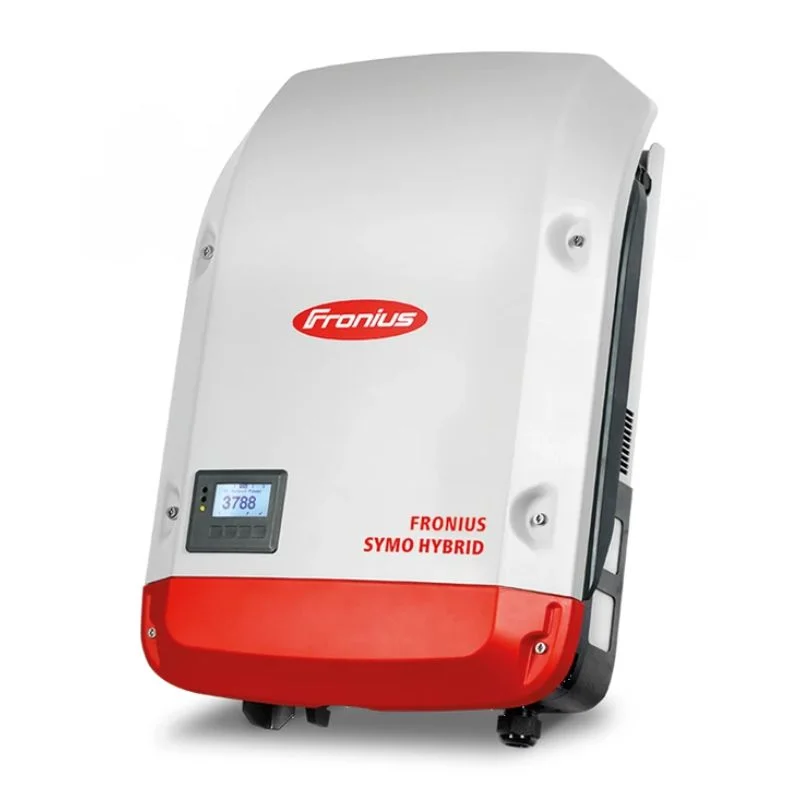
At Happy Solar, our current Family Package uses a 5kWh Lithium Valley battery, a 5kW Deye hybrid inverter and four 585W Jinko solar panels. It is designed around essential household loads rather than trying to run every appliance in the house during a blackout.
That distinction is important.
A 5kWh battery doesn’t mean you can switch on everything in the house and forget about electricity consumption.
Happy Solar Systems
+254 741 163020 | info@happysolar.co.ke
10kWh Solar Battery: A Bigger Step for Home Backup
If you want more backup, the next step is often a 10kWh battery system.
For example, our Standard Package uses two 5kWh Lithium Valley batteries, giving the system a total nominal storage capacity of 10kWh.
This gives you more room to work with in the evening.
You could run the refrigerator, lights, television, Wi-Fi, CCTV and other essential loads for longer, depending on how much power those appliances actually consume.
But again, don’t look at 10kWh and assume it means “10 hours.”
It doesn’t work that way.
If your house is using 1kW continuously, 10kWh is roughly 10 hours before accounting for system losses and other factors. If you are using 3kW, the stored energy will obviously disappear much faster.
This is why we normally ask customers to give us their appliance list and electricity bill before recommending a battery size.
Happy Solar Systems
Call / WhatsApp: +254 741 163020
Email: info@happysolar.co.ke
What About 15kWh and 20kWh Batteries?
Once we move into the 15kWh, 20kWh and larger range, we’re usually talking about bigger homes, farms, offices, businesses or customers who simply want a lot more backup.
For example, our current Premium Package uses four 5kWh lithium batteries, giving a nominal storage capacity of 20kWh. The system also uses two 5kW Deye hybrid inverters and 16 solar panels.
This type of system gives you considerably more storage than a basic 5kWh home system.
But don’t make the mistake of thinking “more batteries automatically means better.”
If your home only consumes a small amount of electricity, you may not need 20kWh of storage. You could end up spending money on battery capacity that you rarely use.
We would rather size the system around what you actually need.
Happy Solar Systems
+254 741 163020 | info@happysolar.co.ke
Lithium vs AGM vs Gel: Which One Makes Sense?
Here’s the simple way we normally explain it to customers.
If you want a modern solar system that is going to charge and discharge the battery regularly, lithium is worth serious consideration.
If you have a smaller backup system and your battery will not be heavily cycled, AGM or gel may still make sense depending on the application and budget.
The important thing is to look at the whole system rather than the battery alone.
Your inverter, solar panels, battery, protection equipment and wiring all need to work together.
A cheap battery connected to the wrong inverter isn’t a bargain.
It’s just an expensive problem waiting to happen.
Happy Solar Systems
Call / WhatsApp: +254 741 163020
Email: info@happysolar.co.ke
What Happens When KPLC Goes Off?
This is usually the moment customers care about most.
The lights go off.
The Wi-Fi goes off.
The TV goes off.
Someone starts asking, “Is the power back?”
With a properly designed hybrid solar system, the inverter can switch to battery backup and keep your selected loads running.
You can have the fridge, lights, Wi-Fi, CCTV and other important appliances connected to the backup supply.
But we normally advise customers to separate essential loads from heavy loads.
An electric cooker, shower heater, water pump or air conditioner can consume a lot of electricity. If you put all these appliances on the backup circuit, your battery can drain much faster than expected.
So when we size a system, we’re not just asking, “How big is your house?”
We’re asking, “What do you actually want to keep running when the power goes off?”
Happy Solar Systems
+254 741 163020 | info@happysolar.co.ke
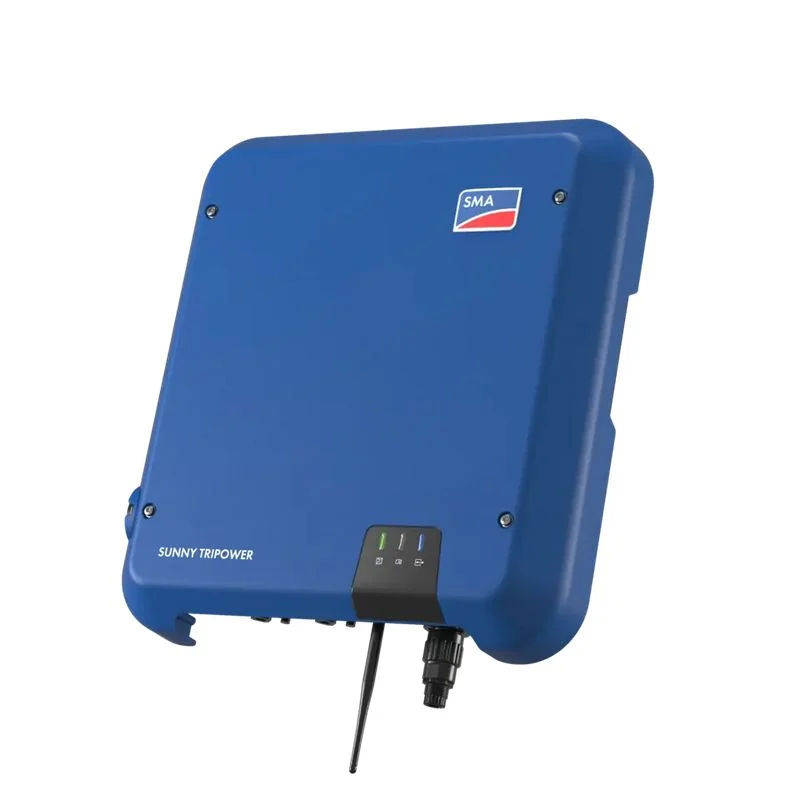
Don’t Buy a Battery Before Checking Your Inverter
This one is important.
Please don’t buy a battery because somebody has told you, “This one is good.”
First check your inverter.
What voltage does it require?
Is it compatible with lithium?
Can it communicate with the battery’s BMS?
How many batteries can be connected?
Can the system be expanded later?
These questions can save you a lot of trouble.
We have seen customers buy equipment separately and then discover that the inverter and battery aren’t the ideal combination.
That’s why, if you already have an inverter, send us a photo of the inverter label or the exact model number. It makes it much easier for us to advise you on the battery options.
Happy Solar Systems
Call / WhatsApp: +254 741 163020
Email: info@happysolar.co.ke
So, How Many Batteries Do You Really Need?
Let’s keep it simple.
If you want us to recommend a battery, give us three things:
- Your electricity bill
- A list of your main appliances
- How long you want backup during a blackout
That’s enough for us to start working out the system.
For example, if you tell us you want to keep the fridge, lights, Wi-Fi, CCTV and television running for several hours, that’s one type of system.
If you tell us you want to run the entire house, including the cooker, pumps, water heater and air conditioning, that’s a completely different system.
Don’t let somebody sell you a 20kWh battery simply because it sounds impressive.
And don’t let somebody sell you a tiny battery simply because it’s cheap.
Get the size that makes sense for your house.
Happy Solar Systems
+254 741 163020 | info@happysolar.co.ke
Solar Battery Prices in Kenya: What Should You Look At?
When comparing quotations from different solar companies, look beyond the headline price.
Check the battery brand and model, not just “10kWh lithium battery.”
Check the warranty.
Check the usable capacity.
Check the battery voltage.
Check the maximum charging and discharge current.
Check whether the battery communicates properly with the inverter.
Check whether installation, protection equipment and cabling are included.
And perhaps most importantly, check who will actually install and support the system after you have paid.
Solar is not something you want to buy today and then start looking for someone to repair it when there’s a problem six months later.
Happy Solar Systems supplies and installs solar batteries, inverters, panels and complete solar systems in Kenya.
Happy Solar Systems
Call / WhatsApp: +254 741 163020
Email: info@happysolar.co.ke
Ridgeways, Kiambu Road, Nairobi
Where Can You Buy Solar Batteries in Kenya?
If you’re looking for solar batteries in Nairobi or elsewhere in Kenya, you can view our current battery range online.
We stock different battery capacities and technologies, including lithium batteries suitable for hybrid solar systems.
View Solar Batteries at Happy Solar Systems
We can also help you match the battery with your inverter and solar panels instead of simply selling you a battery and leaving you to figure out the rest.
If you’re not sure what size you need, send us your electricity bill and appliance list.
We’ll start from there.
Happy Solar Systems
Call / WhatsApp: +254 741 163020
Email: info@happysolar.co.ke
Ridgeways, Kiambu Road, Nairobi
Final Thoughts
If you’ve reached this point, you probably already realise that buying a solar battery isn’t just about asking, “How much is it?”
The better question is, “What battery will actually work for my home?”
A 5kWh battery may be enough for one household. Another home may need 10kWh. A large home or business may need 15kWh, 20kWh or more.
And that’s perfectly normal.
At Happy Solar Systems, we prefer to look at your actual electricity usage before recommending equipment. Bring us your bill, tell us what you want to run, tell us how much backup you want, and we can work from there.
Because at the end of the day, solar is supposed to make life easier, not give you another headache.
Happy Solar Systems
+254 741 163020
info@happysolar.co.ke
Ridgeways, Kiambu Road, Nairobi
Frequently Asked Questions
How much is a 5kWh lithium battery in Kenya?
Our current listed price for a Lithium Valley 5kWh battery is KSh 107,000. Prices can change depending on stock and model availability.
How much is a 10kWh lithium battery in Kenya?
Our current listed Lithium Valley 10kWh battery is KSh 189,900, while the SRNE 10kWh is listed at KSh 195,000. Confirm the current price before ordering.
Is a 5kWh battery enough for a home?
It can be, especially if you are backing up essential appliances such as lights, Wi-Fi, CCTV, television and refrigeration. It depends on your actual electricity consumption and how many hours you want the battery to run.
Can I add more batteries later?
In many systems, yes. But the inverter and battery must support expansion, and the additional batteries need to be compatible with the existing system.
Can you help me choose the right battery?
Yes. Send us your electricity bill, appliance list and preferred backup time and we can use that information to work out a suitable system size.
Happy Solar Systems
Call / WhatsApp: +254 741 163020
Email: info@happysolar.co.ke