

Solar Inverter Prices in Kenya: Hybrid, Off-Grid and Grid-Tie Inverters
If you have started looking at solar power in Kenya, there is a good chance you have already come across plenty of inverter names and prices. Deye, TBB, Growatt, Victron, Felicity and several others are available in the market, with models ranging from small residential units to large systems for businesses and industrial applications. The difficult part is usually not finding an inverter. The difficult part is knowing which solar inverter actually suits your home, business, farm or institution. At Happy Solar Systems, we see this quite often. A customer comes looking for a 5kVA inverter because someone recommended one, but once we look at the appliances, battery bank and solar panels, another size or type may make more sense.
The price of a solar inverter in Kenya depends on several things, including its capacity, brand, whether it is hybrid or off-grid, battery voltage, solar input capacity, number of MPPTs and the features included. For example, Happy Solar’s current online inverter range includes Deye and TBB RIIO SUN II models from around KSh 73,500 to KSh 375,000, depending on the model and capacity. Current listed examples include a TBB RIIO SUN II 3kW at KSh 73,500, a Deye 5kW at KSh 98,000 on sale, a Deye 8kW at KSh 147,000, and a Deye 20KVA hybrid inverter at KSh 375,000. Prices and availability can change, so the product page should always be checked before ordering.
The good thing is that you do not necessarily need the biggest inverter to get a good solar system. What you need is an inverter that matches your actual electricity requirements. If your home normally uses 2kW at any one time, buying a much larger inverter without a reason may simply increase the cost of the project. On the other hand, if you have several heavy appliances running together, such as pumps, ovens, heaters, freezers and air conditioners, an undersized inverter can become frustrating very quickly. This is why we prefer to look at what you want to power, rather than choosing an inverter from the price or kVA number alone.
Happy Solar Systems
Call / WhatsApp: +254 741 163020
Email: info@happysolar.co.ke
Ridgeways, Kiambu Road, Nairobi
What Is a Solar Inverter?
A solar inverter is the equipment that manages and converts electrical power between the solar panels, batteries, grid and appliances. Solar panels produce DC electricity, while most appliances in Kenyan homes and businesses use AC electricity. The inverter handles this conversion and, depending on the type, can also manage battery charging, grid power and backup power.
Modern hybrid inverters do considerably more than simply convert DC to AC. They can decide whether power should come from the solar panels, battery or grid, depending on how the system has been configured. Some models also provide remote monitoring, allowing you to check solar production, battery status and energy consumption from an app. Happy Solar’s current range includes hybrid and off-grid inverter models from brands such as Deye, TBB, Growatt, Victron and Felicity.
That is why the inverter is often described as the brain of a solar system. The panels may be doing the actual generation, and the battery may be storing the energy, but the inverter controls how much power is moving between these different parts. If you choose an inverter that is not compatible with your battery, panels or intended loads, the rest of the installation cannot perform as expected.
Happy Solar Systems
+254 741 163020 | info@happysolar.co.ke
Solar inverter supply and installation in Nairobi and across Kenya.
Why the Inverter Matters
Imagine you have a large water tank but the pipe feeding your house is too small. Having more water in the tank does not automatically mean the house can use it faster. Solar systems are similar. You can have plenty of solar panels and a large battery, but if the inverter cannot handle the required load or does not have the right charging and input capacity, the system will not perform the way you expect.
This is especially important for Kenyan homes with several high-power appliances. A kettle, microwave, cooker, iron, water pump and refrigerator may each be manageable individually, but the combined demand can become substantial if several are running at the same time. The inverter therefore needs to be selected according to maximum simultaneous load, not simply the total number of appliances in the house.
The inverter also needs to match the battery system. A 24V battery system is not the same as a 48V system, and some inverter models are designed specifically around particular battery voltages. Happy Solar’s current TBB range, for example, includes separate 3kW 24V and 3kW 48V RIIO SUN II models.
Happy Solar Systems
Call / WhatsApp: +254 741 163020
Ridgeways, Kiambu Road, Nairobi
Types of Solar Inverters in Kenya
There are several types of solar inverters available in Kenya, but for most customers the conversation normally comes down to hybrid, off-grid and grid-tied systems. Each has a different purpose.
A hybrid inverter is useful when you want to combine solar panels, batteries and the electricity grid. It can use solar power during the day, charge batteries and provide backup when the grid goes off. An off-grid inverter is designed for systems where the solar and battery installation is the main source of power, particularly in places without reliable grid electricity. Grid-tied systems, meanwhile, are designed primarily to work with the utility grid and solar generation, often without battery storage unless the particular system includes backup capability.
The right option depends on your situation. Someone living in Nairobi and mainly looking to reduce a KPLC bill while having backup during blackouts may have very different requirements from someone running a farm far from the grid. This is why a good solar quotation should start with your energy needs instead of starting with an inverter model.
Happy Solar Systems
+254 741 163020 | info@happysolar.co.ke
Hybrid Solar Inverters
A hybrid solar inverter in Kenya combines several functions in one unit. It can work with solar panels, batteries and the grid, depending on the model and configuration.
This makes hybrid inverters popular for homes and businesses where people want to reduce grid electricity consumption but still have backup power. During the day, solar energy can supply loads and charge the battery. When there is not enough solar power, the system can draw from the battery or grid according to the configured operating mode.
Happy Solar currently lists Deye hybrid inverters ranging from residential capacities through larger commercial systems, as well as TBB RIIO SUN II hybrid models.
Happy Solar Systems
Call / WhatsApp: +254 741 163020
Nairobi | Kenya-wide solar supply and installation
Off-Grid Solar Inverters
An off-grid solar inverter is designed for installations where you are not relying on the electricity grid as your main source of power.
This can be useful for farms, remote homes, lodges, workshops, institutions and other locations where grid electricity is unavailable or unreliable. In such a system, the solar panels and batteries have to be designed carefully because the system has to produce and store enough energy to cover the required loads.
For an off-grid installation, battery sizing becomes particularly important. You need to consider not only how much electricity you use during the day but also how much energy you need after the sun goes down.
Happy Solar Systems
+254 741 163020 | info@happysolar.co.ke
Solar Inverter Prices in Kenya
So, how much does a solar inverter cost in Kenya?
There is no single answer because there are many different capacities and brands. As a current reference, Happy Solar’s online inverter category lists 11 products, including Deye, TBB RIIO SUN II and other inverter models. Current listed prices include Deye 5kW at KSh 98,000 on sale, Deye 6KVA at KSh 110,000, Deye 8kW at KSh 147,000, Deye 12kW models from KSh 225,000 to KSh 234,000 depending on the model, and Deye 20KVA at KSh 375,000.
TBB RIIO SUN II models currently listed include the 3kW 24V and 48V versions at KSh 73,500, the 5kW model at KSh 95,000, the 6kW model at KSh 126,500 and the 8kW model at KSh 166,750.
These prices are useful as a guide, but remember that the inverter is only one part of the solar installation. You still need solar panels, batteries if required, cables, protection equipment, mounting hardware, installation and other accessories. A cheap inverter can therefore be misleading if it cannot handle the system you actually need.
Happy Solar Systems
Call / WhatsApp: +254 741 163020
Email: info@happysolar.co.ke
Deye Solar Inverters in Kenya
Deye solar inverters have become a popular option for hybrid solar installations in Kenya. Happy Solar’s current range includes Deye 5kW, 6KVA, 8kW, 12kW and 20KVA models, including three-phase options for larger installations.
One reason Deye gets attention is that its hybrid inverter range combines inverter, battery charging and MPPT solar management functions in one system. Depending on the model, there are also features such as remote monitoring and support for different operating modes.
For customers looking for a Deye inverter price in Kenya, the current Happy Solar listings provide a useful starting point. The Deye 5kW hybrid inverter is currently listed at KSh 98,000 on sale, while the 6KVA model is KSh 110,000 and the 8kW model is KSh 147,000.
Happy Solar Systems
+254 741 163020 | info@happysolar.co.ke
Ask us about Deye hybrid inverter sizing and installation.
Deye 5kW, 6KVA, 8kW and Larger Inverters
The Deye 5kW can be relevant for residential installations where the expected load fits within its capacity. The 6KVA and 8kW options provide more capacity for customers with higher demand.
For larger homes, commercial buildings and three-phase applications, Happy Solar also lists Deye 12kW and 20KVA hybrid inverters. The 12kW three-phase model is currently listed at KSh 234,000, while the Deye 20KVA hybrid inverter is listed at KSh 375,000.
The important thing is not to jump from a 5kW inverter to a 20KVA model simply because you want “more power.” The inverter should be selected from the actual load calculation, future expansion plans, battery configuration and solar array.
Happy Solar Systems
Call / WhatsApp: +254 741 163020
Ridgeways, Kiambu Road, Nairobi
TBB RIIO SUN II Inverters
The TBB RIIO SUN II range is another option available from Happy Solar Systems. Current models include 3kW 24V, 3kW 48V, 5kW, 6kW and 8kW versions.
The 24V and 48V versions are worth highlighting because battery voltage is an important part of inverter selection. You cannot simply buy a 24V inverter and connect it to a battery bank designed for a different voltage. The battery bank, inverter and charging system need to be designed as one system.
Current listed prices are KSh 73,500 for the 3kW 24V and 48V models, KSh 95,000 for the 5kW model, KSh 126,500 for the 6kW and KSh 166,750 for the 8kW RIIO SUN II.
Happy Solar Systems
+254 741 163020 | info@happysolar.co.ke
Solar inverters supplied in Nairobi and across Kenya.
Felicity Solar Inverters
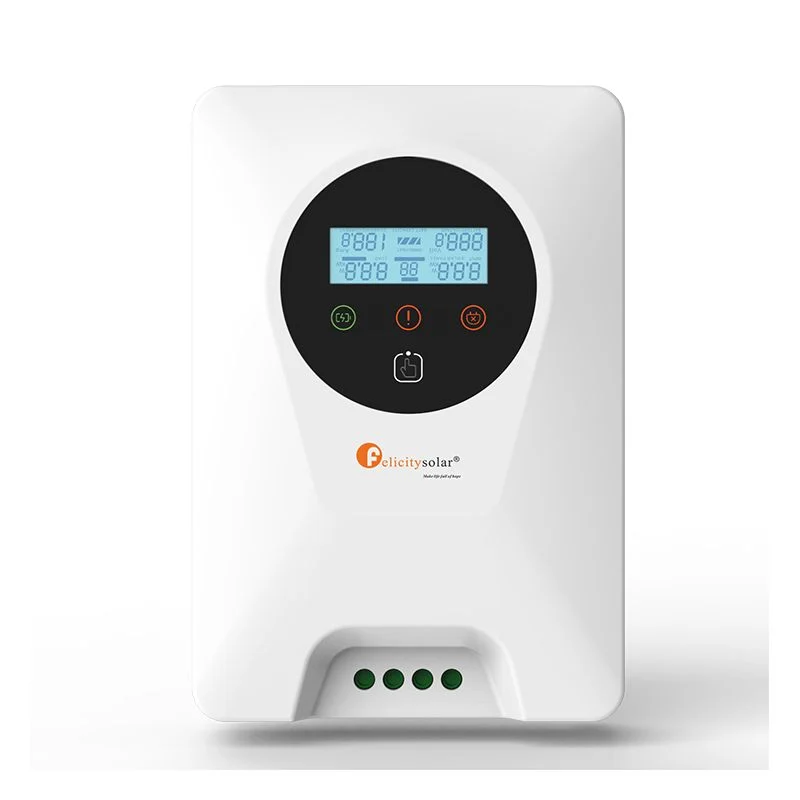
Felicity Solar is another brand that Kenyan solar customers may come across, particularly in residential and off-grid applications. Happy Solar supplies Felicity equipment alongside other inverter and solar equipment brands.
When comparing Felicity with other inverter options, don’t focus only on the brand name. Look at the exact model, rated output, battery voltage, solar input, battery charging capacity and compatibility with your intended battery bank.
Felicity also has products outside the inverter category, including charge controllers and batteries, so it can be useful for customers looking at a broader solar system rather than buying an inverter on its own.
Happy Solar Systems
Call / WhatsApp: +254 741 163020
Email: info@happysolar.co.ke
How to Choose the Right Solar Inverter
Start with your electricity bill and appliances.
This sounds obvious, but it is where many solar projects should begin. Look at what you normally use during the day and at night. Which appliances must remain operational when KPLC power goes off? Are there heavy loads such as pumps, electric cookers, heaters, welders or air conditioners?
Then look at the maximum power those appliances may use at the same time. This gives you a better idea of the inverter capacity required.
The next step is the battery. If you want backup power overnight, the battery capacity needs to match the amount of energy you expect to consume after the sun goes down. The solar panels then need to be sized to produce enough energy during the available sunshine hours while also charging the battery when required.
Happy Solar Systems
+254 741 163020 | info@happysolar.co.ke
Solar Inverter Size for a Kenyan Home
There is no universal “correct” inverter size for a Kenyan home.
A small house with lights, television, fridge, Wi-Fi and a few appliances may have completely different requirements from a large home with several refrigerators, pumps, cooker, washing machines, air conditioners and water heating.
For some homes, a 3kW or 5kW solar inverter may be sufficient. Larger homes may require 6kW, 8kW, 10kW or more. Happy Solar’s current range covers several of these capacities.
One thing we always recommend is thinking about future use. If you are building a house and plan to add a water pump, electric cooker or additional air conditioning later, tell your solar installer. Designing for future requirements can be more sensible than installing a system today and discovering two years later that the inverter needs replacing.
Happy Solar Systems
Call / WhatsApp: +254 741 163020
Ridgeways, Kiambu Road, Nairobi
Solar Inverters for Businesses and Farms
Businesses have a different problem when it comes to power cuts.
At home, a blackout may mean sitting in the dark for a while. At a shop, office, restaurant, salon, workshop or farm, a power interruption can stop operations and sometimes cause losses.
That is where a properly designed hybrid or off-grid solar system can make a real difference. A business may use solar during the day to reduce grid consumption while keeping battery backup available for outages.
Farms can also benefit from larger solar systems for water pumping, refrigeration, electric fencing, irrigation and farm buildings. The inverter should be sized around the equipment that actually needs to run, particularly motors and pumps that may have higher starting requirements.
Happy Solar Systems
+254 741 163020 | info@happysolar.co.ke
Commercial and farm solar solutions across Kenya.
Hybrid Inverter vs Off-Grid Inverter
The easiest way to understand the difference is to ask whether the electricity grid is part of your normal energy plan.
With a hybrid inverter, the grid can work together with solar and batteries. This is useful when you have KPLC electricity but want to reduce your bill and maintain power during outages.
With an off-grid system, solar and batteries are designed to provide the main source of electricity. This can make sense where grid electricity is unavailable or where independence from the grid is important.
Neither approach should be selected simply because one sounds better. The right option depends on your location, electricity availability, energy consumption, backup requirements and budget.
Happy Solar Systems
Call / WhatsApp: +254 741 163020
Ridgeways, Kiambu Road, Nairobi
What Affects Solar Inverter Prices?
Several things affect the price of an inverter.
The first is capacity. A 3kW inverter will normally cost less than a 10kW or 20KVA model because it is designed to handle a smaller amount of power.
The second is the inverter’s technology and features. Hybrid systems with multiple MPPT inputs, battery management, monitoring, grid interaction and other functions can cost more than basic inverter systems.
The third is the brand and model. Two inverters with similar output ratings can have different prices because their internal design, warranty, monitoring platform, battery compatibility and other specifications are different.
Happy Solar Systems
+254 741 163020 | info@happysolar.co.ke
Why Cheap Solar Inverters Can Cost More
There is nothing wrong with looking for a good price. Everyone wants value for money.
The problem comes when price becomes the only consideration.
If an inverter is significantly cheaper than comparable products, find out why. Check the specifications, warranty, battery compatibility, solar input capacity and after-sales support. A solar inverter is expected to operate for years, so the purchase price should not be considered separately from the expected service and support.
A slightly cheaper inverter is not necessarily a bargain if it does not support the battery you want to use or cannot handle the loads you need. You may end up replacing it earlier than expected.
Happy Solar Systems
Call / WhatsApp: +254 741 163020
Nairobi and nationwide solar services
Solar Inverter Installation in Kenya
Buying the inverter is only the first step.
Installation is where the different pieces come together: solar panels, inverter, battery, cables, breakers, isolators, surge protection and the electrical distribution system.
Happy Solar says its installations are carried out by EPRA-licensed solar electricians and that its process includes energy assessment, system design, installation, commissioning and handover.
This matters because even a good inverter can perform badly if the installation is poorly designed. Cable sizing, protection, earthing, battery configuration and system programming all need to be handled correctly.
Happy Solar Systems
+254 741 163020 | info@happysolar.co.ke
Professional solar installation in Nairobi and across Kenya.
Where to Buy Solar Inverters in Kenya
If you are searching for where to buy a solar inverter in Kenya, start by looking at the actual product specifications rather than choosing from advertisements based only on price.
Happy Solar Systems currently has an online category containing Deye and TBB RIIO SUN II models, with other solar inverter brands also supplied as part of its wider solar equipment range.
You can browse the current range here: Solar Power Inverters – Happy Solar Systems.
For customers who are unsure which inverter to buy, the better option is to contact the team with your electricity bill, list of appliances and details of any existing solar equipment. Happy Solar’s consultation process is based on assessing actual energy requirements before designing the system.
Happy Solar Systems
Call / WhatsApp: +254 741 163020
Email: info@happysolar.co.ke
Ridgeways, Kiambu Road, Nairobi
Solar Inverter Prices: A Quick Guide
| Solar inverter | Current listed price* | Typical application |
|---|---|---|
| TBB RIIO SUN II 3kW 24V | KSh 73,500 | Smaller hybrid/off-grid systems |
| TBB RIIO SUN II 3kW 48V | KSh 73,500 | 48V battery systems |
| TBB RIIO SUN II 5kW | KSh 95,000 | Residential systems |
| Deye 5kW Hybrid | KSh 98,000 sale price | Residential hybrid solar |
| Deye 6KVA Hybrid | KSh 110,000 | Larger residential systems |
| TBB RIIO SUN II 6kW | KSh 126,500 | Residential/commercial |
| Deye 8kW Hybrid | KSh 147,000 | Large homes/businesses |
| TBB RIIO SUN II 8kW | KSh 166,750 | Larger solar systems |
| Deye 12kW | KSh 225,000 | Larger homes/commercial |
| Deye 12kW Three Phase | KSh 234,000 | Three-phase applications |
| Deye 20KVA Hybrid | KSh 375,000 | Larger commercial systems |
*Prices are the current online listings found on Happy Solar’s website during research and can change with stock, promotions and model updates.
Conclusion
Choosing a solar inverter in Kenya does not have to be complicated, but it should not be done by looking at price alone.
Start with your electricity usage. Look at the appliances you want to run, the amount of backup you need, whether you have KPLC power, how much solar you want to install and what type of battery you plan to use. From there, the appropriate inverter capacity becomes much easier to work out.
Happy Solar Systems currently supplies a range of Deye and TBB RIIO SUN II solar inverters, alongside other solar brands and complete solar equipment. Current online prices range from around KSh 73,500 for smaller TBB units to KSh 375,000 for the listed Deye 20KVA hybrid inverter.
If you are not sure whether you need a 3kW, 5kW, 6kW, 8kW, 12kW or 20KVA solar inverter, don’t guess. Send Happy Solar your electricity bill, list of appliances and any information you have about your existing solar system. The team can assess the requirements and help you work out the right combination of inverter, panels, batteries and accessories.
Happy Solar Systems
Call / WhatsApp: +254 741 163020
Email: info@happysolar.co.ke
Ridgeways, Kiambu Road, Nairobi, Kenya
Frequently Asked Questions
What is the price of a solar inverter in Kenya?
Solar inverter prices vary according to capacity, brand and features. Current Happy Solar listings range from KSh 73,500 for some 3kW TBB RIIO SUN II models to KSh 375,000 for the Deye 20KVA hybrid inverter.
How much is a 5kW solar inverter in Kenya?
Happy Solar currently lists the Deye 5kW hybrid inverter at KSh 98,000 on sale, down from KSh 105,000. A TBB RIIO SUN II 5kW model is currently listed at KSh 95,000. Prices can change, so confirm the current price before ordering.
What size solar inverter do I need for my home?
It depends on your appliances and how much power you use at the same time. Some homes can work well with a 3kW or 5kW inverter, while larger homes may require 6kW, 8kW or more. A proper load assessment is the safest way to determine the size.
Is a hybrid solar inverter better for a home in Kenya?
A hybrid inverter can be useful for a home that has KPLC electricity but also wants solar power and battery backup. It can allow solar, battery and grid electricity to work together according to the system configuration.
Can Happy Solar Systems install the inverter?
Yes. Happy Solar provides solar system design, supply and installation in Nairobi and across Kenya. Its website states that installations are carried out by EPRA-licensed solar electricians.
Browse the current Solar Power Inverters at Happy Solar Systems.
Happy Solar Systems
+254 741 163020
info@happysolar.co.ke
Ridgeways, Kiambu Road, Nairobi