
If you’ve called around a few solar companies in Nairobi, you’ve probably already noticed the problem: everyone quotes a different number, and nobody tells you why.
Part of that is genuine — no two roofs, no two power bills, and no two households use electricity the same way. But part of it, honestly, is that a lot of installers quote low to get you on the phone, then the “real” price shows up after the site visit. We’d rather just tell you what things cost upfront, even the boring parts.
The short answer
For a typical Kenyan home, a full hybrid solar system — panels, inverter, lithium battery, mounting, cabling, and installation — runs from about KSh 330,000 for a small household system up to KSh 1,080,000+ for a large home with heavy evening usage. Commercial and farm installations are priced per site, because a flower farm’s pump load and a school’s classroom load look nothing alike on paper.
Here’s the breakdown by size, based on what we’re actually installing right now, not a rough estimate pulled off a spec sheet.
By system size
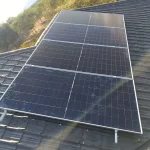
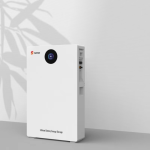
5kWh system — around KSh 330,000 This is our Family package: one 5kW inverter, one 5kWh lithium battery, four 585W panels. It covers lights, a fridge, TV, router, and a few sockets through an outage. It will not carry a borehole pump or an instant shower. Good for a smaller home, or as a backup layer if you’re already on grid power and mostly want blackout protection.
10kWh system — around KSh 496,000 Same inverter, double the battery (two 5kWh units), eight panels instead of four. This is the one most 3–4 bedroom Nairobi homes end up choosing, because it gets you through a full night on battery without rationing power, and it handles a bit more daytime draw — washing machine, kettle, that sort of thing.
20kWh system — KSh 950,000 Two inverters, 20kWh of storage, sixteen panels. This is for a household that genuinely wants to forget KPLC exists — AC in one or two rooms, an electric cooker, a pool pump, whatever your home actually runs on. It’s also the size a lot of our clients with home offices or small home-based businesses choose, because downtime isn’t an option for them.
24kWh+ systems — from KSh 1,080,000 Larger homes, farms with irrigation pumps, lodges, that kind of load. At this point we’re not really selling a “package” anymore — we’re designing around your specific appliances, and the price moves accordingly.
What actually moves the price
A few things push a quote up or down more than people expect:
- Roof type. Mabati roofs are the cheapest and fastest to mount on. Tiled or flat concrete roofs need different mounting hardware and usually more labour.
- Distance from the inverter to the consumer unit. If your DB board is on the far side of the house from where the inverter needs to sit, that’s extra cable and extra conduit — not huge, but it adds up.
- Battery chemistry. Lithium costs more upfront than gel but lasts roughly three to four times longer and handles deeper discharge. Over ten years, lithium is almost always cheaper per year, even though the sticker price looks worse.
- Whether you want automatic or manual changeover. Automatic switching between grid and battery costs more than a manual changeover switch, but if the power goes out at 2am, you’ll be glad you didn’t have to walk outside and flip anything.
A number worth sitting with: payback
Most of our residential clients see their system pay for itself in 4 to 6 years, depending on their current KPLC bill. After that, you’re running on electricity that’s effectively free for the remaining 15–20 years of the system’s life. If your current bill is above KSh 15,000 a month, the math tends to work out faster than people assume — we’ve had clients recalculate it themselves after seeing their first post-solar bill and ask if we made a mistake. We didn’t.
What we’d actually recommend doing
Don’t try to size your own system off a price list, including this one. Get a free site assessment — it costs you nothing, takes about 30 minutes, and means the quote you get back is based on your real usage, not a guess. We’ve seen too many people oversize a system and pay for battery capacity they never touch, or undersize one and end up frustrated within the first dry season.
If you want a rough number before that conversation, our savings calculator will get you in the right range in under a minute. For the real number, message us on WhatsApp and we’ll book a site visit.


